First the Farmland, Then the Lakes — Where Will Alberta's Data Centre Expansion Stop?
Where Will They Stop? — Their investment. Our land. Whose future?
**
November 27, 2026
The story in 30 seconds
Imagine it was your lake
Imagine spending years saving enough money to purchase a little piece of rural Alberta.
Perhaps it is a cabin beside a lake, a retirement property, a family farm or simply somewhere to escape the noise and activity of urban life.
You might have chosen that location specifically because of what was not there.
No industrial complexes. No massive electrical substations. No industrial cooling equipment. No constant industrial activity.
Then one day, you discover that neighbouring agricultural land is being considered for a major industrial development.
Would you have purchased your property had you known what might eventually be built nearby?
And if the character of your surroundings changes permanently, what rights and protections do you have?
These are no longer hypothetical questions for some Alberta residents.
From farmland to industrial development
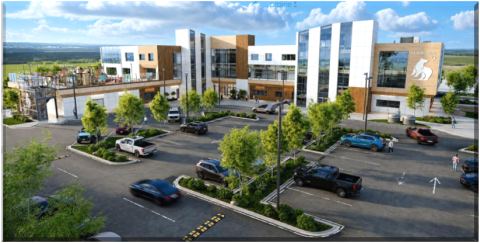
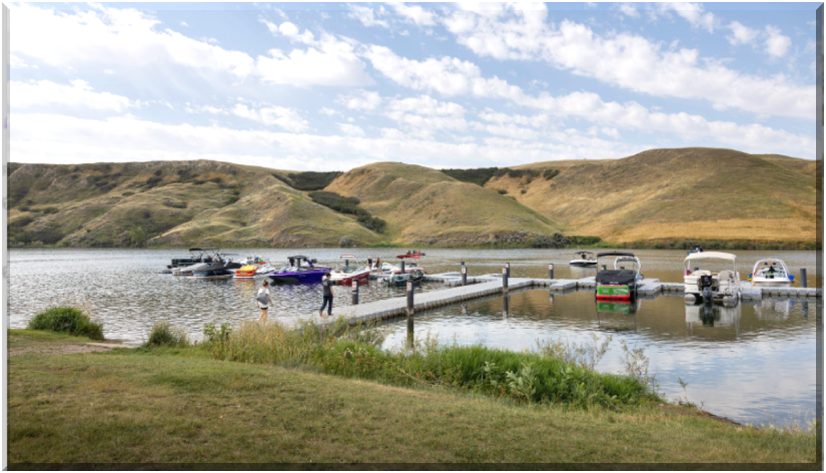
In June 2026, Vulcan County council approved the redesignation of approximately 595 acres near Travers Reservoir from rural general to rural industrial.
The proposed development, known as Palliser Grid, is being advanced by local farmer Eric Steeves.
The original January 2026 concept submitted to Vulcan County contemplated an enormous computing campus with an eventual information technology electricity demand of up to 2,000 megawatts.
The proposal included electrical infrastructure, cooling facilities, emergency generation and a water supply connected to Travers Reservoir.
That original concept should not be confused with an approved construction plan. The developer's plans have subsequently evolved, and the final scale remains to be established.
Residents have challenged the municipality's rezoning decision through the Court of King's Bench of Alberta.
The challenge concerns the legality and fairness of the municipal decision-making process. It does not establish that the municipality acted unlawfully, nor does it establish that the proposed facility would cause environmental damage.
The final outcome remains unconfirmed.
A new development today
The Little Bow AI Data Centre Committee is now seeking an independent provincial review of Alberta's proposed data centre regulations.
Its concerns extend beyond a single development.
The committee wants greater transparency surrounding the technical evidence used to establish residential setbacks, environmental standards and other requirements governing these facilities.
The Alberta government, meanwhile, has stated that data centre development must protect communities, water resources, electricity reliability and the interests of Albertans.
The question is how those assurances will translate into enforceable protections.
This is not simply a farmer versus cabin owners
Steeves has described himself as a fifth-generation farmer seeking to bring employment and additional tax revenue to his community.
Economic diversification is a legitimate consideration for rural municipalities.
Residents who have invested their savings in nearby homes and recreational properties also have legitimate interests.
Both groups have invested in rural Alberta, although with very different expectations about its future.
The dispute raises a larger planning question: what criteria should determine which land uses are compatible with one another?
Why here?
Alberta is an enormous province.
Before placing major industrial facilities near established residential communities, recreational lakes or productive agricultural land, what other locations have been seriously considered?
Were alternative locations rejected because of construction costs, electricity transmission, water availability, fibre-optic connectivity, transportation access or land acquisition expenses?
How much weight was given to the existing community?
Were the financial advantages of the proposed location compared against the potential long-term costs imposed on surrounding residents and businesses?
A publicly accessible comparison of alternative sites could help communities understand why particular locations have been selected.
Why not build farther away?
Alberta already has experience operating major industrial facilities in remote locations.
Workers in numerous resource industries travel to remote operations and stay in accommodation provided for their shifts.
Could some of that experience be applied to large-scale AI computing facilities?
What would happen if developers were required to examine locations at least an hour's drive from established residential communities before proposing industrial campuses near homes, farms and recreational areas?
Such a requirement does not currently represent an established scientific safety standard.
Remote developments would also create challenges, including additional infrastructure, emergency response requirements, transportation costs and possible impacts on wildlife, water resources and Indigenous lands.
Nevertheless, comparing remote and existing industrial locations with sites near established communities deserves serious consideration.
The cheapest location for a developer may not necessarily be the location with the lowest overall cost to society.
How much water are we talking about?
Palliser Grid's public stewardship information identifies a water allocation through the Bow River Irrigation District of up to 5,500 acre-feet annually.
That is equivalent to approximately 6.78 billion litres.
An allocation is not the same as actual consumption. The developer's eventual cooling technology, water recycling and operating requirements will determine how much water is actually needed.
However, residents are entitled to understand what the allocation represents.
How much water would be withdrawn during normal operations?
How much would be returned or reused?
What happens during prolonged drought?
Would agricultural producers and existing water users face additional restrictions?
Who would receive priority when available water becomes scarce?
The answers matter particularly in agricultural regions where water availability can determine whether an entire growing season succeeds or fails.
The agricultural question nobody should overlook
Alberta's agricultural economy depends on more than the ability to produce food.
It also depends on the ability to sell it.
Consider a separate hypothetical example involving a future nuclear power facility constructed beside an established agricultural operation.
Scientific monitoring might demonstrate that the vegetables, grain, milk or animal protein produced nearby are entirely safe.
But would every customer accept that assurance?
Would grocery chains, international distributors and food processors continue purchasing those products without additional testing or certification?
Would neighbouring agricultural producers face additional costs associated with demonstrating the safety of their products?
These questions are not evidence that nuclear power generation contaminates neighbouring food production.
They are questions about consumer confidence, commercial risk and agricultural marketability.
The same principle applies to other industrial developments where neighbouring businesses may experience changes in public perception, whether those perceptions are scientifically justified or not.
Has anyone assessed that economic risk before approving developments?
And if a demonstrable financial loss occurs, who should bear responsibility?
Why is there so much urgency?
The artificial intelligence industry is developing rapidly, with companies competing for computing capacity, electricity, customers and investment.
But technological competition does not eliminate the need for careful municipal planning.
What is driving the proposed timelines for Alberta's largest data centre projects?
Are developers responding to binding customer contracts?
Are they competing to secure electricity capacity?
Are there financing deadlines, investor commitments or government incentives that make early approvals particularly valuable?
Are land-use approvals necessary before additional financing can be secured?
And what happens if demand for computing capacity changes before a proposed facility is completed?
There is no evidence presented here that the Travers Reservoir developer is attempting to conceal financial information from lenders or investors.
However, the relationship between development approvals, financing and commercial viability deserves examination across Alberta's emerging data centre industry.
A rezoned property and an operating data centre are two very different things.
Follow the money
Large industrial proposals are frequently associated with substantial investment announcements and employment projections.
But communities need to distinguish proposed investment from committed financing.
They also need to distinguish temporary construction employment from permanent operating jobs.
Who owns the development company?
Who are its ultimate investors?
Which companies will purchase the computing capacity?
How much financing has actually been secured?
How much municipal tax revenue will be generated after exemptions and incentives?
How much of that revenue will be needed to provide additional municipal infrastructure and emergency services?
And what financial protections will remain in place if a project is abandoned?
These questions are relevant whether the applicant is a local farmer, an international technology company or a billionaire investor.
Palliser Grid states that its project remains in development and that no facilities have been constructed or are operating.
The eventual economic contribution remains to be demonstrated.
Why the Peace Country should be paying attention
The Travers Reservoir dispute is occurring in southern Alberta, but the underlying questions are familiar to communities considerably farther north.
The County of Grande Prairie and the Municipal District of Greenview have already become part of the wider discussion surrounding large-scale AI infrastructure.
The Peace Country offers agricultural land, energy resources, transportation infrastructure and sizeable areas for potential development.
But those resources already serve communities, agricultural producers, businesses and ecosystems.
What would the region look like after ten major data centre projects?
What about twenty?
How much land would be converted?
How much electricity and water would be required?
What additional industrial infrastructure would accompany those facilities?
Would individual project assessments adequately capture their combined impact?
A development may appear manageable when examined alone. The regional consequences of multiple developments could be considerably different.
Who decides where it stops?
Private investment can bring employment, innovation and economic opportunities to rural communities.
Agriculture, recreation, tourism and existing rural businesses also generate economic activity and sustain communities.
The challenge for public decision-makers is determining how these interests can coexist and where they cannot.
What protections should exist before land is rezoned?
What information must be available before residents are asked to participate in public hearings?
Should alternative locations be independently evaluated?
Should investors provide financial guarantees covering reclamation and long-term liabilities?
Should municipalities examine the combined effects of proposed developments across their boundaries?
And how will the public know whether promised benefits have actually materialized?
The Travers Reservoir dispute is one example of a much larger conversation that Alberta is beginning to have.
The question is not simply where the next data centre will be built.
It is who determines the limits of industrial development and what those decisions will mean for the generations that follow.
Your voice matters
Would you purchase a home or recreational property beside a major data centre?
Would the proximity of an industrial facility influence your choice of agricultural products, even if independent testing demonstrated their safety?
Should Alberta require developers to demonstrate that they have considered remote locations and existing industrial areas before selecting land near established communities?
What protections would you want if a development of this scale were proposed next to your property?
Share your experiences and concerns.
Original sources
- Vulcan County — Public hearing and rezoning information for Bylaw 2026-007
- Vulcan County — Travers AI Data Centre Campus original concept master plan
- Vulcan County — Council meeting records and June 17, 2026 meeting highlights
- Palliser Grid — Project stewardship, water allocation and development status
- Christopher Northcott — Remarks delivered at the June 17 Vulcan County council meeting
- Government of Alberta — AI data centre public engagement and provincial assurances
Where Will They Stop?
Their investment. Our land. Whose future?
An ongoing investigation into the long-term consequences of large-scale industrial development in rural Alberta.