Ottawa's $6.5-Billion Forestry Plan: What Will Reach the Peace Country?
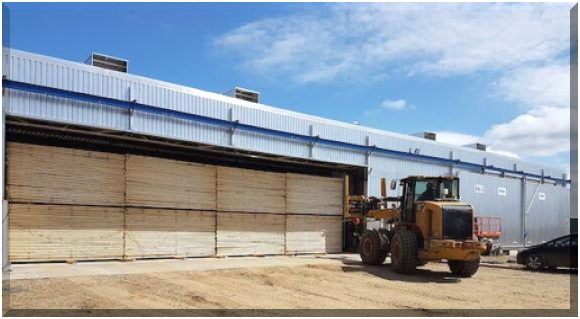
When a sawmill reduces production, the consequences do not necessarily stop at the mill gates.
Beyond the mill gates
When a sawmill reduces production, the consequences do not necessarily stop at the mill gates.
The logging contractor may have fewer trees to harvest. The truck driver may have fewer loads to deliver. The mechanic may have fewer machines to repair. Equipment suppliers, local businesses and households can all experience the consequences.
That is why Friday's federal forestry announcement deserves particular attention throughout the Peace Country.
For communities whose economies depend partly on the forests surrounding them, the value of Ottawa's announcement will ultimately be measured in more than billions of dollars.
It will be measured in employment, business stability and the ability of families to continue making a living in their own communities.
What Ottawa is proposing
Federal Energy and Natural Resources Minister Tim Hodgson unveiled Canada's new national forestry strategy on Friday, November 27.
The proposed $6.5-billion investment outlined in Budget 2026 includes:
- $500 million to improve timber supply systems, forest management and related technologies.
- $2 billion to upgrade equipment and facilities, develop products and improve industrial productivity.
- $4 billion through a Forestry Sector Accelerator to support major industrial investments, including facilities producing biofuels and other advanced forest products.
These proposed investments are scheduled over six years beginning in the 2027–28 fiscal year.
The federal government's broader objective is to reduce the industry's vulnerability to American trade restrictions, develop alternative markets and increase the domestic use of Canadian wood products.
However, a national investment proposal is not the same as money already delivered to individual communities.
Hines Creek receives a share
One Peace Country business has already been identified in the federal funding announcement.
Zavisha Sawmills in Hines Creek is receiving funding through two federal programmes:
- $1 million through the Regional Tariff Response Initiative.
- $3,019,599 through the Regional Homebuilding Innovation Initiative.
The combined funding of approximately $4.02 million will support improvements to the company's lumber production facilities, including new processing machinery, automated inspection technology and equipment electrification.
The improvements are intended to increase efficiency and strengthen the company's position as a lumber supplier to Western Canada's housing industry.
For a smaller community such as Hines Creek, investment in an existing industrial business can have significance well beyond the company's property line.
What remains to be established is whether the investment will increase production, create employment, protect existing positions or generate additional work for regional contractors.
Modernisation does not automatically mean more jobs
There is an important distinction between protecting a business and protecting every job within that business.
Modern equipment can help a sawmill remain competitive, reduce waste and improve production.
Automation can also change the number and types of workers required.
A successful modernisation programme may preserve an operation that would otherwise struggle to remain competitive, while simultaneously changing its workforce requirements.
The employment outcomes of the Hines Creek investment have not yet been established.
Those outcomes will be important when assessing the long-term benefit of the public investment.
A warning from Fox Creek
The challenges facing the forestry industry are already visible in northwestern Alberta.
In its November 4 financial report, Canfor announced a third-quarter operating loss of $77 million and a shareholder net loss of $88 million.
The company also confirmed that its Fox Creek sawmill had completed its shutdown during the quarter.
Those financial losses represent Canfor's corporate operations, not the financial performance of its Grande Prairie sawmill specifically.
Nevertheless, the Fox Creek closure demonstrates that the pressures facing the forestry industry can have permanent consequences for individual communities.
Once a mill closes, replacing its economic contribution may be considerably more difficult than helping an existing operation remain competitive.
What about the independent contractor?
Much of the public discussion surrounding forestry assistance focuses on large manufacturing facilities.
But the industry also depends on smaller, independently owned businesses.
A logging contractor may have substantial investments in harvesting equipment. A trucking company may be making monthly payments on vehicles that require regular work to remain financially viable.
When production slows, those financial obligations do not disappear.
Whether these businesses can apply directly for assistance under the new federal strategy, rather than benefiting indirectly through investments in larger forestry companies, remains an important unanswered question.
Helping communities diversify
Ottawa is also introducing a $100-million national Forestry Regions Economic Diversification initiative.
Of that amount, $17 million has been allocated to the three Prairie provinces.
The programme is intended to help communities affected by forestry-related economic disruption pursue alternative business opportunities and develop stronger local economies.
Applications are expected to open in the coming weeks.
For forestry-dependent Peace Country communities, the initiative could provide opportunities to develop additional industries, attract investment and reduce dependence on a single major employer.
However, the distribution of that funding across individual communities has not yet been announced.
Could more Canadian timber stay in Canada?
Another opportunity lies in the relationship between Canada's forestry industry and its housing requirements.
Canada needs more homes, while its forestry producers need dependable customers.
Developing stronger domestic markets for lumber, engineered wood and prefabricated building components could help connect those two economic priorities.
For the Peace Country, the question is whether more of the wood harvested locally could also be processed into higher-value products within the region.
Doing so could create additional economic activity before those products leave northwestern Alberta.
The federal strategy identifies this type of development as an opportunity, but specific additional Peace Country projects have yet to be established.
What Peace Country workers need to know
Friday's announcement provides a national direction and at least one confirmed regional investment.
There are still important local questions to answer:
- Will Grande Prairie's forestry operations apply for additional federal assistance?
- Can independent logging and transportation contractors qualify directly?
- Will funding protect existing employment or primarily support automation?
- Can smaller communities access diversification funding?
- Will regional workers receive training for changing industrial requirements?
- How much of the proposed national investment will ultimately reach northwestern Alberta?
The answers will determine whether the strategy delivers immediate assistance, long-term industrial development or a combination of both.
Measuring success close to home
The size of a national funding announcement can attract attention.
Its local results are what will matter to the people who depend on the industry.
For the Peace Country, those results will include whether mills remain open, contractors remain in business, young people can find employment and forestry communities remain economically sustainable.
Hines Creek represents one confirmed regional investment.
For the rest of the Peace Country, the next chapter of Ottawa's forestry strategy has yet to be written.
Original sources
- Natural Resources Canada — Minister Hodgson unveils first-ever federal strategy for Canada's forest sector, November 27, 2026
- Prairies Economic Development Canada — Federal forest sector strategy and the Prairie forest sector, November 27, 2026
- Prairies Economic Development Canada — Backgrounder identifying individual funding recipients, including Zavisha Sawmills, November 27, 2026
- Government of Canada — Budget 2026, Strengthening Canada's Forest Sector
- Canfor — Third-quarter financial results, November 4, 2026