40 Years of Building the Peace Country — The Organization Behind Our Small Businesses
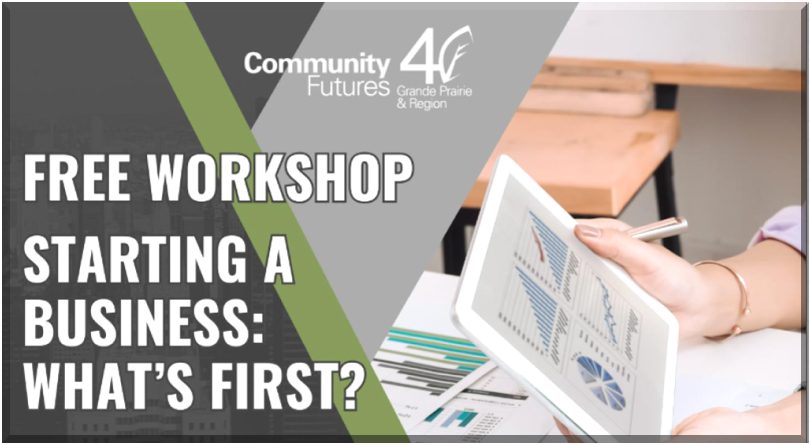
Every local business began with an idea.
Behind every business is someone who took a chance
Perhaps it was someone working in the oilfield who dreamed of owning a service company. A mechanic who wanted to open an independent shop. A baker who wondered whether a family recipe could become a business. Or someone in a rural community who recognized a need that nobody else was filling.
The ideas are often the easy part.
Finding the money, developing a business plan and taking that first financial risk can be considerably more difficult.
For four decades, Community Futures Grande Prairie & Region has been helping entrepreneurs navigate those challenges.
Yet many Peace Country residents may not realize what the organization does, how much money it lends or that its services are available to people who have not yet opened a business.
More than a million dollars in one year
The organization's 2024–25 performance report provides a snapshot of its regional activities.
| Measure | 2024–25 results |
|---|---|
| Business financing provided | $1,050,243 |
| Loans issued | 13 |
| Estimated jobs created, maintained or expanded through lending | 37 |
| Business advisory services | 1,293 |
| Business training participants | 149 |
| Community-based projects | 17 |
| Community strategic plans developed or updated | 10 |
The average loan issued during the reporting period was approximately $80,788.
The employment figure includes existing jobs supported through lending as well as new or expanded employment. It represents estimates made when financing was provided, rather than independently verified long-term employment outcomes.
Behind those figures are business owners making decisions about equipment, employment, expansion and whether they can afford to take their next step.
What happens when the bank says no?
Traditional financial institutions assess business financing against their own lending requirements.
For an entrepreneur without an established business history, sufficient security or predictable revenue, obtaining financing can be challenging.
Community Futures operates as a developmental lender, providing an additional financing option for qualifying entrepreneurs.
Its Grande Prairie office advertises business loans of up to $150,000.
Financing is not automatic, and borrowers must demonstrate that their proposed business is viable. Community Futures also expects entrepreneurs to invest some of their own resources.
The organization does not generally offer business grants through its regular lending programme. Borrowed money must be repaid.
But for someone trying to establish a business in the Peace Country, having another financing option could make a considerable difference.
Following the money
The organization's financial statements for the year ending March 31, 2025, offer a broader picture of its lending activities.
| Loan measure | Amount |
|---|---|
| Recorded outstanding loans | $7,759,655 |
| Allowance against loans | $195,158 |
| Net carrying value of loans | $7,564,497 |
The portfolio includes several federally supported investment and economic development funds, including pandemic-related business recovery financing.
These figures represent outstanding loans across multiple programmes, not the amount of new money distributed in a single year.
They also demonstrate that Community Futures is more than an advisory office. It manages a substantial regional lending portfolio, with responsibilities for assessing risk, collecting repayments and administering investment funds.
You don't have to borrow money to ask for help
One of the lesser-known aspects of Community Futures is that business owners can access advisory services without becoming borrowers.
Someone considering starting a business can seek assistance with planning before committing personal savings or taking on debt.
Existing entrepreneurs can obtain guidance on marketing, business management, expansion and succession.
That last service could become increasingly important as established Peace Country business owners approach retirement.
What happens when a successful local business has customers, employees and decades of experience, but nobody lined up to take over?
Helping another entrepreneur purchase and continue operating an existing business may be just as important to a community as establishing a new one.
Growing beyond Grande Prairie
The organization serves a wide geographical area, including:
- Grande Prairie
- Beaverlodge
- Sexsmith
- Wembley
- Hythe
- Clairmont
- Bezanson
- Grovedale
- Teepee Creek
- La Glace
- Elmworth
- Goodfare
- Demmitt
- Buffalo Lake
- Huallen
- Lymburn
- Horse Lake First Nation
Economic development in these communities is not necessarily measured by major industrial projects or multimillion-dollar construction announcements.
Sometimes it is a new repair shop, a local childcare service, a small manufacturing operation or an existing business employing another two people.
For smaller communities, maintaining those businesses can mean preserving employment and access to essential services close to home.
How important are small businesses?
According to Alberta's Regional Dashboard, Grande Prairie had 3,445 businesses in 2025, up from 3,425 in 2024.
Approximately 95.4 per cent were classified as small businesses.
While major industries remain essential to the Peace Country economy, those figures illustrate the importance of smaller enterprises.
They provide services, employ local residents, occupy commercial properties and participate in community life.
The challenge is not simply attracting businesses to the region. It is also helping existing businesses survive, adapt and grow.
Building the next generation of entrepreneurs
Community Futures also supports initiatives that introduce entrepreneurship to young people and create opportunities for business owners to develop their skills.
Its annual report identifies programmes including Lemonade Day, EmpowRise and the Hyperdrive Women in Business Summit.
Youth entrepreneurship programmes introduce participants to concepts such as pricing, expenses, customer service, marketing and profit.
Those lessons can be valuable whether a young participant eventually opens a business or pursues an entirely different career.
Supporting entrepreneurship is not necessarily about creating tomorrow's largest company.
It can also be about helping young people understand how businesses work and developing the confidence to pursue their own ideas.
The organization faces challenges of its own
The annual performance report acknowledges that obtaining programme-specific funding has become more competitive.
Community Futures reports increasing reliance on private-sector partnerships, municipal assistance and revenue-generating service arrangements to support some of its initiatives.
That raises an important question about the future of regional economic development organizations.
How can they continue providing accessible services to entrepreneurs while securing the resources necessary to operate their programmes?
The organization's ability to develop partnerships may influence which initiatives continue and which new opportunities can be introduced.
Forty years — but what is the full economic impact?
A 40th anniversary is an opportunity to celebrate achievements, but also to measure them.
The available annual report provides useful figures for a single reporting year. It does not establish the organization's cumulative economic impact over four decades.
Several questions deserve further examination:
- How much business financing has Community Futures provided locally since its establishment?
- How many businesses have been established, purchased or expanded with its assistance?
- How many of those businesses are still operating?
- How many jobs have been created or preserved?
- What proportion of business loans have been successfully repaid?
- How much additional private investment has been attracted through its lending?
- How many entrepreneurs received financing after being unable to obtain conventional business loans?
The answers would provide a more complete picture of the organization's contribution to the Peace Country.
Celebrating 40 years
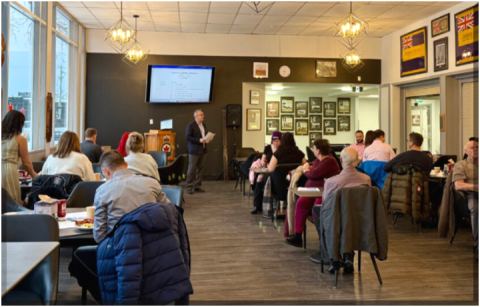
Community Futures Grande Prairie & Region outlined its anniversary plans to Grande Prairie City Council on January 19, 2026.
The organization also scheduled an October anniversary luncheon featuring business success stories and presentations about its regional activities.
The Grande Prairie & District Chamber of Commerce now lists another anniversary celebration for December 9, from 2 to 4 p.m.
The event provides an opportunity to recognize the organization, its partners and the entrepreneurs it has supported.
Have an idea for a business?
Community Futures Grande Prairie & Region can be contacted at:
Suite 170, 214 Place South 10130–99 Avenue Grande Prairie, Alberta
Telephone: 780-814-5340
Email: gpinfo@albertacf.com
Website: https://grandeprairie.albertacf.com/
Were you one of them?
Over four decades, Community Futures has had opportunities to work with entrepreneurs across the Peace Country.
Were you one of those people?
Did the organization help you establish a business, purchase equipment, expand your operations or keep your business going through difficult economic times?
What happened after you received that assistance?
Your experience could help another local entrepreneur understand what it takes to turn an idea into a business.
The community's own business success stories deserve to be told.
Original sources
- Community Futures Grande Prairie & Region — 2024–25 Performance Results
- Community Futures Grande Prairie & Region — Financial Statements, March 31, 2025
- Community Futures — Business Financing, Advisory Services and Training
- Government of Alberta — Grande Prairie Business and Economic Statistics
- City of Grande Prairie — January 19, 2026 Council Minutes
- Grande Prairie & District Chamber of Commerce — Upcoming Events