Bringing Healthcare Closer to Home: The Maskwa Medical Center Story
Back on top · first published Nov 28
What is the real cost of waiting?
Imagine waking up early in the morning, getting into your vehicle and driving approximately 450 kilometres from Grande Prairie to Edmonton for a medical appointment.
Perhaps the appointment lasts less than an hour.
Perhaps you are told that additional tests are required and that you will need to return in several weeks.
For some Northwestern Alberta residents, this is a familiar experience.
There are hotel bills, restaurant expenses, fuel costs, lost wages and arrangements to be made for children or elderly family members.
For patients already dealing with serious medical conditions, the journey itself can become another physical and emotional challenge.
What if more of that healthcare could be provided closer to home?
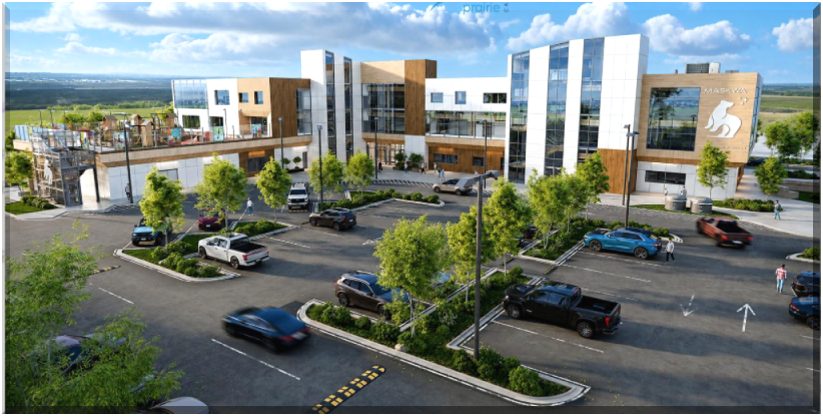
That question is at the heart of the Maskwa Medical Center, now taking shape beside the Grande Prairie Regional Hospital.
It began with a family's search for answers
The origins of Maskwa can be traced back to 2008, long before construction crews arrived at the site.
According to the organization's published history, Grande Prairie resident Ken Drysdale and his wife were dealing with a devastating cancer prognosis after years of medical treatment.
They sought another medical opinion through the Mayo Clinic in the United States, eventually travelling to its Rochester, Minnesota, location.
There, the family received a different prognosis and experienced a healthcare model in which specialists worked collaboratively to investigate medical conditions and develop treatment plans.
The experience left a lasting impression on Drysdale.
Another visit in 2017 reinforced his interest in bringing a similar approach to Northwestern Alberta.
In 2018, the initiative that would become the Maskwa Medical Center was formally launched.
What began with one family's search for medical answers gradually became a regional healthcare project.
The objective was not simply to construct another medical building, but to change how patients with complex medical conditions could access specialists and obtain answers.
Why another medical facility beside our hospital?
The Grande Prairie Regional Hospital opened in late 2021, providing the region with modern facilities for emergency medicine, surgery, cancer care, intensive care, maternity services and other medical needs.
However, having a modern hospital does not automatically eliminate all difficulties in accessing specialized healthcare.
Patients with complicated medical conditions may require consultations with several different specialists before a diagnosis or treatment plan can be established.
Each referral can introduce another waiting period.
Patients may also find themselves travelling between communities, attending separate appointments and repeating parts of their medical history to different healthcare providers.
Maskwa is intended to complement the regional hospital rather than replace it.
Its proposed model emphasizes coordinated medical investigation, specialist collaboration and physician education.
Locating the facility beside the hospital creates opportunities for cooperation with existing medical professionals, diagnostic services and educational programmes.
The two buildings could ultimately become important components of a broader regional healthcare and medical education campus.
What will be inside Maskwa?
The Government of Alberta's major projects inventory describes Maskwa as a three-storey, approximately 107,000-square-foot healthcare development.
The planned facility brings together several different functions.
The medical specialist clinic
The specialist clinic is intended to help patients with complex or difficult-to-diagnose medical conditions.
Rather than relying entirely on a succession of individual specialist referrals, the proposed approach encourages medical professionals to work together.
Maskwa's stated ambition is to reduce the time required to establish diagnoses and develop treatment recommendations.
Project information presented to Saddle Hills County in 2025 identified a treatment-planning target of 10 days following referral.
That is an ambitious service objective, not an established performance result or a guarantee that every patient will receive a diagnosis within 10 days.
The actual services available will depend on specialist recruitment, funding arrangements and the clinical needs of individual patients.
A teaching clinic for future family doctors
Another important component is the academic teaching clinic being developed in connection with the University of Alberta's family medicine programme.
Plans presented in 2025 included approximately 22,000 square feet of teaching space, with the capacity to accommodate 20 resident physicians and support the graduation of 10 family physicians annually.
Training doctors in Northwestern Alberta could help address one of the region's continuing healthcare challenges: recruiting physicians who are willing to establish long-term practices in northern and rural communities.
During their training, physicians can develop relationships with local patients, colleagues and communities.
They also gain familiarity with the opportunities and challenges of practising medicine outside major metropolitan centres.
How many of these physicians ultimately remain in Northwestern Alberta will be an important measure of the programme's long-term success.
Primary healthcare services
Primary Care Alberta has signed a long-term lease for the building's first floor, according to information published by the County of Grande Prairie in June 2026.
The space is intended to accommodate a health clinic that will also support family medicine training.
This could be particularly significant for residents who do not have a regular family physician.
The County's 2024 municipal census found that 27 per cent of County residents did not have a family doctor.
A stronger local primary healthcare network could help patients receive medical attention earlier and potentially reduce some avoidable emergency department visits.
The number of patients the new clinic will be able to accommodate has yet to be established publicly.
Supporting services
Earlier project descriptions have also included commercial and supporting services such as pharmacy access, medical supplies and childcare.
These services could benefit patients, families and healthcare workers.
Final tenants, service arrangements and opening dates will need to be confirmed as the project approaches completion.
Will patients have to pay?
One of the most important questions surrounding Maskwa concerns how patients will access its services.
Is this a private medical clinic available primarily to people who can afford to pay?
According to Maskwa's published operating principles, the answer is no.
The organization is a registered charity that intends to deliver publicly funded medical services without additional patient charges for its covered clinical care.
The proposed model is designed to provide access regardless of a patient's financial circumstances.
That distinction is particularly significant in rural communities.
A facility that offered faster diagnoses only to people capable of paying substantial medical fees would not address the same accessibility challenges.
Nevertheless, the final specialist funding arrangements, referral requirements and available services remain important matters to confirm.
A project built by the region
The Maskwa Medical Center has developed through years of regional cooperation.
In March 2021, Grande Prairie City Council approved $50,000 to assist with the development of the project's business case.
The County of Grande Prairie and the Municipal District of Greenview also contributed to early planning work.
A long-term land agreement with Northwestern Polytechnic was formally signed in April 2025, securing the location beside the regional hospital.
On May 20, 2025, municipal representatives, Indigenous representatives, healthcare advocates and project partners gathered for the official groundbreaking.
Construction began on June 2, with Clark Builders selected as the general contractor.
The project organization reported that approximately 70 per cent of construction work would involve local contractors.
Beyond its future medical contribution, the project is therefore also providing construction-related economic activity within the region.
Who is paying for it?
The financial history of Maskwa illustrates how significantly local governments have become involved in supporting regional healthcare infrastructure.
According to information published by the County of Grande Prairie in June 2026, the estimated total project cost was approximately $40 million.
Alberta's major projects inventory separately lists an estimated cost of $35 million. Earlier municipal reporting identified a construction contract of approximately $35.7 million.
These figures may reflect different project scopes or reporting dates. The difference should not automatically be interpreted as a construction cost overrun.
Municipal contributions identified in public records include:
| Municipality | Capital grant | Interest-free loan |
|---|---|---|
| City of Grande Prairie | $500,000 | $3,500,000 |
| County of Grande Prairie | $500,000 | $3,500,000 |
| MD of Greenview | $500,000 | $3,500,000 |
| Saddle Hills County | $3,500,000 | — |
| Big Lakes County | Approximately $846,940 | — |
These identified commitments represent approximately $5.85 million in capital grants and another $10.5 million in interest-free municipal loans.
The figures do not include earlier planning contributions, every private donation or any additional municipal commitments that may have been made subsequently.
Grants and loans are also different forms of financial support. Loans are intended to be repaid.
The additional financial commitment
Maskwa has also sought municipal guarantees to help secure approximately $23.35 million in construction financing through ATB Financial.
The proposed contribution from each of four participating municipalities was approximately $5.84 million in loan guarantees.
A guarantee is not an immediate payment.
Instead, a municipality agrees to assume responsibility for a specified portion of the debt if the borrower cannot meet its repayment obligations.
June 2026 County documentation indicated that the City of Grande Prairie, MD of Greenview and Saddle Hills County had approved bylaws authorizing their respective guarantees.
At that time, the County of Grande Prairie was consulting residents before considering final approval of its own guarantee bylaw.
The final status of the County's guarantee requires confirmation.
The long-term financial model, including lease revenue, debt repayment and the facility's operating costs, will remain important considerations for municipal taxpayers.
Where does the provincial government fit?
Healthcare delivery is primarily a provincial responsibility, yet municipalities across Northwestern Alberta have made substantial financial commitments to help establish Maskwa.
According to the County's June 2026 public information, the provincial government had not provided capital funding toward construction at that point.
Primary Care Alberta's long-term lease represents a separate form of public-sector involvement.
In August, the County identified provincial support for an Alternative Relationship Plan for Maskwa's specialist diagnostic clinic as one of its healthcare advocacy priorities.
Such an arrangement could help establish how participating physicians are compensated and how specialized services are funded.
A completed building is only one part of delivering healthcare.
The facility will also need medical professionals, sustainable operating funding, appropriate equipment and agreements with other healthcare providers.
Whether additional provincial capital or operating commitments have been secured since those disclosures remains an important unanswered question.
The social cost of travelling for healthcare
A medical appointment does not take place in isolation from the rest of a patient's life.
For someone living in a rural community, receiving specialized healthcare in Edmonton can mean arranging time away from employment, transportation, accommodation and support from relatives.
For older residents who no longer drive, attending an appointment may depend on whether a family member is available to accompany them.
For parents of young children, it may require additional childcare.
For agricultural producers, travelling during seeding, calving or harvest can create significant complications.
For people receiving disability benefits or living on fixed incomes, the cost of transportation and accommodation can become an additional financial burden.
Not everyone has the same opportunity to travel for medical care.
Reducing unnecessary medical travel could therefore improve not only convenience but also equity in healthcare access.
What does one medical trip really cost?
Consider an illustrative example of a Grande Prairie family travelling to Edmonton for a specialist appointment.
| Expense | Illustrative cost |
|---|---|
| Fuel for approximately 900 km of driving | $140 |
| One night of accommodation | $160 |
| Meals | $80 |
| Parking | $20 |
| One day of lost employment income | $250 |
| Total | $650 |
Actual expenses will vary considerably, and some families may qualify for assistance programmes.
However, if a family must make four similar trips during a year, the combined expense and lost income could reach $2,600 under this example.
That does not include vehicle wear, additional childcare, extended absences from employment or the value of unpaid caregiving.
Nor does it measure the emotional strain of travelling while dealing with an uncertain medical condition.
Maskwa's ability to reduce these costs will ultimately depend on how many appointments and referrals can genuinely be completed within the region.
The value of receiving answers sooner
Waiting for a diagnosis can be one of the most difficult aspects of dealing with a medical condition.
Without a diagnosis, patients may not know whether their symptoms are temporary, progressive or indicative of something more serious.
Families can find it difficult to make decisions about employment, education, finances and future care.
Some medical conditions benefit substantially from early diagnosis and treatment.
In other cases, earlier clarification may help avoid unnecessary tests, repeated consultations or prolonged uncertainty.
Maskwa's objective of improving diagnostic coordination could have benefits extending well beyond the immediate medical appointment.
Those benefits will need to be measured through actual patient outcomes once services become available.
Could it help our rural hospitals?
Communities such as Beaverlodge, Spirit River, Fairview and Valleyview continue to face challenges associated with healthcare recruitment and access.
A stronger regional physician training programme could potentially help attract and retain doctors across Northwestern Alberta.
Improved access to specialists in Grande Prairie could also benefit patients referred from smaller communities.
However, Maskwa will not replace rural emergency departments or automatically resolve existing physician shortages.
A patient requiring emergency care in Beaverlodge still needs appropriate emergency services in that community.
The wider opportunity is to strengthen the relationship between rural primary care, regional specialist services, hospitals and larger provincial medical centres.
A successful regional healthcare network requires all of those components.
The importance of culturally accessible healthcare
Maskwa acknowledges its location within Treaty 8 territory and has identified culturally respectful healthcare as one of its guiding principles.
For Indigenous patients living in rural and remote communities, access to specialized healthcare can involve considerable travel, unfamiliar medical environments and separation from family and community support.
Reducing unnecessary travel and providing culturally appropriate services could help improve the healthcare experience.
Meaningful participation by First Nations and Métis communities, Indigenous healthcare professionals and patients will be important in determining whether these objectives are achieved.
Cultural accessibility must be reflected in the patient experience, not simply in the design or name of a building.
A healthier population supports a healthier economy
Healthcare infrastructure also has a connection to the long-term economic development of Northwestern Alberta.
Businesses seeking skilled workers must compete with communities across Canada.
Access to family doctors, specialist care, education and community services can influence where workers and their families choose to live.
Retired residents may also consider healthcare availability when deciding whether to remain in the community where they have spent much of their lives.
A region capable of providing more comprehensive medical services may be better positioned to attract and retain residents.
There is also a potential benefit to local employers if earlier diagnosis and treatment help reduce prolonged employee absences.
These economic benefits are possible outcomes, not guaranteed returns on the investment.
Their actual value should be examined once the facility becomes operational.
When will Maskwa open?
The project remains under development, with opening planned for 2027.
Maskwa's December 2025 year-end report identified early 2027 as its objective.
A more recent presentation to Fox Creek Town Council in August 2026 identified June 2027 as the anticipated opening.
The organization's current website lists 2027 without specifying a month.
The final opening date will depend on construction completion, recruitment, equipment installation, funding agreements and operational readiness.
How will we know whether Maskwa succeeds?
The success of the facility will ultimately be determined by what happens to patients after its doors open.
Several measurable outcomes could help establish whether the project is delivering on its objectives:
- Average waiting time between referral and specialist consultation.
- Average waiting time between consultation and diagnosis or treatment planning.
- Number of patients receiving specialist services locally.
- Number of medical trips outside Northwestern Alberta avoided.
- Number of additional residents connected with family physicians.
- Number of physicians trained and retained within the region.
- Patient satisfaction and accessibility across different communities.
- Changes in healthcare expenditure and municipal financial exposure.
Regular public reporting of these results would help residents understand the return on the region's investment.
More than a medical building
The Maskwa Medical Center began with a family's search for answers.
Nearly two decades later, that experience has evolved into a substantial regional healthcare project supported by municipalities, medical professionals, educational institutions, businesses and individual donors.
Its greatest potential contribution may not be measured in square footage or the number of examination rooms.
It may instead be measured in the number of families able to stay together during medical investigations, the number of unnecessary journeys avoided and the number of people able to receive appropriate medical attention sooner.
For Northwestern Alberta, the question is whether Maskwa can turn those ambitions into lasting improvements in everyday life.
Tell us your healthcare story
Have you had to travel to Edmonton, Calgary or another community for specialized medical care?
How many trips were necessary?
What did those journeys cost your family?
Did waiting for a diagnosis affect your employment, relationships or quality of life?
What medical services would you most like to see available closer to home?
Your experiences can help establish a clearer picture of the challenges facing Northwestern Alberta patients and their families.
Learn more
The Maskwa Medical Center is a registered charity and continues to seek community support.
Visit the official Maskwa Medical Center website
Original sources
- Maskwa Medical Center — History, purpose and organizational values
- Government of Alberta — Maskwa Medical Center Major Project Profile
- City of Grande Prairie — March 31, 2021 Council Highlights and business case funding
- Saddle Hills County — May 2025 Maskwa Medical Center Groundbreaking
- Saddle Hills County — August 2025 construction and project update
- Maskwa Medical Center — 2025 Year in Review
- County of Grande Prairie — Municipal contributions and construction loan guarantee
- County of Grande Prairie — Frequently asked questions about the Maskwa project
- Big Lakes County — Capital funding commitment
- County of Grande Prairie — August 10, 2026 Council Highlights and healthcare advocacy priorities
- Town of Fox Creek — August 2026 Maskwa Medical Center presentation
- Alberta Health Services — Grande Prairie Regional Hospital