When the Emergency Room Doctor Isn't in the Emergency Room
Virtual healthcare is helping keep rural hospitals open, but does rural Alberta have an equal voice when it comes to healthcare?
Imagine arriving at your local emergency department and discovering that the doctor is somewhere else.
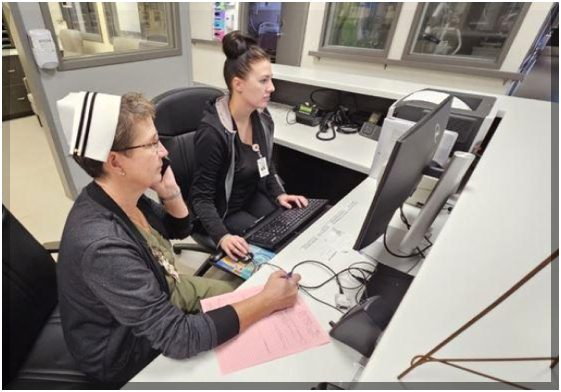
There is a nurse in the building. There is medical equipment. There is a hospital bed. A physician may even be available on a video screen.
But there is no doctor physically standing beside you.
For some rural Albertans, this is already part of their healthcare reality.
On November 24, Alberta Health Services released new results from its Virtual Emergency Physician program, describing its success in reducing disruptions at rural emergency departments.
The findings show that virtual medicine can help maintain access to certain services during physician shortages.
They also raise a larger question about what rural residents can expect from their healthcare system.
Keeping the doors open
Beaverlodge was among the original participants when the virtual emergency physician pilot began in January 2025.
The program allows hospital nurses to consult an off-site doctor when an emergency physician is unavailable locally.
The remote doctor can communicate with patients, request diagnostic investigations, prescribe treatment and help determine whether someone can return home or requires further care elsewhere.
AHS reports that virtual coverage prevented 71 per cent of potential disruptions at participating facilities during the July-to-September period of 2026.
That represents a meaningful benefit for patients whose conditions can be managed through this model.
However, a functioning virtual service and a fully staffed emergency department are not necessarily the same thing.
What happens when the emergency is serious?
Virtual medicine cannot physically perform a medical procedure or replace every aspect of hands-on emergency physician care.
Patients requiring interventions beyond the capabilities of the local healthcare team may need transportation to another hospital.
For Beaverlodge residents, that can mean travelling to Grande Prairie Regional Hospital.
The effectiveness of that arrangement depends on several factors, including the patient's condition, available ambulance resources and the time required to reach appropriate treatment.
The province-wide results released by AHS do not establish how frequently Beaverlodge patients have required emergency transfers or how long those transfers have taken.
Those are important measurements in determining how well the system is serving local residents.
Almost two years later
The original Beaverlodge announcement in January 2025 described virtual medicine as a temporary response to gaps in physician availability.
AHS identified maintaining in-person physician coverage as its priority.
Nearly two years later, interruptions continue.
In its November 17, 2026, advisory, AHS confirmed that it had obtained an on-site physician for one previously announced overnight interruption.
Two other overnight interruptions remained scheduled.
Additional interruptions are now listed for November 28–29 and November 30–December 1.
Virtual coverage provides assistance during some of these periods, but it does not eliminate the underlying shortage of on-site physicians.
When does temporary become permanent?
There is a difference between introducing technology to improve healthcare and relying on technology because existing services cannot be consistently staffed.
AHS describes virtual emergency medicine as a bridging measure, accompanied by efforts to recruit and retain physicians.
Some participating communities have successfully recruited doctors and reduced their dependence on remote coverage.
What remains unclear is when Beaverlodge can expect consistently available in-person emergency physician services.
Is there a recruitment target?
Is there a timeline?
Is there a publicly available plan against which residents can measure progress?
Without those answers, it is difficult to determine how long the bridge is expected to remain necessary.
Does rural Alberta have enough of a political voice?
Alberta's political leaders regularly speak about the importance of rural communities.
Healthcare provides an opportunity to examine how those commitments translate into services between elections.
Do smaller communities receive sufficient attention when provincial healthcare priorities are established?
Does population size influence how healthcare resources are allocated?
Are rural MLAs able to secure the services their constituents identify as priorities?
These are questions rather than established conclusions.
There is no verified evidence in the records examined for this article that Beaverlodge's physician shortages are the result of deliberate electoral calculations.
Geography, recruitment difficulties, staffing requirements and physician retention also need to be examined.
Nevertheless, rural residents are entitled to ask how provincial decisions are made and how the government measures its performance in their communities.
Is rural healthcare also an urban responsibility?
Grande Prairie and its surrounding rural communities are connected through employment, agriculture, education, commerce and healthcare.
A family may live near Hythe, work in Grande Prairie, shop in Beaverlodge and have relatives in Sexsmith.
Municipal boundaries do not necessarily reflect how people live their lives.
When rural healthcare services become unavailable, some of the demand shifts to larger regional hospitals.
That makes rural physician shortages relevant to urban residents, too.
Could Grande Prairie, Beaverlodge, the County of Grande Prairie and other Peace Country municipalities benefit from presenting shared healthcare priorities to the provincial government?
Could chambers of commerce, agricultural organizations and community associations contribute to a regional discussion about physician recruitment and emergency services?
Rather than treating healthcare as a competition between neighbouring communities, a regional approach could examine how their needs intersect.
What should success look like?
The percentage of emergency department disruptions prevented through virtual medicine is useful information.
But it is only one measurement.
A more complete assessment of rural emergency healthcare would include:
- Hours with a physician physically present.
- Hours supported by a virtual physician only.
- Hours without either form of physician coverage.
- The number of patients transferred to other hospitals.
- Ambulance availability and transfer times.
- Patient outcomes and experiences.
- Physician vacancies and recruitment progress.
These figures would allow residents to distinguish improvements in service availability from improvements in the underlying staffing situation.
Continuing the 365-day investigation
The previous investigation, 365 Days of Rural Healthcare — How Often Was a Doctor Available in Beaverlodge?, examined announced interruptions in on-site physician coverage.
Virtual emergency medicine adds another dimension to that investigation.
An emergency department may remain accessible while offering a different level of service from what residents would receive with an on-site physician.
Both measurements matter.
The next stage of the investigation will distinguish between physical physician availability, virtual physician availability and periods when neither was available.
What do rural and urban residents think?
Have you received emergency care through a virtual physician?
Were you satisfied with the experience?
Have you needed to travel to Grande Prairie because a service was unavailable in your community?
Should rural and urban municipalities work together when presenting healthcare concerns to the provincial government?
What commitments would you like your elected representatives to make, and how should progress be measured between elections?
Share your experiences through The Local Wire.
For medical emergencies, call 911. Health Link is available at 811 for non-emergency health information.
Original sources
- Alberta Health Services — Virtual Emergency Physician program reduces rural emergency department closures, November 24, 2026
- Alberta Health Services — Virtual Emergency Physician pilot launches in Beaverlodge, January 20, 2025
- Alberta Health Services — Initial pilot program results, March 31, 2026
- Alberta Health Services — Update on Beaverlodge physician coverage, November 17, 2026
- Alberta Health Services — Current temporary facility service updates