From 75,635 Hectares to Just 70: Why Was the Peace Region's 2026 Wildfire Season So Quiet — and What Comes Next?
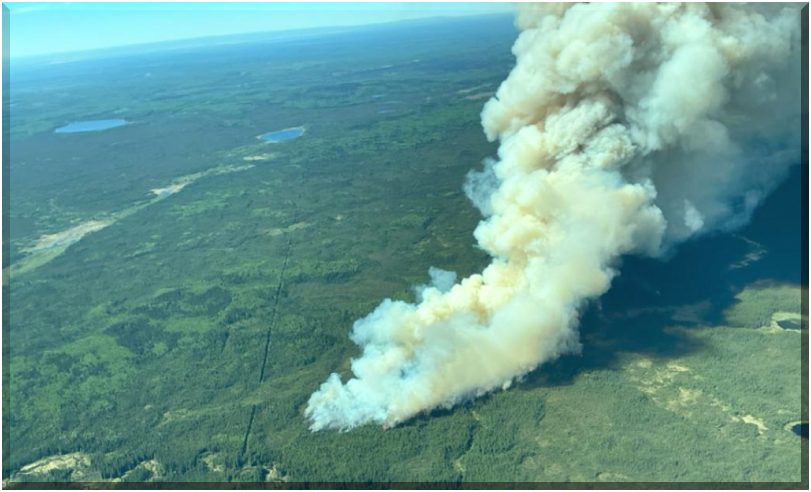
From 75,635 Hectares to Just 70: Why Was the Peace Region's 2026 Wildfire Season So Quiet — and What Comes Next? fter a devastating 2025 wildfire season, the Peace River Forest Area recorded dramatically less land burned in 2026. Rainfall, changing fire conditions and successful suppression all help explain the difference. But Canada's latest climate research points to longer fire seasons and increasing future risks. What does that mean for Peace Country residents, farmers and communities?
What a Difference One Year Can Make
In September 2025, the Peace River Forest Area was under extreme wildfire danger.
Temperatures were high, rainfall was limited, and tens of thousands of hectares had burned.
By September 14, provincial records showed 139 wildfires affecting 75,635 hectares.
A year later, the situation was remarkably different.
Alberta Wildfire's November 2, 2026, update reported 71 fires and only 70 hectares burned throughout the season.
There were no active wildfires in the forest area.
The two figures represent cumulative totals reported at different points in their respective years, but the difference is unmistakable.
The 2026 burned area was less than one-tenth of one per cent of the area reported by September 2025.
That raises three important questions.
Why was 2026 so different?
Does a quiet year challenge the science linking climate change with wildfire risk?
And what should the Peace Country expect in the decades ahead?
Why Were There So Few Large Fires in 2026?
The answer begins with the weather.
Wildfires require three basic ingredients: something to burn, a source of ignition and conditions that allow flames to spread.
Those conditions include temperature, humidity, wind, precipitation and the moisture content of vegetation.
A fire may ignite during a wet period but struggle to spread. The same ignition during prolonged hot, dry and windy conditions can develop into a major emergency.
Rainfall Made a Difference
On June 16, 2026, Alberta Wildfire reported low fire danger in the Peace River Forest Area because of significant precipitation.
At that point, 21 wildfires had burned just 11 hectares.
That provides direct evidence that moisture reduced wildfire danger during part of the season.
But the situation was not consistently safe.
By June 25, increased temperatures had pushed regional fire danger to high.
Eleven wildfires were active, including three burning out of control approximately 30 kilometres east of Manning. Crews, helicopters and airtankers were responding.
By the end of the season, however, the regional total remained only 70 hectares.
These reports show how quickly fire conditions can change even within a relatively quiet year.
They do not establish precisely how much of the annual reduction resulted from rainfall, fewer ignitions, favourable winds or suppression activity.
A complete explanation would require a comparison of regional weather records, fire causes, response times and suppression outcomes.
Firefighting Also Matters
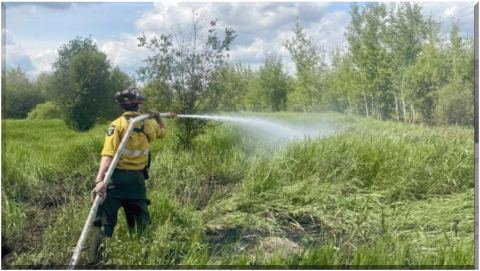
In its year-end update, Alberta credited preparation, firefighters, improved technology and response tools with helping contain many fires before they became large.
That is the provincial government's assessment.
It is reasonable to recognize that successful early suppression can reduce damage.
However, the available report does not quantify how many hectares were saved by firefighting compared with the effect of weather.
Those are different factors, and they should not be confused.
How Much Quieter Was Alberta as a Whole?
The Peace River Forest Area was not alone.
Alberta's November 2 provincial statistics reported:
- 789 wildfires in 2026.
- Approximately 18,000 hectares burned.
- A five-year average of 1,219 wildfires.
- A five-year average of approximately 761,688 hectares burned.
That places the number of 2026 fires about 35 per cent below the five-year average.
The area burned was approximately 98 per cent below the average.
The difference between those two percentages is important.
It demonstrates that the number of fires is not the same as the amount of damage.
A relatively small number of large fires can account for most of the land burned in a severe season.
In a year when most fires remain small, the total area burned can fall dramatically even if hundreds of ignitions still occur.
What Does Climate Change Have to Do With Wildfires?
Climate change does not mean every summer will be hotter, drier or more destructive than the summer before it.
It means the underlying conditions that influence wildfire risk are changing over longer periods.
Canada's Changing Climate Report 2026 concludes that fire seasons have lengthened across much of Canada.
It also identifies increased fire-weather conditions in Alberta and British Columbia.
The report projects that extreme fire weather will become more frequent and intense across most Canadian regions as global temperatures rise.
Why Warming Matters
Warmer air can increase evaporation and accelerate drying of vegetation and soil.
Earlier snowmelt may expose grass, brush and forest litter to drying conditions sooner in the year.
Longer periods of heat and drought can make forests more combustible.
Strong winds can then spread flames and carry burning embers over considerable distances.
These conditions do not automatically create a wildfire.
An ignition source is still required.
But they can increase the likelihood that an ignition becomes a serious fire.
Does 2026 Disprove Climate Change?
No.
A single quiet season cannot establish that long-term wildfire risk is decreasing.
Likewise, a single destructive season cannot, on its own, establish how much climate change contributed to a particular fire.
Scientists examine patterns across decades, including temperature, drought, fire-weather conditions, fire-season length and area burned.
The distinction is similar to the difference between weather and climate.
Weather helps explain what happened this year.
Climate research examines how the probability and severity of those conditions are changing over time.
A warming climate can still produce wet summers.
And those wet summers can still provide welcome relief from wildfire danger.
What Does the Historical Evidence Show?
Alberta's own environmental reporting provides useful perspective.
The province estimates the following wildfire areas burned over successive decades:
| Period | Alberta area burned |
|---|---|
| 1995–2004 | 2,630,736 hectares |
| 2005–2014 | 2,660,820 hectares |
| 2015–2024 | 6,753,759 hectares |
The most recent decade recorded substantially more land burned than either of the preceding periods.
However, Alberta also cautions that the extraordinary 2023 wildfire season heavily influenced the latest decade's total.
That qualification matters.
A decade with one exceptionally destructive year can look very different from a decade with several moderate seasons.
The figures nevertheless provide a reason to examine long-term risk rather than judging the future by 2026 alone.
These are province-wide statistics, not a historical series specifically for the Peace River Forest Area.
What About Farmers and Rural Property Owners?
Wildfires are not only a forestry issue.
They can threaten farm buildings, crops, livestock, equipment, fencing, stored feed and rural transportation routes.
They can also interrupt agricultural operations when smoke reduces visibility or evacuation orders restrict access.
The Peace River Forest Area has a particular connection to agricultural fire prevention.
In its October 2026 updates, Alberta Wildfire stated that agricultural activity was the primary cause of human-related wildfires in the forest area.
It reported that improper burning, heavy equipment and off-highway vehicles accounted for 51 per cent of human-caused wildfires in the region during 2025.
That figure does not mean 51 per cent of all wildfires were caused by farming.
It refers to a group of causes within the human-caused category.
The distinction is important.
A hot bearing, accumulated crop residue, an equipment malfunction or an escaped burn can create a serious hazard when vegetation is dry.
Keeping firefighting equipment available, maintaining machinery and monitoring burning conditions remain practical precautions even after a quiet season.
What Did the 2026 Wildfire Season Cost Taxpayers?
This is one of the most important unanswered questions.
Fewer hectares burned do not necessarily mean wildfire spending fell by the same proportion.
Fire protection requires substantial preparation before an emergency occurs.
That includes trained personnel, aircraft arrangements, equipment, monitoring systems, communications, prevention programs and the ability to deploy resources rapidly.
Those costs do not disappear simply because fewer large fires occur.
Alberta also reported that some firefighters were assigned to prevention projects or deployed elsewhere during the quieter 2026 season.
To determine the financial outcome, several figures are needed:
- Alberta's total 2026 wildfire preparedness and suppression spending.
- The comparable amount spent in 2025.
- Costs specifically attributable to the Peace River Forest Area.
- Spending on aircraft, equipment, personnel and prevention.
- Any costs recovered from other governments or organizations.
- Municipal expenses and any outstanding recovery claims.
The published regional wildfire update does not provide those figures.
It would therefore be misleading to estimate a taxpayer saving from hectares burned alone.
What Will Wildfires Look Like in the Future?
The latest federal climate assessment projects longer wildfire seasons and more extreme fire-weather conditions as global temperatures increase.
That does not mean every future year will be worse than 2025.
There will still be wet years, cooler periods and seasons when few fires escape initial containment.
But the conditions capable of producing severe fires are expected to become more common.
The future also depends on factors beyond climate.
Prevention
Reducing preventable ignitions can make a difference, particularly where human activity is a major source of fires.
Forest and Land Management
Vegetation management, fuel reduction and carefully planned treatment projects may help reduce exposure in selected locations.
Community Preparedness
FireSmart measures, evacuation planning and reliable emergency communications can reduce risks to people and property.
Firefighting Capacity
Early detection, trained crews, aircraft and effective coordination remain important when dangerous conditions develop.
Development Decisions
As more homes, businesses and infrastructure are built near forests and grasslands, the number of properties exposed to wildfire can increase even without a corresponding increase in fire frequency.
The central question is therefore not simply how many fires will occur.
It is how vulnerable communities will be when a serious fire does occur.
A Quiet Season Is Good News — Not a Guarantee
The 2026 wildfire season brought welcome relief to much of Alberta.
For the Peace River Forest Area, the contrast with 2025 was extraordinary.
Rainfall helped reduce danger during parts of the season, and the province reports that crews successfully contained many fires before they grew.
But climate science and local seasonal statistics answer different questions.
The 2026 figures describe what happened during one relatively quiet year.
The climate research describes how the underlying risk is changing over time.
Both can be true.
The challenge for the Peace Country is to use quieter years to strengthen preparedness without assuming the danger has permanently passed.
The Story Isn't Over
Several questions remain unanswered:
- What were the final causes of the 71 wildfires recorded in the Peace River Forest Area during 2026?
- How did monthly rainfall, drought conditions and lightning activity compare with 2025?
- What did provincial wildfire operations cost in the Peace River Forest Area in each year?
- How much did municipalities spend on prevention, emergency preparedness and response?
- What improvements are being made to protect rural communities, farms and critical infrastructure?
- How are provincial climate projections being incorporated into future wildfire planning?
The official wildfire season ended October 31, but Alberta warns that fires can still start outside the designated season.
Swan City Speaks: What Do You Think?
- Did you notice a difference in wildfire smoke or fire danger around your community in 2026?
- Do