100 Years of Winnie-the-Pooh: A Little Bear Who Taught the World a Lot About Life
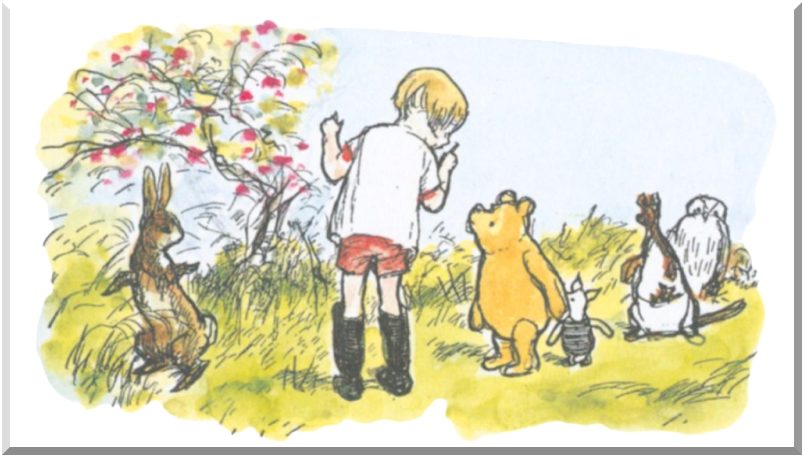
Some stories never grow old. And some friendships last forever.
In 2026, a much-loved little bear with a fondness for honey celebrates a remarkable milestone: 100 years of Winnie-the-Pooh.
For many of us, Winnie-the-Pooh was part of childhood. We grew up with the books, the stories, and the adventures of Pooh Bear, Christopher Robin, Piglet, Eeyore, Tigger, Rabbit, Owl, Kanga and Roo. Whether we listened to the stories at bedtime, read them ourselves, or watched the animated adventures, the Hundred Acre Wood became a familiar and comforting place.
There was something special about those stories. They didn’t need elaborate plots, superheroes, or extraordinary adventures. Sometimes, all it took was a little bear looking for honey, a friend needing encouragement, or a group of friends simply spending time together.
And perhaps that was the magic.
First introduced to the world in A.A. Milne’s book Winnie-the-Pooh, published on October 14, 1926, the beloved bear was brought to life through the beautiful illustrations of E.H. Shepard. But the story of how Pooh came to be is almost as charming as the adventures themselves.
A little boy, a teddy bear and a Canadian connection
The inspiration for Winnie-the-Pooh began with Milne’s son, Christopher Robin, who received a teddy bear for his first birthday in 1921. Originally named Edward Bear, the teddy became his constant companion. Christopher also had several other stuffed animals, including Piglet, Eeyore, Kanga, Roo and Tigger, which would eventually find their way into his father’s stories.
But the name Winnie-the-Pooh has a particularly special Canadian connection.
During the First World War, a Canadian veterinarian and soldier named Lieutenant Harry Colebourn purchased an orphaned black bear cub in White River, Ontario, in 1914. He named her Winnipeg, after his hometown, and affectionately called her Winnie.
When Colebourn was sent overseas, he left Winnie in the care of the London Zoo, where she quickly became a favourite attraction.
Young Christopher Robin visited the zoo with his father and became so fond of the bear that he renamed his teddy bear Winnie in her honour. The name Pooh came from a swan Christopher had encountered and named Pooh.
And so, through a Canadian bear, a little boy’s beloved toys, and a father’s imagination, one of the world’s most recognizable literary characters was born.
The Hundred Acre Wood itself was inspired by Ashdown Forest in Sussex, England, where the Milne family enjoyed spending time.
What started with a little boy’s love for his stuffed animals became a collection of stories that would eventually capture the hearts of generations around the world
More than just a children’s story
But Pooh’s legacy goes far beyond children’s entertainment.
As adults, many of us look back at those stories and discover lessons we might not have fully appreciated when we were young. Pooh taught us about friendship, loyalty, patience, acceptance, grief, and being there for one another. Piglet reminded us that even the smallest among us can be brave. Eeyore showed us that friends should be loved even on their difficult days. Tigger reminded us to have fun and embrace our individuality, and Christopher Robin showed us the importance of imagination and holding on to the wonder of childhood.
When my dad was killed by an impaired driver, I was comforted by one of the stories written back in 1977 titled Pooh's Grand Adventure: The Search for Christopher Robin. "If ever there is a tomorrow when we're not together... there is something you must always remember. You are braver than you believe, stronger than you seem, and smarter than you think." I still hold onto and find comfort in that quote today.
Pooh himself had a remarkable way of looking at the world. He wasn’t always the smartest, the fastest, or the most adventurous. He didn’t have all the answers. But he had a big heart, a loyal group of friends, and an appreciation for life’s simple pleasures.
Perhaps one of the greatest lessons from the Hundred Acre Wood is that we don’t have to be extraordinary to make a difference in someone’s life. Sometimes, simply showing up, listening, sharing a little kindness, or sitting beside a friend is more than enough.
A hundred years later, the world has changed tremendously. Technology has transformed how children learn, play, and entertain themselves. Yet the stories of a little bear and his friends continue to find their way into homes and hearts around the world.
There is something comforting about knowing that new generations are still discovering Pooh, just as generations before them did.
Maybe that is the true secret to his longevity. Winnie-the-Pooh never tried to teach us how to be perfect. He simply reminded us how important it is to be kind, to cherish our friendships, to find joy in the little things, and to make room for the people who matter.
One hundred years later, Pooh Bear is still reminding us of something we could all use a little more of: a little kindness, a little laughter, and a whole lot of love.
As children, we visited the Hundred Acre Wood through the pages of a book. We laughed at Pooh’s adventures, worried about Piglet, smiled at Tigger’s antics, and learned to love each of the characters for who they were. As adults, perhaps we realize that the wisdom we needed was there on those pages all along.
We grew up, but the lessons remained.
And maybe that’s the real magic of Winnie-the-Pooh. The stories didn’t just give us wonderful childhood memories; they gave us little reminders of how to live, how to love, and how to treat one another.
Happy 100th birthday, Winnie-the-Pooh. Thank you for a century of stories, smiles, friendships, and reminders that the simplest things in life are often the most important.