Could Grande Cache Have Taken a Different Road? Work Camp Debate Reopens Questions About the Community's Economic Past
Nearly eight years after Grande Cache ceased to be an independent town, a discussion about industrial work camps is raising broader questions about the community's economic history.
Local hotel, motel and retail operators are concerned that nearby industrial activity may not be generating enough economic benefits within Grande Cache itself.
However, community reactions to those concerns demonstrate that the issue is more complicated than simply asking industrial companies to accommodate their workers in town.
Distance, worker safety, operating costs and the relationship between industry and the community all deserve consideration.
So does Grande Cache's history.
The Workers' Side of the Debate
While local businesses would benefit from additional customers, community reactions have highlighted practical considerations for industrial workers.
Among the concerns raised are lengthy journeys between Grande Cache and remote work sites, extended working days and the benefits of having accommodation close to industrial operations.
Consider a worker completing a 12-hour shift who must travel two hours in each direction.
Between work and commuting, 16 hours of the day would already be accounted for.
A 14-hour shift under the same circumstances would leave only six hours for sleeping, eating, showering and other personal needs.
These are illustrative scenarios rather than verified travel times for specific Grande Cache industrial projects.
Nevertheless, they demonstrate why accommodation close to work sites can be important to workers and employers.
Others have identified potential savings in living-out allowances and the advantages of structured camp environments.
For industrial companies, workforce accommodation is not solely an economic decision. It can also involve fatigue management, transportation requirements and operational safety.
Why Did Grande Cache Lose Its Town Status?
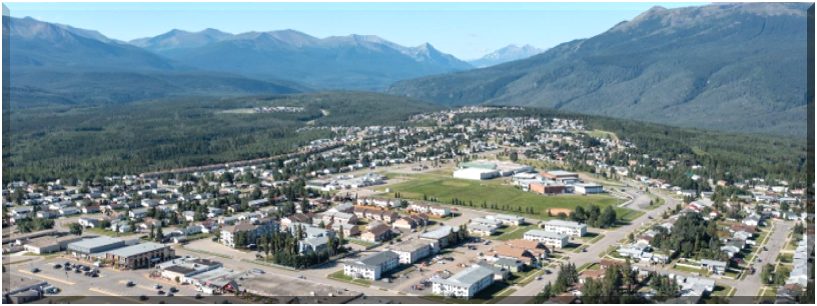
Grande Cache was developed during the late 1960s as a resource-based community in the foothills of the Rocky Mountains.
Coal mining became central to its economy, supporting employment, businesses and municipal revenues.
But dependence on resource industries also exposed the community to fluctuations in commodity prices and investment.
The closure of mining operations in 2015 eliminated hundreds of jobs.
Families moved away, businesses faced reduced demand and the municipality encountered growing financial pressure.
Historical population figures show that Grande Cache declined from 4,319 residents in 2012 to 3,571 in 2017.
That represents a decrease of 748 residents, or approximately 17 per cent.
In June 2016, Grande Cache council requested a municipal viability review.
The review examined whether the community could continue operating as an independent municipality or whether dissolution and integration into the surrounding Municipal District of Greenview offered a more sustainable alternative.
The Documents Behind the Decision
The September 2018 Grande Cache Viability Review Report identified significant financial pressures.
The municipality faced difficulties generating enough revenue to maintain services and infrastructure.
Major infrastructure projects required outside financial assistance, while economic uncertainty threatened future municipal revenues.
These were not simply questions about whether local businesses were doing well.
They were questions about whether the municipality itself could continue meeting its financial obligations.
Grande Cache also provided services to the surrounding region, creating challenges for a relatively small municipality with a limited tax base.
The Community Voted to Dissolve
In September 2018, residents were asked whether Grande Cache should remain an incorporated town or become part of Greenview.
Of the 1,097 valid ballots, 1,065 supported dissolution.
Approximately 97.1 per cent of participating voters supported joining the surrounding municipality.
Herb Castle was mayor at the time.
On January 1, 2019, Grande Cache officially became part of the Municipal District of Greenview.
The community remained, but its independent municipal government ceased to exist.
What Greenview Inherited
A subsequent Rural Municipalities of Alberta study examining municipal dissolutions provides further insight into the transition.
Its Grande Cache case study describes difficulties integrating municipal operations, maintaining infrastructure and managing the financial responsibilities inherited through dissolution.
It also identifies challenges associated with historical record keeping and administrative capacity.
Greenview took on responsibilities for an urban community with service requirements that differed from those of many rural areas.
The study raises wider questions about how municipalities maintain infrastructure before dissolution and how the resulting financial obligations are distributed afterward.
Those issues remain relevant whenever residents discuss municipal restructuring elsewhere in Alberta.
Could Economic Diversification Have Changed the Outcome?
Grande Cache is situated near significant forestry, mining and oil and gas activity.
However, industrial activity in the surrounding region does not automatically translate into business revenue or municipal taxation within the community.
An oilfield operation located outside the former town boundaries might generate property tax revenue for the surrounding municipality, while some workers could purchase accommodation, meals and other services inside Grande Cache.
The economic relationship between industry and the community is therefore important.
Consider a hypothetical example in which 100 industrial workers each spent 200 nights annually in Grande Cache.
At an assumed accommodation cost of $125 per night, that would generate $2.5 million in annual accommodation spending.
Another $50 per worker per day for meals and other purchases could add $1 million.
Together, that represents $3.5 million in potential annual gross business spending.
These are illustrative figures, not documented historical losses or municipal tax revenues.
The actual economic opportunity would depend on workforce numbers, available accommodation, project locations and the ability of businesses to meet industrial requirements.
There is no established evidence that different industrial accommodation arrangements would have prevented Grande Cache's dissolution.
Nevertheless, historical business development and economic diversification policies deserve examination when considering the community's future.
Were Opportunities Missed?
The current discussion provides an opportunity to revisit Grande Cache's historical relationship with surrounding industries.
Did previous councils actively pursue opportunities to accommodate industrial workers?
Were there discussions with employers about using local hotels, restaurants and suppliers?
Were municipal development policies supportive of industrial accommodation?
Did practical considerations, such as distance and transportation costs, prevent those opportunities from developing?
Historical council minutes, development decisions, business records and accounts from former accommodation operators could help answer these questions.
Understanding what happened in the past could help identify opportunities that exist today.
Can Camps and Local Businesses Work Together?
The debate does not necessarily require a choice between closing industrial camps and accepting that all associated spending will remain outside Grande Cache.
There may be opportunities for local businesses to provide food, maintenance, transportation, laundry, equipment, supplies and other services to industrial operations.
Hotels could also accommodate workers during portions of projects where travel distances make that practical.
Industrial companies may have different requirements depending on the location, duration and nature of their operations.
A cooperative approach could potentially generate additional local economic activity without requiring workers to undertake excessive daily travel.
Have Your Say
Former Grande Cache residents, business owners, industrial workers and municipal officials may hold valuable information about the community's historical relationship with the oil and gas industry.
Particularly useful would be firsthand accounts supported by dates, correspondence, council decisions or other historical records.
Residents with information about Grande Cache's economic history are encouraged to share their experiences through The Local Wire.
https://swancitynow.com/wire?region=greenview
The Story Isn't Over
Grande Cache's current work camp debate raises several questions extending beyond accommodation:
- What economic development strategies were pursued by former councils before dissolution?
- Did municipal policies influence where industrial workers were accommodated?
- How much business did Grande Cache historically receive from surrounding oilfield operations?
- What financial and infrastructure obligations did Greenview inherit in 2019?
- How much has Greenview invested in Grande Cache since dissolution?
- Could stronger relationships between industrial operators and local businesses create new economic opportunities?
The documented reasons for Grande Cache's dissolution include economic decline, revenue pressures and infrastructure requirements.
Whether additional economic opportunities could have changed that outcome remains unanswered.
Understanding those historical decisions could help the community determine how it participates in the regional economy going forward.
Previous Coverage
Grande Cache Businesses Question Whether Nearby Work Camps Are Keeping Money Out of Town
Original Sources and References
Town of Grande Cache — September 2018 Viability Review Report:
https://mdgreenview.ab.ca/wp-content/uploads/2020/12/ViabilityReviewReportSeptember2018.pdf
Rural Municipalities of Alberta — Post-Dissolution Impacts Study, Grande Cache case study, page 38:
https://rmalberta.com/wp-content/uploads/2024/07/RMA-Post-Dissolution-Study-Summary-Report.pdf
Alberta Municipal Affairs — 2018–2019 Annual Report:
Historical reporting — September 2018 dissolution vote:
https://globalnews.ca/news/4488829/grande-cache-vote-dissolve-town/