Alberta's New Licence Plates Are Here — But Do You Need One? And Could Plates Eventually Disappear?
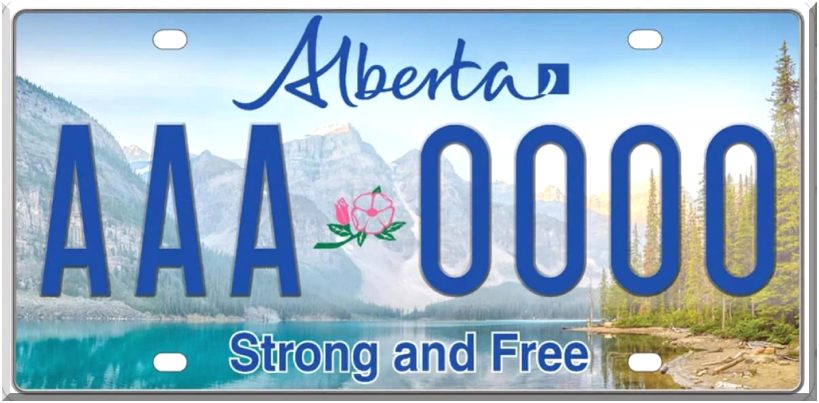
After more than 40 years, Alberta is introducing a new license plate design. But as technology changes how vehicles are identified, could this be one of the last traditional plate redesigns?
First, the Good News: You Do Not Need a New Plate
If your Alberta license plate is still in good condition, you can keep it.
The provincial government's new design does not mean every driver must visit a registry office or pay for a replacement.
For drivers who want the new Moraine Lake design, the province announced two options:
- Keep your existing plate: No replacement is required if it remains valid and readable.
- Request the new design: The province announced a $28 fee for voluntary early replacement.
- Replace it at registration renewal: The province said drivers could obtain the new design without an additional plate charge when renewing their registration.
Drivers should confirm current fees and availability with their registry agent.
The new design is being introduced in November 2026, replacing a basic design that has been familiar to Alberta motorists since 1984.
Government of Alberta — New Licence Plate Design
What Does the New Plate Look Like?
The new plate features Moraine Lake, one of Alberta's best-known mountain landscapes.
The design includes blue lettering, a wild rose and the slogan "Strong and Free."
The winning design was selected through a public consultation involving more than 240,000 votes across three rounds.
The change also marks a departure from the familiar "Wild Rose Country" slogan that has appeared on Alberta plates for more than half a century.
The new slogan reflects Alberta's official provincial motto, Fortis et Liber, meaning "Strong and Free."
Alberta's Licence Plates Have a Surprisingly Long History
When automobiles first appeared in Alberta, license plates looked nothing like those we recognize today.
In 1906, Alberta introduced vehicle registration requirements.
But the province did not initially manufacture the plates.
Motorists were assigned registration numbers and had to display those numbers themselves.
Early identification plates could be made from materials such as wood, metal or leather.
In 1912, Alberta began issuing government-manufactured license plates.
Over the following decades, plate designs changed frequently, sometimes almost every year.
Colours, lettering, numbering systems and materials evolved as automobiles became a common part of everyday life.
From Metal Numbers to Wild Rose Country
A few important milestones help tell the story.
1912 — Government-issued plates begin
Alberta takes responsibility for producing license plates rather than leaving motorists to make their own.
1967 — Reflective plates
Reflective materials improve nighttime visibility, helping other drivers and police identify vehicles.
1973 — Wild Rose Country
The familiar slogan begins appearing on Alberta plates.
1975 — Permanent plates
Alberta moves away from regularly replacing the entire plate, allowing drivers to retain plates for longer periods.
1984 — The familiar red-and-white design
The basic plate design that Albertans have recognized for more than four decades is introduced.
1992 — Front plates disappear
Alberta stops requiring a front license plate on ordinary passenger vehicles.
2021 — Registration stickers disappear
Alberta eliminates the familiar registration expiry stickers.
Police can verify registration information electronically rather than relying on a coloured sticker.
2026 — Moraine Lake and Strong and Free
The province introduces its first major redesign in more than 40 years.
Each change reflects a combination of technology, cost, public preferences and government policy.
The Most Important Change May Have Happened in 2021
When Alberta eliminated registration stickers, something significant happened.
For generations, police officers could look at a plate and its sticker to see when a vehicle's registration was supposed to expire.
Today, electronic records provide that information.
The licence plate still identifies the vehicle, but the registration details are stored in a computer database.
That raises an interesting question.
If registration can already be verified electronically, how long will we continue needing a physical metal plate?
Technology Is Already Changing How Vehicles Are Identified
Modern policing and transportation systems increasingly use technology that would have seemed like science fiction only a few decades ago.
One example is automatic license plate recognition, commonly called ALPR.
These systems use cameras and software to read license plate numbers and compare them with information in authorized databases.
Depending on the system and its legal authority, the technology can help identify vehicles associated with stolen-vehicle reports, registration issues or other police investigations.
Instead of manually entering every plate number, an officer can receive information from an automated system.
However, the technology still relies on the vehicle displaying a readable license plate.
It is a step toward automated identification, not the elimination of plates.
Could Vehicles Identify Themselves Electronically?
Modern vehicles already contain sophisticated electronic systems.
They have vehicle identification numbers, onboard computers and, in many cases, wireless communication capabilities.
Some vehicles can transmit information to manufacturers, emergency services or connected applications.
Future identification systems could potentially use secure electronic credentials rather than relying exclusively on numbers printed on metal.
Imagine a system in which a vehicle could electronically confirm:
- Its registered vehicle identity.
- Whether its registration is current.
- Whether required inspections have been completed.
- Whether it is authorized to operate in a particular location.
Technologies such as radio-frequency identification (RFID), secure digital certificates and connected-vehicle communications could play roles in such systems.
But there is an important distinction.
Having the technology to identify a vehicle electronically does not mean governments have approved replacing physical license plates.
Electronic identification would require common standards, secure systems, reliable communications and new legislation.
Digital License Plates Already Exist
Some American jurisdictions have authorized electronic license plates.
Instead of embossed or printed metal, these use electronic displays to show a vehicle's registration number.
Certain systems can update displayed information electronically.
These plates demonstrate that the familiar metal plate is no longer the only possible method of displaying a vehicle's identity.
But digital plates still perform the basic function of traditional plates: they display an identifier that can be read by people and cameras.
They also introduce new questions.
What happens if the display fails?
Who pays for the electronics?
Could the plate be hacked?
What happens if a vehicle is sold?
And how long will an electronic plate survive Canadian winter conditions?
For Peace Country motorists dealing with road salt, gravel, freezing temperatures and long rural journeys, durability would be particularly important.
Could We Eventually Have No License Plates at All?
It is technologically conceivable that future vehicles could identify themselves through secure wireless systems.
But eliminating visible plates would create practical challenges.
A police officer, parking enforcement worker or witness can currently read a plate without specialized electronic equipment.
A person reporting a hit-and-run can record a visible plate number.
A parking lot attendant can identify a vehicle without accessing a government database.
And older vehicles may not have the electronic capabilities required by a new system.
A fully electronic identification system would also have to work when wireless networks fail.
For these reasons, physical license plates could remain useful long after electronic vehicle identification becomes more sophisticated.
The more likely near-term development is a combination of visible plates and increasingly advanced electronic verification.
There is no announced Alberta plan to eliminate physical license plates.
The Other Question: What About Privacy?
As vehicle identification technology becomes more powerful, privacy becomes increasingly important.
A traditional license plate allows a vehicle to be identified when someone sees it.
Automated camera networks can potentially record where and when a vehicle was observed.
Connected-vehicle systems could create additional records depending on what information is collected and transmitted.
These technologies may help police investigate stolen vehicles and other offences.
But they also raise questions about surveillance, data retention, cybersecurity and who is permitted to access vehicle information.
Any future system that replaces or supplements license plates would need clear rules governing those issues.
Technology can make identification easier.
Whether it should make continuous tracking easier is a separate public-policy question.
From Wooden Plates to Wireless Vehicles
Alberta's first motorists sometimes had to make their own identification plates.
More than a century later, vehicles can communicate electronically, police can check registration databases and some jurisdictions have experimented with digital displays.
The new Moraine Lake plate is another chapter in that history.
It may remain on Alberta vehicles for decades.
Or future technology may eventually make the traditional metal plate seem as outdated as the wooden identification plates of 1906.
For now, however, the message for Alberta drivers is simple.
If your existing license plate is valid and readable, you do not need to replace it simply because a new design is available.
The Story Isn't Over
The introduction of the new plates leaves several practical questions:
- What will the final production and implementation costs be?
- How quickly will registry offices receive the new plates?
- Will future identification technology reduce costs or introduce new fees?
- What privacy safeguards would be necessary if electronic vehicle identification expands?
The answers will help determine whether future changes benefit motorists, governments or both.
Swan City Speaks: What Do You Think?
-
Do you prefer the new Moraine Lake license plate or the traditional Wild Rose Country design?
-
Would you pay $28 to get the new plate, or keep your existing one?
-
Would you support electronic vehicle identification if it eventually eliminated physical plates, or would privacy concerns outweigh the convenience?
Share your thoughts in the comments. Your opinion matters.
Sources and Further Reading
- Government of Alberta — Pick a Plate
- Government of Alberta — License Plates
- Alberta Motor Association — 100 Years of Alberta License Plates
- American Association of Motor Vehicle Administrators — License Plate Reader Best Practices
- International Association of Chiefs of Police — Automated License Plate Recognition