Bears in the Peace Country: How Many Are Out There, and How Dangerous Are They?
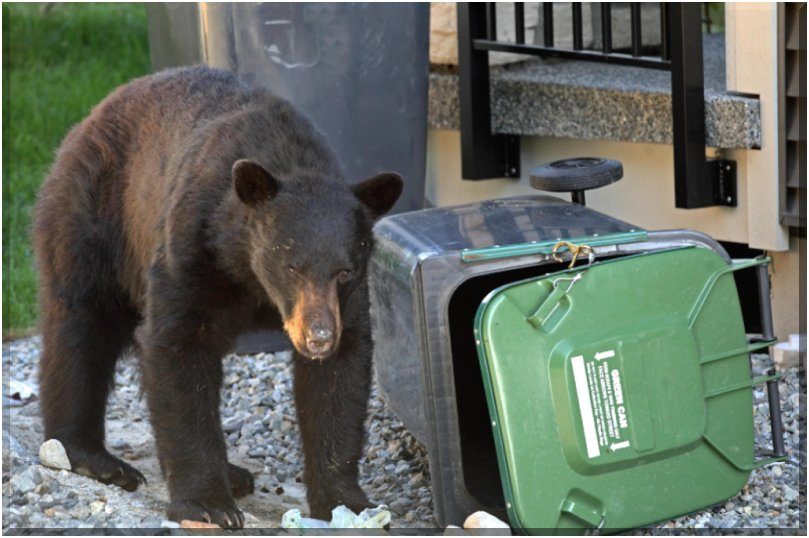
Alberta Fish and Wildlife is warning residents to remove food attractants before winter. But how many bears actually live around Grande Prairie, where have attacks occurred, and are encounters becoming more common?
Bears Are Still Looking for Their Last Meals Before Winter
Winter may be approaching, but that does not mean every bear has entered its den.
Alberta Fish and Wildlife issued a reminder on November 5 that bears remain active while searching for high-calorie foods before hibernation.
That search can bring them into residential neighbourhoods, rural subdivisions, farms and campsites.
For people living in the Peace Country, this is not an unfamiliar situation.
Our region contains extensive forests, river valleys, agricultural land and communities built alongside wildlife habitat.
Black bears and grizzly bears have long occupied parts of this landscape.
But as residential development expands into formerly undeveloped areas, opportunities for people and bears to encounter one another can increase.
The province's latest warning is preventive. It does not identify a new November bear attack in the Grande Prairie area.
Nevertheless, the region has experienced serious encounters in the past.
How Many Bears Live in the Peace Country?
This is a surprisingly difficult question to answer.
Alberta has population estimates for bears, but there is no verified, current count covering the entire Peace Country.
The province's black bear management information includes an estimate of approximately 40,000 black bears across Alberta in 1993.
That is a historical provincial estimate, not a current population count.
Black bears are widespread in Alberta and occupy approximately 74% of the province's land area.
The situation with grizzlies is different.
A federal wildlife assessment published in 2025 estimated Alberta's grizzly population at approximately 791 to 1,319 bears, using information collected over different periods.
That estimate covers Alberta, not just the Peace Country.
Grizzlies occur primarily in western and northern Alberta, including parts of the foothills and forested areas connected to our region.
The Peace Country contains habitat for both species.
However, without updated regional population surveys, we cannot responsibly estimate how many black bears or grizzlies live within a particular distance of Grande Prairie.
What we know is that bears are present. What we do not know is their exact current regional population.
That is an important distinction.
What About Bear Density?
Alberta's historical research shows that bear populations vary dramatically according to habitat.
Some areas can support many bears.
Others support relatively few.
Historical studies reported black bear densities ranging from eight bears per 1,000 square kilometres in Banff National Park to 370 per 1,000 square kilometres near Cold Lake.
For grizzlies, older research identified approximately seven bears per 1,000 square kilometres in the South Wapiti study area.
These are historical research estimates from specific locations and periods.
They should not be applied across the entire Peace Country to produce a modern population count.
Bear numbers depend on available food, habitat, reproductive success, human activity and other environmental conditions.
A densely forested valley may support a different population than surrounding farmland.
That is why regional wildlife surveys matter.
Where Have Bears Been a Problem Around Grande Prairie?
Alberta's Grande Prairie BearSmart program provides useful local information.
In 2011, the province completed a bear hazard assessment examining human-bear conflicts in the greater Grande Prairie area.
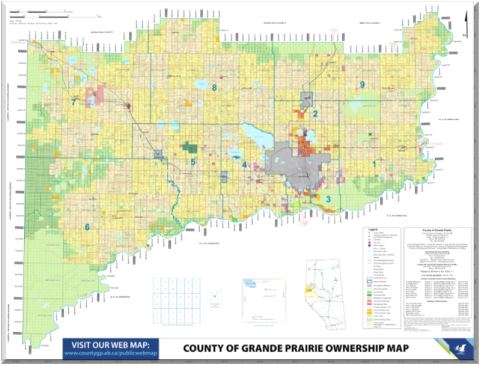
The assessment identified three areas of particular concern.
1. South of Grande Prairie and the Wapiti River
Rural subdivisions and smaller communities near the Wapiti River experienced elevated numbers of black bear encounters.
Garbage was identified as a major attractant.
The Wapiti River corridor provides natural habitat and travel routes for wildlife.
Residential properties built near these corridors can bring people and bears into closer contact.
2. Sturgeon Lake
The Sturgeon Lake area was another location where black bear encounters were relatively common.
Again, garbage was identified as a major contributing factor.
This is important because it demonstrates that bear encounters are not always caused by people entering remote wilderness.
Sometimes bears are attracted directly into communities.
3. Goodfare and Rio Grande
The province identified higher levels of grizzly bear encounters around Goodfare and Rio Grande.
Agricultural attractants, particularly dead livestock disposal sites, were a significant concern.
This is a different problem from bears entering residential garbage bins.
Farms and ranches may have animal feed, grain, livestock carcasses and other materials that can attract wildlife.
The findings are from 2011 and should not be presented as a current ranking of dangerous locations.
However, they provide a useful historical picture of how human activities can contribute to bear conflicts.
A Confirmed Grizzly Attack North of Demmitt
The danger is not entirely theoretical.
On July 18, 2025, MyGrandePrairieNow reported that Alberta Fish and Wildlife Enforcement Services had temporarily closed an area north of Demmitt following a grizzly bear attack.
The closure was a public-safety response to the incident.
The available report confirms an attack occurred, but this review did not establish the full circumstances, the extent of any injuries or the ultimate outcome of the investigation.
Those details should be confirmed before making further claims about the incident.
Nevertheless, it is a documented example of a serious bear encounter in the Peace Country.
It also demonstrates why wildlife officers sometimes restrict public access to an area following an attack.
Their priority is protecting people while assessing the circumstances and the animal involved.
Bear Sightings Around Grande Prairie
Other documented incidents have involved bears appearing near residential or recreational areas.
In October 2024, a bear was reported in the Sprucewood Park subdivision south of Grande Prairie along Highway 40.
In September 2018, the Wapiti Nordic Ski Club area was temporarily closed following reports involving a grizzly bear.
O'Brien Provincial Park was also temporarily closed in August 2018 after a grizzly was observed feeding on a moose carcass.
The bear was subsequently captured, and the park reopened.
These examples illustrate an important point.
A bear sighting is not the same as a bear attack.
Most encounters do not result in injuries.
But when bears become accustomed to food sources near people, the potential for conflict increases.
Five Bears Relocated Around Peace River
A particularly revealing example occurred in the Town of Peace River during September 2025.
According to the Town, Alberta Fish and Wildlife officers captured and relocated five black bears in approximately a week and a half.
The bears had been found in areas including Lower and Upper West Peace, The Pines, Saddleback and Shaftesbury.
The Town explained that bears naturally travel through the Peace River valley.
During the fall, they search for food wherever it is available.
That includes natural food sources such as berries and fruit trees.
But it can also include garbage, pet food, compost and barbecue residue.
The municipality urged residents to secure garbage and remove attractants.
This example shows how several bears can enter populated areas within a relatively short period.
It does not mean those bears attacked anyone.
The reported response was capture and relocation.
Are Bear Attacks Increasing?
This is another question that deserves a careful answer.
Bear sightings and reports of human-bear conflicts do not automatically indicate an increase in attacks.
An encounter may involve a bear crossing a road, entering a yard or approaching a garbage container.
An attack involves physical contact resulting from aggressive or defensive behaviour.
These events should be counted separately.
Alberta describes serious bear attacks as rare.
However, attacks do occur.
In September 2024, a grizzly attacked and seriously injured a person near Madden, northwest of Calgary.
Officials subsequently linked that bear through DNA evidence to a fatal attack near Waiparous in 2021.
In August 2025, a man fishing along the St. Mary River near Cardston was injured in a grizzly attack.
Those incidents demonstrate the potential danger, but they occurred outside the Peace Country.
They should not be counted as local attacks.
For our region, the July 2025 Demmitt incident is a confirmed example.
A reliable trend would require annual figures for attacks, injuries, encounters and wildlife responses across the same geographic area.
Those figures were not established during this review.
We therefore cannot conclude that bear attacks in the Peace Country are increasing or decreasing.
Why Are Bears More Active Around Food in the Fall?
Bears experience a period of intense feeding before hibernation known as hyperphagia.
During this period, they consume large amounts of food to build fat reserves.
Those reserves help sustain them through winter.
Natural food sources can include berries, roots, insects and other available vegetation or animal material.
But bears are opportunistic feeders.
An unsecured garbage container may offer an easier meal than searching through the forest.
A fruit tree can provide concentrated calories.
Grain, livestock feed or animal carcasses may also attract bears.
Once a bear learns that a particular property provides reliable food, it may return.
This can create problems for both residents and the animal.
A bear that repeatedly approaches people for food may eventually require intervention by wildlife officers.
Relocation is not always successful, and some dangerous situations can result in a bear being destroyed.
Preventing access to food is therefore not only about protecting people.
It can also help protect bears.
Are Black Bears or Grizzlies More Dangerous?
Both species are powerful wild animals capable of causing serious injury.
Black bears are generally smaller than grizzlies, although individual sizes vary.
Grizzlies are often associated with defensive encounters involving cubs, food or sudden close contact.
Black bears may also act defensively or aggressively.
Neither species should be approached, fed or treated as harmless.
It is also important not to identify a bear solely by its colour.
Black bears can have brown or cinnamon-coloured coats.
Grizzlies can vary in colour as well.
Body shape, shoulder structure, facial profile and other characteristics are more useful for identification.
Regardless of species, the safest approach is to give bears space and avoid attracting them to human activity.
What Should Residents Do?
Alberta Fish and Wildlife recommends several practical steps.
Secure garbage
Keep household waste and recyclable containers in bear-resistant storage.
Avoid leaving garbage accessible overnight.
Remove bird feeders
Birdseed can attract bears.
The province recommends removing feeders during the active bear season, generally April through November.
Clean barbecues
Food residue and grease can attract wildlife.
Clean cooking surfaces after use and store equipment securely where practical.
Manage fruit trees
Pick ripe fruit promptly and collect fallen fruit.
Do not leave piles of apples or berries available to wildlife.
Keep pet food indoors
Do not leave food bowls outside overnight.
Manage farm attractants
Store feed securely and follow appropriate procedures for livestock carcass disposal.
Talk to neighbours
One household's unsecured garbage can attract a bear into an entire neighbourhood.
Bear safety works best when neighbouring properties take similar precautions.
What If You Encounter a Bear?
Alberta's BearSmart guidance recommends remaining calm and avoiding sudden movements.
Do not run.
If a bear has not noticed you, quietly leave the area without attracting attention.
If the bear is aware of your presence, avoid approaching it and slowly create distance when it is safe to do so.
Do not attempt to photograph a bear at close range.
Keep children and pets close.
People hiking, hunting, fishing or working in bear habitat should carry accessible bear spray and know how to use it.
Bear spray should not be buried inside a backpack.
If a bear enters your yard, calmly bring children and pets indoors and notify wildlife authorities.
Different attack circumstances can require different responses. Residents should familiarize themselves with Alberta's official BearSmart encounter and attack guidance rather than relying on one universal reaction.
For an immediate threat to human life, call 911.
For bear concerns, contact Alberta Fish and Wildlife through 310-0000 or the after-hours wildlife line at 1-800-642-3800.
Should Rural Subdivisions Have Bear-Resistant Garbage Bins?
This may be the most useful longer-term question for the Peace Country.
If garbage is repeatedly identified as a major reason bears enter communities, should prevention depend entirely on individual homeowners?
Some rural subdivisions are located beside forests, rivers and wildlife corridors.
Residents may have outdoor garbage storage because of property layouts or collection arrangements.
Bear-resistant containers can reduce access to food.
But they may cost more than ordinary bins.
Alberta's Grande Prairie BearSmart program has previously promoted access to bear-resistant containers through a partnership with the Peace Parkland Naturalists.
That raises several questions for municipalities.
Should bear-resistant bins be standard in higher-risk subdivisions?
Could municipalities negotiate bulk purchasing arrangements?
Should new developments beside wildlife corridors include bear-management planning?
And should public parks, campgrounds and recreation areas have consistent wildlife-resistant waste facilities?
These measures could potentially reduce encounters before they require emergency responses.
Their effectiveness and costs would need to be evaluated.
The Story Isn't Over
The November 5 warning is useful, but it leaves several important local questions unanswered.
1. How many bears are actually here?
What are the most recent black bear and grizzly population estimates for the Grande Prairie and Peace Country region?
2. How many attacks have occurred?
How many confirmed bear attacks, injuries and fatalities have been recorded in the Peace Country during the past 10 or 20 years?
3. Are encounters increasing?
How many bear-related calls did Fish and Wildlife receive in 2024, 2025 and 2026?
4. What happened near Demmitt?
What were the circumstances and outcome of the July 2025 grizzly attack?
5. Are the old hotspots still relevant?
Has the Province updated its 2011 Grande Prairie bear hazard assessment?
6. Could municipalities prevent more conflicts?
Would wider use of bear-resistant garbage bins and better agricultural attractant management reduce the number of bears entering populated areas?
Swan City Now will seek those answers from Alberta Fish and Wildlife and local municipalities.
Because knowing where bears live is useful.
Understanding why they come into our communities may be even more important.
Swan City Now — Because the story doesn't end with the headline.
Swan City Speaks: What Do You Think?
1. Have you seen black bears or grizzlies around Grande Prairie, the County or elsewhere in the Peace Country? Where have you encountered them?
2. Should municipalities provide or subsidize bear-resistant garbage containers in rural subdivisions and other higher-risk areas?
3. Do you believe bear encounters are becoming more common, or are residents simply reporting and sharing sightings more often?
Share your thoughts in the comments. Your opinion matters.
Sources
Alberta Fish and Wildlife — November 5, 2026 Bear Attractant Advisory
Government of Alberta — Grande Prairie BearSmart
https://www.alberta.ca/grande-prairie-bearsmart
Government of Alberta — Black Bear Management
https://www.alberta.ca/black-bears-overview
Government of Canada — Grizzly Bear Status Assessment, 2025
Town of Peace River — Bear Safety During Fall, September 2025
https://www.peaceriver.ca/news/bear-safety-during-fall
Town of Peace River — Fire Department Performs Bear Rescue, September 2025
https://www.peaceriver.ca/news/fire-department-performs-bear-rescue
Saddle Hills County — Be Bear Aware, May 2025
https://www.saddlehills.ab.ca/news/posts/be-bear-aware/
Government of Alberta — Bears and Residents
https://www.alberta.ca/bears-and-residents
Government of Alberta — Bears and Outdoor Recreation
https://www.alberta.ca/bears-and-outdoor-recreation
Grande Prairie Region — 2011 Bear Hazard Assessment
Editor's note: Population estimates are provincial or historical and should not be interpreted as current Peace Country counts. The article distinguishes bear sightings and relocations from confirmed attacks. No new local attack was established by the November 5 advisory.