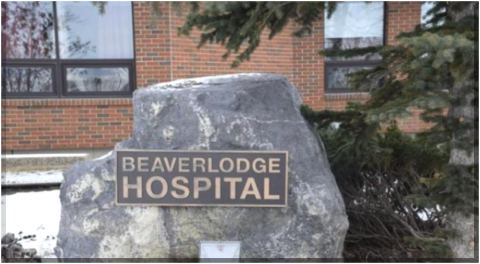
Beaverlodge Hospital: Another Emergency Physician Shortage — But Where Is the Long-Term Solution?
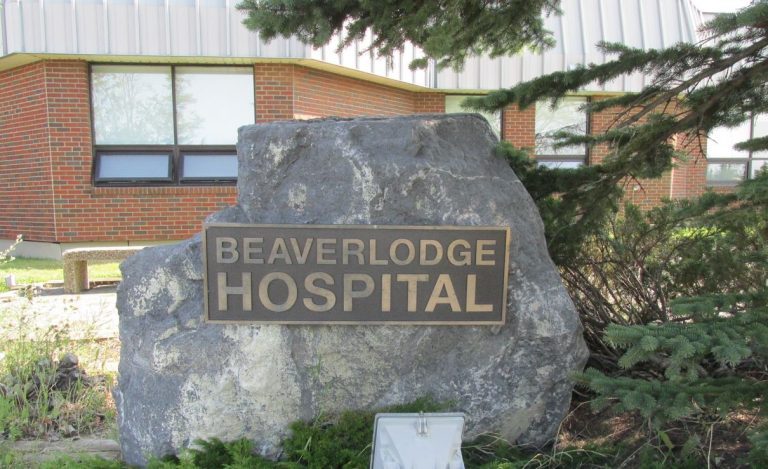
Repeated interruptions to emergency physician coverage are raising questions about rural health care, staffing shortages and what it will take to provide dependable emergency services in Beaverlodge
Another Day Without an Emergency Physician
For Beaverlodge residents and families in the surrounding Peace Country, announcements about emergency physician shortages are becoming familiar.
On October 30, Alberta Health Services announced that Beaverlodge Municipal Hospital would be without an on-site emergency physician for 12 hours on Sunday, November 1.
AHS attributed the interruption to an unexpected clinical personnel shortage and an inability to secure temporary coverage.
Nursing staff will remain at the hospital to provide patient assessments, triage and referrals to other emergency departments when necessary.
A Virtual Emergency Physician is scheduled to provide remote support for all or part of the shift.
AHS says it continues working to secure coverage and will cancel the interruption if an on-site physician becomes available.
But the latest announcement raises a question that deserves more attention than another brief service advisory.
When does a series of temporary staffing interruptions become a long-term health care problem?
How Often Has This Happened?
A review of AHS announcements reveals that the November 1 interruption is far from the first.
The following are some of the documented periods when on-site emergency physician coverage was scheduled to be unavailable.
- September 28–29: 12 overnight hours.
- September 29–30: 12 overnight hours.
- September 30–October 1: 12 overnight hours.
- October 1–2: 12 overnight hours.
- October 13–14: 12 overnight hours.
- October 27–28: 12 overnight hours.
- November 1: 12 daytime hours.
Together, these announcements account for 84 hours of scheduled interruptions.
However, that figure requires an important qualification.
AHS sometimes finds replacement physicians after issuing an initial notice. Therefore, 84 hours represents the announced interruptions identified here, not necessarily the actual hours without on-site coverage.
For example, AHS announced on October 9 that coverage had been found for a previously affected October 12 shift.
Its public archive also identifies additional Beaverlodge staffing advisories in August and September.
The actual number of interruptions and hours without on-site physician coverage during 2026 remains to be established.
That information would help residents understand whether the situation is improving, deteriorating or remaining largely unchanged.
What Happens When There Is No Doctor on Site?
It is important to understand that an interruption to on-site physician coverage does not necessarily mean the hospital building is closed.
During these periods, AHS says nursing staff remain available to assess patients, determine the urgency of their conditions and arrange transfers or referrals when needed.
The hospital may also receive support through the Virtual Emergency Physician program.
This system connects local medical staff with an experienced emergency physician through telephone or video technology.
The remote physician may assist with patient assessments, order tests or medications, and help determine whether a patient can be discharged or requires transfer.
The program offers an important alternative when an on-site physician is unavailable.
But it also raises a practical question.
Can virtual emergency care provide the same level of treatment as having a physician physically present during every type of emergency?
For non-life-threatening conditions, virtual physician support may allow patients to receive care without travelling to another community.
For serious emergencies requiring immediate hands-on physician treatment, the situation can be more complicated.
AHS advises residents experiencing a medical emergency to call 911. Emergency medical services remain available and may transport patients to surrounding facilities.
The Virtual Emergency Physician Program: A Solution or a Temporary Substitute?
There is encouraging information about the Virtual Emergency Physician program.
According to an October 2025 AHS medical staff update, the program began as a six-month pilot in northern Alberta in January 2025.
Its early evaluation reported:
- 1,153 patients received care through the program.
- Virtual physician coverage was provided during 98 per cent of hours without an on-site physician at participating emergency departments.
- Most surveyed patients reported being satisfied or very satisfied with their care.
- Almost two-thirds of surveyed patients said they would recommend a virtual physician visit to family or friends.
Those findings suggest virtual emergency care can be a useful tool for rural communities.
However, the evaluation does not establish that virtual care is equivalent to having an on-site physician for every emergency.
It also does not tell us whether Beaverlodge's staffing problems have improved since the program was introduced.
That raises another question.
Is virtual emergency coverage intended primarily as a short-term safety measure, or is it becoming part of the permanent operating model for rural hospitals?
Residents deserve to understand what level of emergency service their hospital is expected to provide.
Rural Residents Face Different Challenges
For residents of larger cities, travelling to another emergency department may involve crossing town.
For people living in Beaverlodge, Hythe and surrounding rural areas, reaching another hospital may require travelling much farther.
Winter driving conditions, road closures, distance and access to transportation can complicate medical emergencies.
Consider a parent whose child develops a serious illness overnight.
Or a senior who experiences chest pain while living alone.
Or a farmer injured while working some distance from town.
These examples are hypothetical, but they illustrate why reliable local emergency services matter.
Even when ambulance services remain available, longer transportation distances may affect patients, families and emergency service resources.
It would be valuable to know whether physician shortages at Beaverlodge have increased patient transfers, ambulance travel distances or response pressures.
Those figures have not been established in the AHS announcements reviewed for this article.
Why Are Physicians So Difficult to Keep?
AHS attributes the latest Beaverlodge interruption to an unexpected clinical personnel shortage and the inability to secure temporary coverage.
But that explanation leaves several important questions unanswered.
Is Beaverlodge struggling to recruit permanent physicians?
Are existing doctors being asked to cover too many shifts?
Are physicians leaving rural emergency practice because of workload, compensation, professional isolation or scheduling difficulties?
Are there enough physicians in the region to maintain dependable emergency department coverage?
These are possible contributing factors that deserve investigation, not established explanations for Beaverlodge's particular situation.
Rural physician recruitment and retention can involve many considerations, including workload, professional support, family needs and access to specialized medical resources.
Understanding which factors are affecting Beaverlodge is essential before identifying the most effective solution.
Simply announcing another temporary interruption does not explain why the underlying staffing problem continues.
What Would a Long-Term Solution Look Like?
There may be several approaches worth examining.
Recruiting additional permanent physicians
Would increasing the number of physicians working in Beaverlodge reduce dependence on temporary coverage?
How many additional doctors would be needed?
Improving physician retention
What would encourage existing physicians to remain in the community?
Are workload, scheduling and professional support adequate?
Regional physician-sharing arrangements
Could neighbouring communities develop more dependable shared coverage arrangements without creating shortages elsewhere?
Expanded virtual physician services
Can the virtual program reduce interruptions while permanent recruitment continues?
What types of emergencies can safely be managed through virtual care, and which require an on-site physician?
Better public reporting
Would publishing monthly statistics on emergency physician coverage help residents and health authorities measure progress?
Each option involves costs, staffing considerations and practical limitations.
Swan City Now is not suggesting that one approach is necessarily the answer.
But residents should be able to see what options have been considered, what measures are underway and whether those measures are producing results.
Who Is Responsible for Finding a Solution?
The provincial government establishes health care policy and funding priorities, while Alberta's health organizations and physician partners have operational responsibilities.
The precise responsibilities for Beaverlodge physician recruitment, emergency department scheduling and long-term staffing plans should be clarified with the appropriate provincial and regional authorities.
Residents should not have to navigate a complicated administrative system simply to understand who is responsible for maintaining emergency coverage.
Several questions deserve direct answers:
- How many permanent and temporary physicians currently provide emergency coverage at Beaverlodge Municipal Hospital?
- How many positions, if any, remain unfilled?
- How many emergency department shifts have lacked an on-site physician in 2026?
- How many announced interruptions were cancelled after replacement coverage was secured?
- What recruitment or retention initiatives are currently underway?
- What measurable improvement should residents expect over the next six months?
These are reasonable questions about an essential public service.
They also provide a way to measure whether future announcements represent genuine progress.
Whatever Happened To...? Finding a Permanent Answer
This story should not end when the November 1 interruption is over.
Swan City Now intends to follow the broader issue of emergency physician availability in Beaverlodge and other Peace Country communities.
The questions worth tracking include:
- Whether physician recruitment improves.
- Whether the frequency and duration of interruptions decline.
- Whether virtual physician coverage expands.
- Whether residents experience changes in access to emergency treatment.
- Whether health authorities establish measurable staffing targets.
If meaningful improvements occur, residents should hear about them.
If the situation remains unchanged, that deserves reporting too.
A temporary solution may be necessary during a staffing emergency. But repeated temporary solutions should not prevent a serious examination of the long-term problem.
What Residents Should Know Today
According to the October 30 AHS advisory, Beaverlodge Municipal Hospital is scheduled to be without an on-site emergency physician from 8 a.m. to 8 p.m. on Sunday, November 1.
Nursing staff will remain available, and virtual physician support is scheduled for all or part of the interruption.
Anyone experiencing a medical emergency should call 911.
For non-emergency health questions, Albertans can call Health Link at 811, available 24 hours a day.
Residents can also provide feedback to AHS Patient Relations at 1-855-550-2555.
Because staffing arrangements may change, residents should consult the latest AHS service advisory for updated information.
Swan City Speaks: What Do You Think?
-
If you live in Beaverlodge or a surrounding rural community, how confident are you that emergency medical care will be available when your family needs it?
-
Should Alberta publish monthly reports showing exactly how many hours rural emergency departments operate without an on-site physician, along with the reasons for those interruptions?
-
Would you consider virtual emergency physician services an acceptable long-term arrangement, or should every rural emergency department have a physician physically present whenever it is operating?
Have you experienced a physician coverage interruption at Beaverlodge Municipal Hospital? We would like to hear about your experience, while respecting patient and medical staff privacy.
Share your thoughts in the comments. Your opinion matters.
Sources and Further Reading
This article draws on original Alberta Health Services announcements and records.
Alberta Health Services — October 30, 2026
Temporary service advisory for Beaverlodge Municipal Hospital Emergency Department.
https://www.albertahealthservices.ca/news/Page20009.aspx
Alberta Health Services — September 28, 2026
Temporary service advisory identifying four overnight physician coverage interruptions.
https://www.albertahealthservices.ca/news/Page19965.aspx
Alberta Health Services — October 9, 2026
Updated advisory confirming replacement coverage for October 12 and identifying the October 13–14 interruption.
https://www.albertahealthservices.ca/news/Page19992.aspx
Alberta Health Services — October 23, 2026
Temporary service disruption records identifying the October 27–28 interruption.
https://www.albertahealthservices.ca/br/Page19641.aspx
Alberta Health Services — North Zone News Archive
Historical physician coverage advisories for Beaverlodge and other northern Alberta hospitals.
https://www.albertahealthservices.ca/zones/Page16962.aspx
Alberta Health Services — Medical Staff Update, October 10, 2025
Virtual Emergency Physician pilot evaluation and expansion.
https://www.albertahealthservices.ca/assets/info/hp/phys/if-hp-phys-cmo-update-2025-10-10.pdf
Editorial note: The interruption figures in this article reflect scheduled periods identified in public advisories. They do not constitute a complete or independently confirmed count of actual physician coverage hours lost during 2026. Additional records and responses from health authorities would be required to establish that total.