Beaverlodge Hospital Without an Emergency Doctor — Again. Is Rural Health Care Reaching a Breaking Point?
Another 12-hour physician shortage is scheduled for November 1. After repeated disruptions throughout 2026, residents deserve to know whether Alberta has a long-term solution — or whether temporary shortages are becoming the new normal.
Imagine arriving at your local hospital with severe abdominal pain, a serious injury or a child who suddenly becomes ill.
The hospital is there. The emergency department is there. The nurses are there.
But there is no doctor physically present.
For residents of Beaverlodge and surrounding rural communities, this is no longer an unfamiliar announcement.
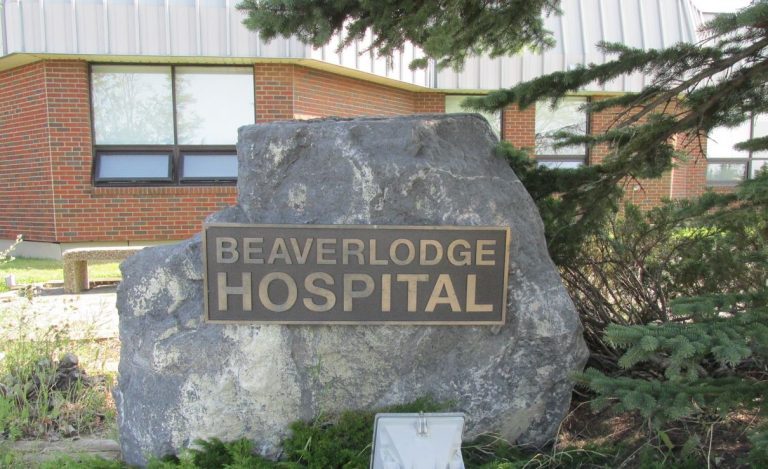
Alberta Health Services has confirmed another temporary physician coverage disruption at Beaverlodge Municipal Hospital, scheduled for 8 a.m. to 8 p.m. on Sunday, November 1.
Nursing staff will remain available for assessment and triage, and a virtual emergency physician may provide support.
Patients requiring care beyond what can be provided locally may need to be transferred to another hospital.
But this latest disruption raises a question that deserves more attention than another routine service advisory.
How many times can a community lose access to an on-site emergency doctor before the problem is no longer considered temporary?
This Is Not the First Time
A review of Alberta Health Services announcements shows repeated emergency physician coverage disruptions in Beaverlodge during 2026.
Among the documented incidents:
- January 5 and 7: Overnight physician coverage shortages.
- June: Multiple announcements involving unavailable physician coverage.
- July: Further temporary disruptions.
- August: Additional periods without an on-site emergency physician.
- September 8 and 10: Two overnight disruptions announced.
- September 28 to October 2: Four consecutive overnight shifts affected.
- October 27: Another overnight disruption.
- November 1: A further 12-hour daytime disruption scheduled.
These announcements do not necessarily mean the emergency department was completely closed.
In many cases, nursing staff remained on-site and virtual physician assistance was available for some or all of the affected shifts.
But the repeated announcements point to an ongoing challenge in maintaining reliable physician coverage.
What remains unclear is whether the total number of uncovered physician hours is increasing, decreasing or remaining relatively constant.
That is information Alberta Health Services should be able to provide.
And it is information residents deserve to see.
Is the Problem Getting Bigger?
Beaverlodge is not alone.
Throughout 2026, Alberta Health Services has issued temporary emergency service advisories affecting rural communities including Edson, Hinton, Swan Hills, Smoky Lake, Two Hills and others.
The reasons frequently involve clinical staffing shortages and the inability to secure temporary physician coverage.
That suggests the problem extends beyond a single hospital.
However, repeated notices do not by themselves prove that rural emergency coverage is getting worse across the province.
To establish that, we need to know:
- How many hours rural emergency departments operated without an on-site physician in 2024, 2025 and 2026.
- How many hospitals experienced repeated disruptions.
- Whether the number of available rural emergency physicians is increasing or decreasing.
- How often temporary coverage was secured before a scheduled disruption.
- Whether patients experienced longer transfer times or delayed treatment.
Without those figures, residents are being told about individual disruptions without being shown the overall condition of the system.
That makes it difficult to determine whether provincial recruitment and retention efforts are actually working.
Why Is It So Difficult to Keep Rural Emergency Departments Staffed?
There is no single explanation for rural physician shortages.
Smaller communities often face challenges recruiting and retaining doctors willing to provide both regular medical services and emergency department coverage.
Rural physicians may be expected to handle a wide range of medical situations, sometimes with fewer specialists and diagnostic resources immediately available.
After-hours emergency shifts can add to an already demanding workload.
Several factors may contribute:
- Workload and burnout: A small number of physicians may be responsible for covering many emergency shifts.
- Recruitment: Doctors may prefer larger centres with more professional support and specialist services.
- Family considerations: Employment opportunities for spouses, schools and lifestyle preferences can influence where physicians choose to practise.
- Professional support: Rural physicians need reliable access to specialist advice, diagnostic services and transfer arrangements.
- Retention: Recruiting a physician is only part of the solution. Keeping that physician in the community is equally important.
These are recognized challenges in rural medicine, but the specific reasons for Beaverlodge's repeated shortages require answers from the health authorities and physicians involved.
What Happens When There Is No Doctor?
Alberta Health Services says nursing staff remain on-site during the announced Beaverlodge disruptions.
Their responsibilities include assessing patients, determining urgency and arranging referrals or transfers when necessary.
A Virtual Emergency Physician may also be available.
This program allows an experienced emergency physician at another location to communicate with hospital staff and patients by telephone or video.
The physician may assist with treatment decisions, order appropriate tests or medications, and determine whether a patient requires transfer.
Virtual physician coverage is an important backup, but it is not identical to having a doctor physically present.
Some medical emergencies require immediate hands-on assessment, procedures and treatment.
For serious emergencies, ambulance services remain available, and patients may be transported to another facility, including Grande Prairie Regional Hospital.
AHS advises residents to call 911 for medical emergencies.
For non-emergency medical questions, Health Link is available at 811.
The Grande Prairie Connection
When Beaverlodge cannot provide full on-site emergency physician coverage, patients may need care in Grande Prairie.
That raises another question.
Are physician shortages in smaller communities placing additional pressure on Grande Prairie Regional Hospital?
It would be reasonable to expect some impact when patients are redirected, but the size of that impact has not been established.
We need to know how many patients have been transferred or redirected from Beaverlodge to Grande Prairie because of physician shortages.
We also need to know whether those transfers have affected ambulance availability, emergency department workloads or patient wait times.
This is not simply a Beaverlodge issue.
It potentially affects residents throughout the western Peace Country and the larger regional health system.
Is There a Solution?
There are several approaches worth examining.
1. Recruit More Rural Physicians
Alberta could strengthen incentives for physicians who commit to practising in smaller communities.
These might include recruitment bonuses, relocation assistance, rural training opportunities and incentives tied to longer-term service.
But incentives alone may not solve the problem if physicians face unsustainable workloads.
2. Retain the Doctors Already Working Here
Keeping an experienced rural physician may be more effective than repeatedly recruiting replacements.
That means examining working conditions, emergency shift schedules, professional support and opportunities for time off.
A community that attracts physicians but cannot retain them will continue facing shortages.
3. Expand Rural Medical Training
Physicians who train in rural communities may be more likely to consider rural practice.
Expanding rural medical education and residency opportunities could help build a longer-term supply of doctors familiar with smaller hospitals.
But training additional physicians takes years.
It will not solve next Sunday's staffing shortage.
4. Develop Regional Emergency Physician Teams
Could Beaverlodge, Grande Prairie and surrounding communities benefit from a coordinated pool of physicians specifically assigned to provide rural emergency coverage?
Instead of individual hospitals struggling to fill vacant shifts, a regional system might help distribute available resources.
Such a model would require adequate staffing, funding and safeguards against simply moving shortages from one community to another.
5. Use Virtual Emergency Physicians as Backup — Not the Entire Solution
Virtual emergency medicine can help maintain access to professional medical advice when no doctor is on-site.
It may be particularly valuable in remote communities.
But the Province should clearly explain which medical services can be safely delivered through virtual coverage and which require an on-site physician.
Residents should know what level of emergency care is actually available before an emergency occurs.
Who Is Responsible for Fixing This?
The Alberta government is responsible for the overall funding, policy and organization of the provincial health system.
Provincial health authorities and service delivery organizations are responsible for implementing staffing and service arrangements within that system.
Physician recruitment and retention also involve medical organizations, training institutions and local communities.
Beaverlodge and surrounding municipalities can help attract physicians by promoting the community and supporting recruitment efforts.
But municipal governments cannot independently solve a provincial shortage of emergency physicians.
Ultimately, the Province needs to explain what it considers an acceptable level of rural emergency coverage and how it intends to maintain that standard.
Five Questions Alberta Should Answer
Rather than simply announcing another temporary disruption, Swan City Now believes the following questions deserve public answers.
-
How many hours has Beaverlodge Municipal Hospital been without an on-site emergency physician during 2026, compared with 2025 and 2024?
-
How many permanent physicians are currently available to cover Beaverlodge's emergency department, and how many are needed for reliable coverage?
-
How many patients have been transferred or redirected to Grande Prairie because of physician shortages?
-
What specific recruitment and retention measures are underway, and when should residents expect measurable improvements?
-
Does the Province have a long-term rural emergency coverage plan, with published targets and timelines?
These are not unreasonable demands.
They are the basic information needed to evaluate whether the situation is improving.
When Does Temporary Become Permanent?
Every hospital can experience an unexpected staffing shortage.
Doctors become ill, emergencies arise and schedules sometimes cannot be filled.
A temporary disruption does not automatically indicate that a hospital is failing.
But when similar disruptions occur repeatedly over many months, the public deserves more than assurances that officials are continuing to seek coverage.
Residents need to know whether there is a credible plan to prevent the next disruption, not just manage it when it happens.
Beaverlodge is an important part of the Peace Country's rural health care network.
Its emergency department serves people who live and work in the surrounding region, including families, seniors, farmers and industrial workers.
Reliable access to emergency medical care is not merely a convenience.
It is an essential public service.
The question is no longer just who will cover the next emergency shift. It is whether Alberta can provide a sustainable level of emergency medical care to rural communities.
And that is a question worth asking until there is a meaningful answer.
Swan City Speaks: What Do You Think?
-
Have you or your family been affected by emergency physician shortages in Beaverlodge? Were you redirected to another hospital, and what was your experience?
-
Should Alberta provide stronger financial incentives to attract and retain rural emergency doctors? Or are working conditions and physician workloads the bigger problem?
-
Should Alberta Health Services publish monthly reports showing how many hours each rural emergency department operates without an on-site physician? Would that help residents understand whether the situation is improving?
Share your thoughts in the comments. Your opinion matters.
Swan City Now wants to hear from rural residents, health care workers and local officials. Firsthand experiences and practical solutions can help move this discussion beyond repeated announcements.
Visit https://swancitynow.com/ to join the conversation.