Could Grande Prairie Students Start Their Careers Before They Finish High School?
Pembina Pipeline is investing $120,000 in a regional career-training initiative involving three school divisions. But the bigger story is what this could mean for Peace Country students who want to explore skilled trades, earn college credits and discover career opportunities before graduation
What If Your Career Could Begin Before Graduation?
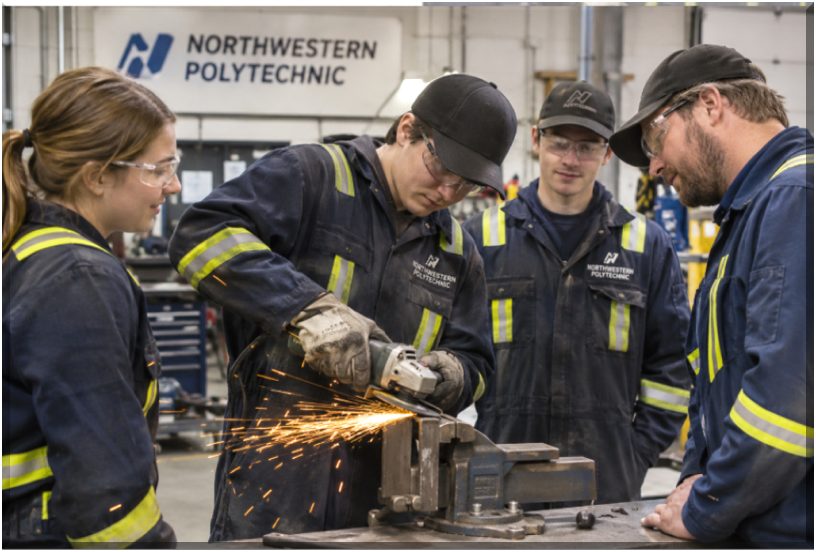
Imagine being 17 years old, still attending high school, but already learning to weld, repair heavy equipment or work with industrial machinery.
Instead of waiting until graduation to find out whether a trade interests you, you could be getting practical experience, earning credits and exploring your future while completing high school.
For students in Grande Prairie and the surrounding Peace Country, that opportunity is becoming more accessible.
On October 23, Pembina Pipeline Corporation announced a $120,000 commitment to the Grande Prairie Regional Career Collegiate (GPRCC).
The company will contribute $40,000 annually over three years.
But this is more than another corporate donation to education.
It is part of a broader effort to connect high school students with practical training, post-secondary education and employers who need skilled workers.
And it raises an interesting question for students and parents:
Why wait until high school is finished to begin preparing for a career?
Three School Divisions Working Together
The Grande Prairie Regional Career Collegiate brings together:
- Grande Prairie & District Catholic Schools
- Grande Prairie Public School Division
- Peace Wapiti Public School Division
The program also involves Northwestern Polytechnic and local industry partners.
This collaboration is particularly important in the Peace Country.
Not every community has a college campus, specialized trades shop or industry training facility nearby.
Students attending smaller schools may have fewer opportunities to explore certain careers without travelling.
The collegiate model is intended to expand access by allowing students to remain enrolled at their home schools while participating in specialized training elsewhere.
Learning may take place through classrooms, Northwestern Polytechnic facilities, mobile training labs and industry sites.
The participating divisions have described both half-day and full-day learning options.
That flexibility matters for students who still need to complete their regular high school courses.
The goal is not to replace traditional education.
It is to offer additional pathways for students with different interests, strengths and career ambitions.
Where Will the $120,000 Go?
Pembina's funding has two primary purposes.
1. Mobile Training Equipment
Part of the contribution will support the acquisition and improvement of equipment trailers used for hands-on learning.
These trailers can help bring specialized equipment and training opportunities to students rather than requiring every school to maintain its own fully equipped trades facility.
For a geographically spread-out region like the Peace Country, mobile training could be particularly valuable.
However, the school divisions have not yet publicly detailed how many schools the new or improved equipment will serve, how frequently it will travel or which communities will receive visits.
Those are worthwhile questions for a follow-up report.
2. Help With Dual-Credit Tuition
The second priority is tuition support for dual-credit education.
This is where the opportunity becomes especially interesting.
A student may be able to earn credits toward high school graduation while also earning credits recognized by a post-secondary institution.
Depending on the course, those credits could count toward further education or career training.
That means some students could finish high school with part of their next educational step already completed.
Pembina's contribution is intended to help expand access to those opportunities.
What Exactly Is Dual Credit?
Dual credit is a way for eligible high school students to take approved courses that count toward two educational goals.
For example, a student enrolled in a qualifying college-level course may earn both high school credits and post-secondary credits after successfully completing it.
It offers several potential advantages:
- Students can explore a career before making a major financial commitment.
- They may complete some post-secondary requirements earlier.
- They can gain confidence in a college or trades-learning environment.
- They may discover whether a particular occupation suits their interests.
- Some students may reduce the time or expense required for later studies.
Grande Prairie & District Catholic Schools says its dual-credit programming is available to Grade 11 and 12 students and, in some circumstances, Grade 10 students.
But there is an important distinction.
Not every dual-credit course guarantees an apprenticeship position, professional certification or a job.
What students earn depends on the specific course, its requirements and the recognition provided by the educational institution or industry.
Families should ask exactly what qualification or credit a particular course provides.
What Careers Can Students Explore?
The collegiate builds on trades and career-training opportunities already available through the participating school divisions and Northwestern Polytechnic.
Previously identified pathways include:
- Welding
- Carpentry
- Automotive service technician training
- Introduction to the trades
- Heavy equipment technician training
The collegiate's original announcement also identified plans for a Heavy Equipment Technician Period 1 apprenticeship course in spring 2027, delivered by a Red Seal journeyperson.
This could be particularly relevant in a region where transportation, construction, agriculture, forestry and energy operations depend on skilled technicians.
The program's actual availability, admission requirements and start dates should be confirmed with the participating schools.
There is also a broader point worth recognizing.
Dual-credit education is not limited to industrial trades.
Grande Prairie Catholic's existing Career Academy information identifies courses and pathways connected with business, education, psychology, social work and other fields.
That means career-focused education can benefit students with many different interests.
The question is whether the regional collegiate can eventually expand opportunities across an even wider range of careers.
Why Northwestern Polytechnic Matters
Northwestern Polytechnic is an important part of this initiative.
Rather than asking high schools to duplicate every piece of specialized equipment, students can access training facilities and educational expertise already available through the post-secondary institution.
This also introduces young people to a different learning environment.
A student who has never considered college or apprenticeship training may discover that post-secondary education is more accessible than expected.
The transition from high school to further education can be intimidating.
Experiencing that environment before graduation may make the next step easier.
It also creates an opportunity for students to make more informed decisions before committing significant time or money to a particular career.
What About Students in Smaller Communities?
One of the most promising aspects of this initiative is its regional structure.
Peace Wapiti Public School Division serves communities outside Grande Prairie, and its involvement creates opportunities to reach students who might otherwise have limited access to specialized training.
But several practical questions remain.
Will a student attending school in Sexsmith, Beaverlodge or another smaller community have the same opportunities as a student attending a large Grande Prairie high school?
How will transportation be arranged?
Will equipment trailers travel to rural schools?
Will students need to travel into Grande Prairie for certain courses?
And how many spaces will be available?
The collegiate's earlier announcement indicated that program spaces are limited and interested students should request application information through their schools.
That makes access and selection criteria particularly important.
A regional program should ideally provide meaningful opportunities to students throughout the region, not only those living closest to the training facilities.
Are Students Expected to Pay?
This is another question parents should investigate.
Pembina's new contribution specifically includes dual-credit tuition support.
Grande Prairie Catholic's published Career Academy information says tuition is covered for successful applicants in its supported dual-credit programs.
However, that does not mean every expense is automatically covered.
The division identifies potential costs for books, materials and learning-resource fees, as well as a refundable $300 caution fee under its existing arrangements.
Costs and policies may differ by school division and program.
Parents and students should confirm current fees, transportation arrangements and available financial assistance before applying.
If a student wants to learn a trade but their family cannot afford extra expenses, that should not become an unnecessary barrier to participation.
What Role Will Local Businesses Play?
Pembina's contribution is not limited to money.
The company has also committed to helping provide educational experiences through guest speakers, facility tours and possible job-site visits.
These activities could allow students to see how classroom lessons connect to actual workplaces.
There is a considerable difference between reading about a career and seeing someone perform that work.
A student considering an industrial trade might benefit from seeing a working facility, meeting experienced employees and asking questions about training, safety and career progression.
The collegiate's earlier announcement also identified Brogan Fire and Safety and Triple Threat Diesel as industry partners.
This creates an opportunity for other Peace Country businesses to consider participating.
Imagine the possibilities if more local employers became involved.
Automotive shops could introduce students to modern vehicle diagnostics.
Construction businesses could demonstrate carpentry, electrical work and equipment operation.
Agricultural businesses could explain the technology used in modern farming.
Healthcare employers could help students understand careers that require technical and practical skills.
Restaurants, technology firms, transportation companies and other local businesses could also introduce students to occupations they may never have considered.
These are possibilities for future partnerships, not confirmed additions to the collegiate program.
The bigger question is whether more employers will step forward to help students understand the opportunities available in their own communities.
Does This Mean Students Will Have Jobs Waiting?
Not necessarily.
Neither Pembina's funding announcement nor the school divisions' collegiate descriptions establish that participating students are guaranteed employment.
Industry tours and guest speakers are valuable, but they are not the same as paid work placements, apprenticeships or job offers.
That distinction matters.
For students and parents, the most useful measure of the program's success may eventually be what happens after participation.
How many students complete a dual-credit course?
How many earn recognized qualifications?
How many continue into apprenticeship training or post-secondary education?
How many find employment in the Peace Country?
Those results would provide a clearer picture of the program's long-term value.
They would also help taxpayers, school divisions and industry sponsors determine where future investments could make the greatest difference.
Are We Giving Hands-On Learners Enough Opportunities?
For decades, students have often been encouraged to think of education as a choice between attending university and entering the workforce.
But the choices are considerably broader.
Some students thrive in academic settings.
Others discover their strengths through practical problem-solving, mechanical work, technology or building things with their hands.
Many benefit from a combination of both.
A student interested in becoming a heavy equipment technician should have access to meaningful career guidance.
So should a student considering nursing, business, teaching, agriculture, engineering or entrepreneurship.
There is no reason one pathway should automatically be considered more valuable than another.
The Grande Prairie Regional Career Collegiate offers an opportunity to rethink how students explore their futures.
Instead of asking every young person to choose a career before experiencing it, perhaps schools and employers can help them discover what they enjoy and where their abilities are strongest.
What Would Success Look Like?
The $120,000 commitment is a positive beginning.
But its real value will depend on what students experience over the next three years.
Swan City Now would like to see answers to several practical questions:
How many students will benefit?
A clear participation target would help families understand the program's reach.
Which schools and communities will be included?
Regional access is especially important for smaller Peace Country communities.
What qualifications will students earn?
Families need to know which courses provide college credits, industry certifications or recognized apprenticeship training.
How much will families pay?
Tuition support is encouraging, but additional fees and transportation costs should be clearly explained.
Will employers offer more than tours?
Mentorship, supervised work experience and apprenticeship opportunities could strengthen the connection between education and employment.
Will results be made public?
Annual reporting on participation, completion and student outcomes could demonstrate whether the investment is achieving its goals.
These are not criticisms of the initiative.
They are the questions that can turn a promising announcement into a measurable community success.
How Can Students Get Involved?
Students interested in career-focused learning should begin by speaking with their high school counsellor or career advisor.
Ask whether your school participates in the Grande Prairie Regional Career Collegiate and which courses are available.
Find out whether you meet the eligibility requirements, when applications open and what credits or qualifications you could earn.
Also ask about transportation, course fees and the time commitment.
The three participating school divisions are working with Northwestern Polytechnic and industry partners to develop and expand opportunities.
Because programs and application deadlines can change, students should obtain current information directly from their schools.
A Chance to Keep More Young Talent in the Peace Country
Grande Prairie and the surrounding communities have long depended on people with practical skills.
Farmers, mechanics, welders, electricians, heavy equipment technicians, builders and countless other workers help keep the regional economy moving.
At the same time, young people deserve the freedom to explore careers wherever their interests lead them.
The goal should not simply be to train students for today's vacancies.
It should be to give them the knowledge, experience and confidence to build successful futures.
If the Grande Prairie Regional Career Collegiate can help students discover meaningful careers, reduce barriers to training and develop stronger connections with local employers, its benefits could extend well beyond the initial $120,000 investment.
And perhaps the greatest benefit will be something that cannot be measured in dollars.
A young person who once had no idea what they wanted to do after graduation may discover a career they genuinely enjoy.
That would be an investment worth making.
Swan City Speaks: What Do You Think?
- Should every Peace Country high school student have the opportunity to earn college credits or explore a trade before graduation?
- Should more local businesses offer mentorship, workplace visits and hands-on experience to high school students?
- Are students who prefer practical, hands-on learning receiving enough encouragement and opportunities?
- If you're a student, which career would you like to experience before deciding what to do after high school?
What Have We Missed?
Are you a student already participating in dual-credit education?
Are you a parent, teacher, tradesperson or local employer who has experience with these programs?
We would especially like to hear from students in smaller Peace Country communities.
Tell us what opportunities are available at your school, what is missing and what would make career training more accessible.
Swan City Now's Next Gen Desk is also looking for high school students who want to write about their schools, sports, achievements, events and issues that matter to young people.
You do not have to be an experienced journalist. You just need an interest in sharing what is happening in your community.
Interested in writing?
https://swancitynow.com/write-for-us
Join the conversation:
We're neighbours. We don't all have to agree, but we can all benefit from asking better questions.
Sources
Grande Prairie & District Catholic Schools — Pembina Invests $120,000 in GPRCC (October 23, 2026)
https://www.gpcsd.ca/apps/news/article/864027?categoryId=11464
Grande Prairie & District Catholic Schools — New Collegiate Programming in Grande Prairie Expands Specialized Trades Options for Students (May 2026)
https://www.gpcsd.ca/apps/news/article/862168?categoryId=11464
Grande Prairie & District Catholic Schools — Dual Credit Programs
https://www.gpcsd.ca/apps/pages/DualCredit
Peace Wapiti Public School Division — Pembina Pipeline Corporation Invests $120,000 in Grande Prairie Regional Career Collegiate
https://www.pwpsd.ca/apps/news/article/864032?categoryId=11881
Peace Wapiti Public School Division — New Collegiate Programming in Grande Prairie
https://pwpsd.scholantisschools.com/apps/news/article/862159?categoryId=11881
Editor's note: This article is based on original school-division announcements and published program information. Questions concerning student numbers, specific school access, future work placements and employment outcomes are identified as matters requiring further confirmation. No student or employer interviews were conducted for this article.