County's New Road Plan Could Decide Which Rural Routes Get Attention — and Which Keep Waiting
For someone driving a gravel road to work, hauling grain to market or moving heavy equipment between farms, a municipal transportation plan might sound like another document destined for a filing cabinet.
Your Road Today. Your Road Ten Years From Now.
But decisions made in that document can influence which roads receive attention, which intersections need improvements and where future transportation investments are directed.
The County of Grande Prairie is now reviewing those long-term decisions.
On November 20, representatives from engineering firm McElhanney presented a draft Transportation Master Plan to the County's Committee of the Whole.
According to the County's official meeting highlights, the document identifies possible future road networks and classifications using projected population and traffic numbers.
Committee members were invited to provide feedback before the document is completed.
No final adoption was announced in those highlights.
Why Road Classifications Matter
Not every County road serves the same purpose.
Some primarily provide access to farms, acreages and individual properties.
Others connect communities, carry commercial vehicles or serve as important routes for agricultural and industrial traffic.
A road's classification helps planners determine its intended function and can influence future design standards and improvement priorities.
That does not mean a change in classification automatically results in pavement, widening or construction.
Those decisions depend on additional planning, engineering, funding and Council approvals.
For rural residents, however, the classification can be an early indication of how the municipality expects a road to be used in the future.
Four Rural Road Corridors Worth Watching
The County's November 2025 Regional Growth Study revisited recommendations from its earlier Transportation Master Plan.
Among the routes previously identified for potential upgrades to a primary roadway were:
- Township Road 714, east of Grande Prairie to Range Road 53.
- Township Road 712, between Range Roads 63 and 65, and between Range Roads 54 and 55.
- Township Road 710, between Range Roads 63 and 64.
- Range Road 63, north of Grande Prairie to Township Road 722.
These are historical planning recommendations, not confirmed new construction commitments.
The November 20, 2026 presentation has not yet established whether the updated draft retains, removes or changes those recommendations.
That comparison will be important when the complete draft becomes available for public review.
Have the Old Traffic Predictions Held Up?
One of the more interesting findings in the County's Regional Growth Study concerns the assumptions used in earlier transportation planning.
The study noted that population and employment projections associated with the previous plan's 2021 horizon no longer aligned with present-day conditions.
It suggested that the timing and extent of transportation improvements would likely require review.
That raises an important question.
If the population, employment and traffic projections have changed, should the road priorities change too?
A road previously expected to carry substantial traffic might now have different needs.
Conversely, new residential subdivisions, agricultural operations or industrial developments could place additional pressure on routes that were not originally considered priorities.
The updated Transportation Master Plan is an opportunity to examine those differences.
Farmers and Heavy Trucks Have Different Needs
Grande Prairie County's road network supports a wide range of users.
Farmers need reliable access for large equipment and seasonal hauling.
Commercial carriers need routes capable of handling heavy loads safely and efficiently.
Rural residents need dependable year-round access to homes, schools and workplaces.
Industrial development can introduce additional traffic, sometimes involving oversized vehicles or concentrated truck movements.
Those needs do not always align.
A road that works adequately for local residential traffic may face different demands when industrial activity increases.
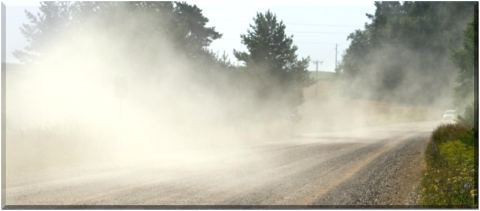
Likewise, improving a route for higher traffic volumes may introduce new concerns about speed, access, dust, noise and safety for nearby residents.
A useful transportation plan must consider more than projected vehicle counts.
It must also consider who uses the roads and how those roads support surrounding communities.
What About Highway 43 and the Bypasses?
The County's Regional Growth Study also discusses longer-term provincial highway planning.
It identifies a future vision in which Highway 43 becomes a rural divided freeway, with access restricted to interchanges.
The study also refers to planned bypasses for Beaverlodge and Hythe.
Such changes could improve regional transportation efficiency while potentially affecting access to nearby communities and businesses.
However, those provincial highway concepts should not be confused with approved County road projects or commitments made at the November 20 meeting.
The relationship between provincial highway planning and the County's updated transportation network remains an important question.
The Real Test Will Be the Maps
The November 20 meeting highlights establish that a draft plan was presented.
They do not provide enough detail to identify every proposed road classification or determine which routes might receive higher priority.
For residents, the most useful information will be the actual maps.
Those maps should help answer several questions:
Which roads are expected to carry more traffic?
Which routes could be classified differently?
Are agricultural and industrial traffic patterns being adequately considered?
How will road safety and maintenance needs influence future priorities?
And how will the County balance improvements near growing communities with the needs of residents farther from Grande Prairie?
The Story Isn't Over
The Transportation Master Plan is still being developed.
The next meaningful development will be the release of the completed draft, supporting maps or a recommendation for Council consideration.
Until then, no specific new road upgrade should be treated as approved simply because it appears in an earlier planning document.
For rural residents, the question is straightforward:
Will the County's next road plan reflect the roads people actually need today — and the traffic they will face tomorrow?
Original sources
County of Grande Prairie — November 20, 2026 Committee of the Whole Highlights: https://www.countygp.ab.ca/news/posts/november-20-2026-committee-of-the-whole-highlights/
County of Grande Prairie — Transportation Master Plan: https://www.countygp.ab.ca/council-administration/plans-reports-and-studies/transportation-master-plan/
County of Grande Prairie — Regional Growth Study, November 2025: https://www.countygp.ab.ca/media/pg4bzx0t/regional-growth-study-2024-76-final-2-1.pdf