DeBolt: Across the Smoky, Where Pioneers Built More Than Farms
A homemade plough. Four horses. Two brothers. And not enough money to buy seed.
It is a small detail in the history of DeBolt, but it tells us something about the circumstances facing many families who established themselves east of the Smoky River.
They arrived with ambitions, but not necessarily the resources to fulfil them.
Building a farm was difficult enough.
Building a community required something more.
Before the Homesteaders Arrived
The history of the East Smoky district stretches far beyond the establishment of agricultural settlements.
The region lies within Treaty 8 territory, where Indigenous peoples maintained longstanding relationships with the rivers, forests and wildlife.
The landscape provided food, materials and transportation routes.
The subsequent arrival of agricultural settlers brought considerable changes to land ownership and land use.
DeBolt's pioneer history represents one chapter in a much longer regional history.
The DeBolt & District Pioneer Museum recognizes this through exhibits incorporating contributions from First Nations and Métis people.
Preserving Indigenous histories alongside agricultural settlement records remains important to understanding how the East Smoky district developed.
The Trail That Connected the Peace Country
Before dependable highways connected the Peace Country with central Alberta, overland travel presented considerable challenges.
The Edson to Grande Prairie Trail became an important route during the early settlement period.
Its history remains particularly significant to communities east of the Smoky River.
Travelling through this country meant dealing with rivers, forests, difficult ground and changing weather.
The journey itself could be an important part of a family's settlement experience.
The DeBolt museum society considered the trail sufficiently important to undertake a dedicated historical research project.
Its book, Edson to Grande Prairie Trail, was published in 1988.
A monument recognizing the trail's pioneers was also established near the community hall.
The museum subsequently produced a publication commemorating the trail's 1911–2011 centennial.
These efforts preserve the history of a transportation route that helped connect the developing Peace Country with the rest of Alberta.
Eight Acres, Four Horses and a Homemade Plough
Charlie Moore arrived in the DeBolt district in November 1930.
His brother Tom had already established a homestead.
According to family records preserved by South Peace Regional Archives, Tom persuaded Charlie to acquire land of his own.
The brothers constructed a small shelter on Tom's property for the winter.
During their first farming season, they cleared and broke eight acres on Charlie's land and another 18 acres on Tom's.
Their equipment consisted of a four-horse team and a plough they had made themselves.
The work was physically demanding.
Before a crop could be planted, the land first had to be made suitable for cultivation.
By 1932, the brothers were ready to seed.
There was just one problem.
They had no money to purchase the seed.
The Man Who Helped Get the Crop Planted
Robert Cochrane, a seed grower from Grande Prairie, helped the Moore brothers by advancing seed to them.
That assistance allowed them to plant their crops.
The surviving family account does not establish the complete financial arrangement or the eventual value of the harvest.
But it documents an important relationship between an established agricultural producer and two relatively new farmers.
Their experience illustrates how access to credit, equipment and supplies could influence whether a homestead succeeded.
Agricultural settlement was not simply a matter of acquiring land.
Farmers also needed a way to finance the work necessary to make that land productive.
The Farm That Became Part of DeBolt
Charlie Moore and his wife, Winnie, whose maiden name was DeBolt, later contributed substantially to the development of the community.
The South Peace Regional Archives identifies their homestead with the land occupied by the present-day hamlet.
Their surviving family records contain much more than accounts of early farming.
They include business transactions, agricultural documents, correspondence, wartime savings certificates and records of community involvement.
Such documents provide a glimpse into the ordinary economic and social activities that sustained rural families.
They also help explain how individual farms gradually became part of a larger community.
More Than a Country Club
The name DeBolt Country Club might suggest a golf course or a modern recreational facility.
Its origins, however, reach back to a much earlier period.
The organization received its charter on October 14, 1929.
Its original signatories included Fred Morland, D.D. McArthur, A.J. McLarty, J.C. Fehr, E.R. Clarke, George DeBolt, H.F. Oyler and H.E. DeBolt.
The club followed an earlier organization known as the DeBolt/Goodwin Development Club.
During the 1930s, its activities centred on the community hall and local sporting and rodeo grounds.
The organization became an important part of the district's social life.
Its responsibilities evolved over the decades to include entertainment, sporting activities and the operation of community facilities.
The surviving records of the DeBolt Country Club & Agricultural Society cover much of the twentieth century.
They document the work of generations of residents who organized activities beyond their individual farms and households.
Making Their Own Entertainment
The community's agricultural society history describes the Great Depression as a particularly active period for locally organized entertainment.
Money was scarce.
Nevertheless, residents continued finding opportunities to gather.
Community halls and sporting grounds became important shared spaces.
Unlike today, when entertainment can be delivered directly into people's homes, rural social life often depended on someone organizing an event and neighbours making the effort to attend.
These activities strengthened connections between families spread across the district.
They also provided a foundation for the recreational organizations that followed.
From Community Gatherings to Organized Recreation
The agricultural society's published history traces several important stages in DeBolt's recreational development.
The Second World War affected community activities during the 1940s.
The following decade was comparatively quiet.
During the 1960s, the Country Club and Curling Club amalgamated.
Development of a golf course followed in the 1970s.
These changes reflected the evolving interests and resources of local residents.
What began as an organization supporting rural social gatherings gradually developed more permanent recreational facilities.
The modern community inherited the results of decades of volunteer work.
A Recreation Board for the East Smoky
On March 21, 1968, a public meeting established the East Smoky Recreation Board.
The initiative involved residents including Andy Rieger, Luke Dwyer, Bill Chapman, Harvey Pellerin, Marvin Moore, John Nielsen and Roy Bickell.
By 1975, the board had established an office in DeBolt Centennial Hall, with Dawne Klassen serving as coordinator.
Its work extended beyond organizing individual events.
The board circulated community information and examined longer-term recreation requirements.
Planning documents produced in 1978 and 1991 considered facilities and programming across the district.
The surviving records show that recreation had become an important regional responsibility.
DeBolt was serving families from beyond the boundaries of the hamlet itself.
Farming Was Not the Only Industry
The forests surrounding the East Smoky district also supported economic activity.
Local sawmills formed part of the region's development.
Their history was sufficiently important that the DeBolt museum society began a dedicated research project in 1993.
The project examined sawmill operations across the Smoky River district.
Its findings were eventually incorporated into the community history Bridges to the Past.
Agriculture and forestry developed alongside one another.
Both depended on transportation, labour and access to markets.
The district's industrial history deserves attention alongside the more familiar stories of homesteads and agricultural settlement.
A Cheese Factory Worth Remembering
One of the more unusual exhibits at the DeBolt museum concerns the Ridgevalley Co-operative Cheese Factory.
The museum preserves equipment and historical information associated with the operation.
The exhibit offers a reminder that agricultural development involved more than producing raw commodities.
Local processing also formed part of the rural economy.
Co-operative businesses provided opportunities for producers to work together.
The Ridgevalley exhibit is particularly valuable because it preserves the material history of an industry that can easily be overlooked in accounts focused primarily on grain farming.
The factory's complete operating history would make a worthwhile subject for a separate historical feature.
The Homesteading Story Was Not Over in the 1930s
Although much pioneer history concentrates on the first decades of the twentieth century, agricultural settlement continued considerably later.
In 1964, Norman and Margaret Dyck filed on a homestead in the Puskwaskau district north of DeBolt.
They were part of a later generation of families establishing farms as the provincial government made additional land available.
Members of the extended Dyck family worked together on the agricultural undertaking.
During the first year, Norman continued teaching in Sexsmith.
Margaret operated a hairdressing business from the teacher's residence.
Their experience demonstrates that families entering agriculture sometimes relied on employment and businesses outside farming while establishing their properties.
The development of the Peace Country did not happen in a single wave.
Different generations faced different circumstances, but the challenge of establishing a sustainable farm remained.
The Inheritance That Helped Preserve a Community
An important turning point in DeBolt's cultural history came in 1969.
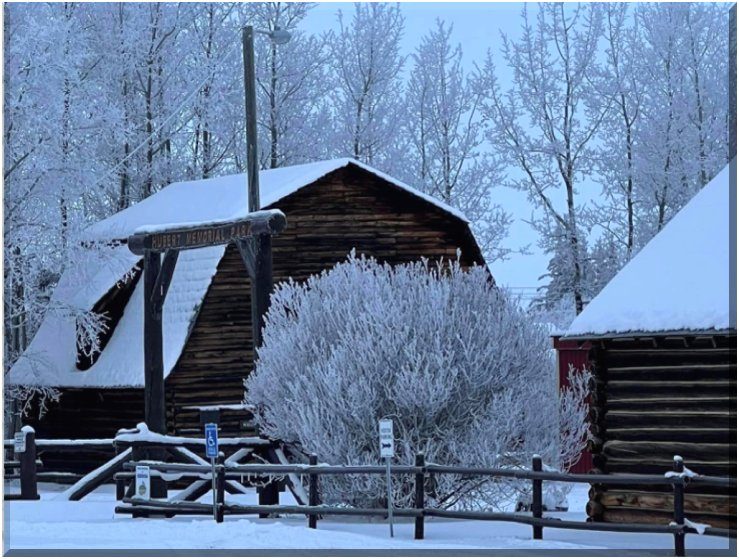
Following an inheritance from Tom Hubert, representatives of three community organizations formed the Hubert Memorial Park Committee.
The organizations were:
- DeBolt Country Club.
- DeBolt United Church.
- East Smoky Royal Canadian Legion Branch No. 89.
The committee decided to develop a museum within the park.
An existing former church residence provided a starting point.
The project would eventually become one of the district's most significant historical institutions.
Rather than concentrating solely on preserving individual objects, residents began preserving the buildings and written records that explained how their community had developed.
Winnie Moore and a Dream Worth Keeping
Winnie Moore was a driving force behind the idea of establishing a museum and publishing a community history.
The museum's own historical account identifies her as an early advocate for both projects.
Other residents joined the effort, including Jean Pushor, Art Boe, John Nielsen, Donald Matlock, Sigfred Welander and Fran Moore.
The DeBolt & District Pioneer Museum Society was incorporated in September 1975.
Winnie served as its first president.
Jean Pushor became secretary-treasurer, while Fran Moore took responsibility as curator.
The museum officially opened in October 1976.
Edna Stevenson performed the ribbon-cutting ceremony.
Hubert Memorial Park was formally opened the following August by MLA Marv Moore.
In 2026, the museum marked 50 years since its official opening.
It is a milestone worth recognizing, particularly given how much of the institution's development depended on local initiative.
Saving the Buildings Before They Disappeared
A rural building can contain considerable historical information.
Its construction, materials, layout and original purpose can reveal how people worked and lived.
The DeBolt museum grew by preserving examples of these buildings.
Among them are the Mehlum barn, an ice house, a former teacher's residence and historic homes.
Some were moved into Hubert Memorial Park and restored.
The museum's collection also incorporates buildings connected with the community's religious and organizational history.
The result is a heritage site where visitors can examine aspects of rural life through the structures themselves.
A photograph can show what a building looked like.
Preserving the building allows later generations to appreciate its physical scale and construction.
From Pioneer History to Prehistoric History
Not everything at the DeBolt museum concerns agricultural settlement.
The Bickell Fossil Collection introduces visitors to a much earlier period in the region's natural history.
The collection originated through the efforts of a local fossil enthusiast and contains material recovered from regional waterways.
It is an unusual feature for a rural community museum.
Together with Indigenous exhibits, agricultural displays and historical buildings, the fossils demonstrate the wide range of subjects that can be preserved within a local institution.
DeBolt's museum tells stories extending well beyond the establishment of the hamlet.
The Books That Saved Family Memories
One of the museum society's greatest achievements has been the publication of local histories.
Its major works include:
- Across the Smoky
- Edson to Grande Prairie Trail
- DeBolt Country Club & Agricultural Society
- Bridges to the Past
These publications document families, businesses, agricultural activities, community organizations and transportation history.
The original research materials associated with several of the books are preserved at South Peace Regional Archives.
That is particularly valuable because community history books often represent years of interviews, correspondence and the collection of photographs.
Behind the published pages are the efforts of residents who recognized that firsthand memories would not remain available forever.
Winnie Moore Park
The tradition of community improvement continued after the museum was established.
The DeBolt Beautification Society formed in 1997.
Its projects included improving public spaces, planting vegetation, cleaning areas around the creek and developing recreational opportunities.
On July 21, 2000, Winnie Moore Park officially opened.
The park carries the name of a woman who had helped preserve the community's earlier history.
It represents another generation's contribution to DeBolt's development.
The Beautification Society's records are now themselves preserved in the regional archives.
Yesterday's community projects have become today's historical documents.
A History Much Larger Than the Hamlet
DeBolt's history extends into the surrounding East Smoky communities.
The local history Across the Smoky includes families and events associated with Goodwin, Crooked Creek, Clarkson Valley and Sturgeon Heights.
Ridgevalley and Puskwaskau also form part of the wider district's agricultural and social history.
These communities shared transportation routes, businesses, organizations and family connections.
Their individual histories cannot always be separated neatly.
A person might live in one district, attend school in another and participate in community activities somewhere else.
DeBolt's importance lies partly in its role as a gathering place for this wider rural population.
What Survives After the Pioneers Are Gone?
Charlie Moore died in 1996.
Winnie died in 1993 while work was underway on another community history.
Their generation experienced considerable changes in agriculture, transportation, technology and rural living.
But much of their contribution remains visible through the institutions they helped establish.
The surviving museum, historical publications and family records provide a connection between the present community and its earlier residents.
The brothers who once needed assistance to obtain seed could hardly have anticipated the full extent of the district's subsequent development.
Their story is one among many.
Other families arrived with different backgrounds, resources and ambitions.
Together, they helped shape the East Smoky district.
DeBolt's history is not simply about people who cleared land. It is also about people who built institutions, organized their neighbours and made sure the stories of earlier generations would not disappear.
Historical Photographs and Records
The DeBolt & District Pioneer Museum and South Peace Regional Archives hold extensive photographic and documentary collections relating to the district.
Particularly valuable subjects for this feature include:
- Early DeBolt homesteads and agricultural equipment.
- The DeBolt Country Club and its sporting grounds.
- Historic photographs of the Edson Trail.
- The original buildings preserved at Hubert Memorial Park.
- The establishment of the museum in the 1970s.
- Photographs and records of the Ridgevalley Co-operative Cheese Factory.
The DeBolt & District Pioneer Museum Society photographic collection is preserved under South Peace Regional Archives reference 0116.09.
Individual photographs should be identified, inspected and cleared for publication before reproduction.
Families holding original photographs are encouraged to contribute images with known dates, locations and names.
Sources and Historical References
South Peace Regional Archives — Charlie and Winnie Moore fonds
Family records and historical background documenting the Moore brothers' early farming experiences and the family's involvement in DeBolt.
https://www.southpeacearchives.org/finding-aid/fonds-376-charlie-and-winnie-moore-fonds/
South Peace Regional Archives — DeBolt & District Pioneer Museum Society fonds
Historical records relating to the museum, Hubert Memorial Park, community publications and photographic collections.
DeBolt & District Pioneer Museum Society — Spirit of the Peace Museums
The museum's own account of its establishment, exhibits, founders and historical publications.
https://spiritofthepeace.ca/our-museums/debolt-and-district-pioneer-museum/
South Peace Regional Archives — DeBolt Country Club & Agricultural Society fonds
Organizational records covering community recreation, agricultural society activities and the club's establishment.
https://www.southpeacearchives.org/finding-aid/fonds-375-debolt-country-club-fonds/
South Peace Regional Archives — East Smoky Recreation Board fonds
Records documenting regional recreation planning and community organization.
https://www.southpeacearchives.org/finding-aid/fonds-374-east-smoky-recreation-board/
South Peace Regional Archives — Norm & Margaret Dyck fonds
Family records documenting later agricultural settlement in the Puskwaskau district.
https://www.southpeacearchives.org/finding-aid/fonds-598-norm-margaret-dyck-fonds/
South Peace Regional Archives — DeBolt Beautification Society fonds
Records of community improvement projects and the establishment of Winnie Moore Park.
https://www.southpeacearchives.org/finding-aid/fonds-638-debolt-beautification-society-fonds/
South Peace Regional Archives — Library Collection
Catalogue of locally published historical books, including the histories of DeBolt and the East Smoky district.
Municipal District of Greenview — Museums and Pioneer Centres
Municipal information about the DeBolt museum and its historical exhibits.
https://mdgreenview.ab.ca/residents/museums-and-pioneer-centres/
Swan City Speaks: What Do You Think?
DeBolt, Goodwin, Ridgevalley, Crooked Creek, Clarkson Valley, Sturgeon Heights and Puskwaskau — we would love to hear from you.
-
Does your family have photographs of the early homesteads, farming equipment or original community buildings?
-
Do you remember the DeBolt Country Club, early stampedes, community dances or sporting events?
-
Did your parents or grandparents travel the Edson Trail? Are their experiences recorded in family letters or diaries?
-
Did anyone in your family work at a local sawmill or the Ridgevalley cheese factory?
-
Were you involved in establishing the museum or collecting material for the community history books?
-
Can you identify people in historical photographs who have not yet been named?
-
Which early families, teachers, merchants, farmers and community volunteers deserve greater recognition?
-
Is there anything in this account that you can correct or expand through family records or firsthand knowledge?
Please include known names, dates, locations and photograph ownership information when sharing historical material.
Every family has a story. Sometimes the smallest detail in an old photograph or handwritten letter can help complete a much larger piece of community history.
Help preserve the history of the East Smoky district for the next generation. Share your memories in the comments.