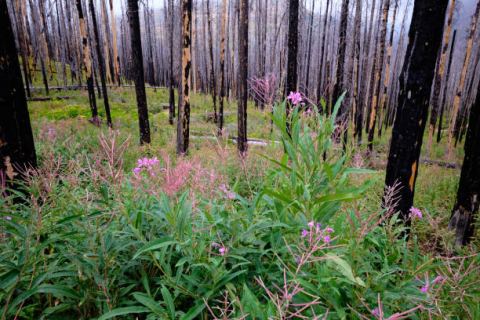
CWD- The Silent Cervid Threat and Awareness
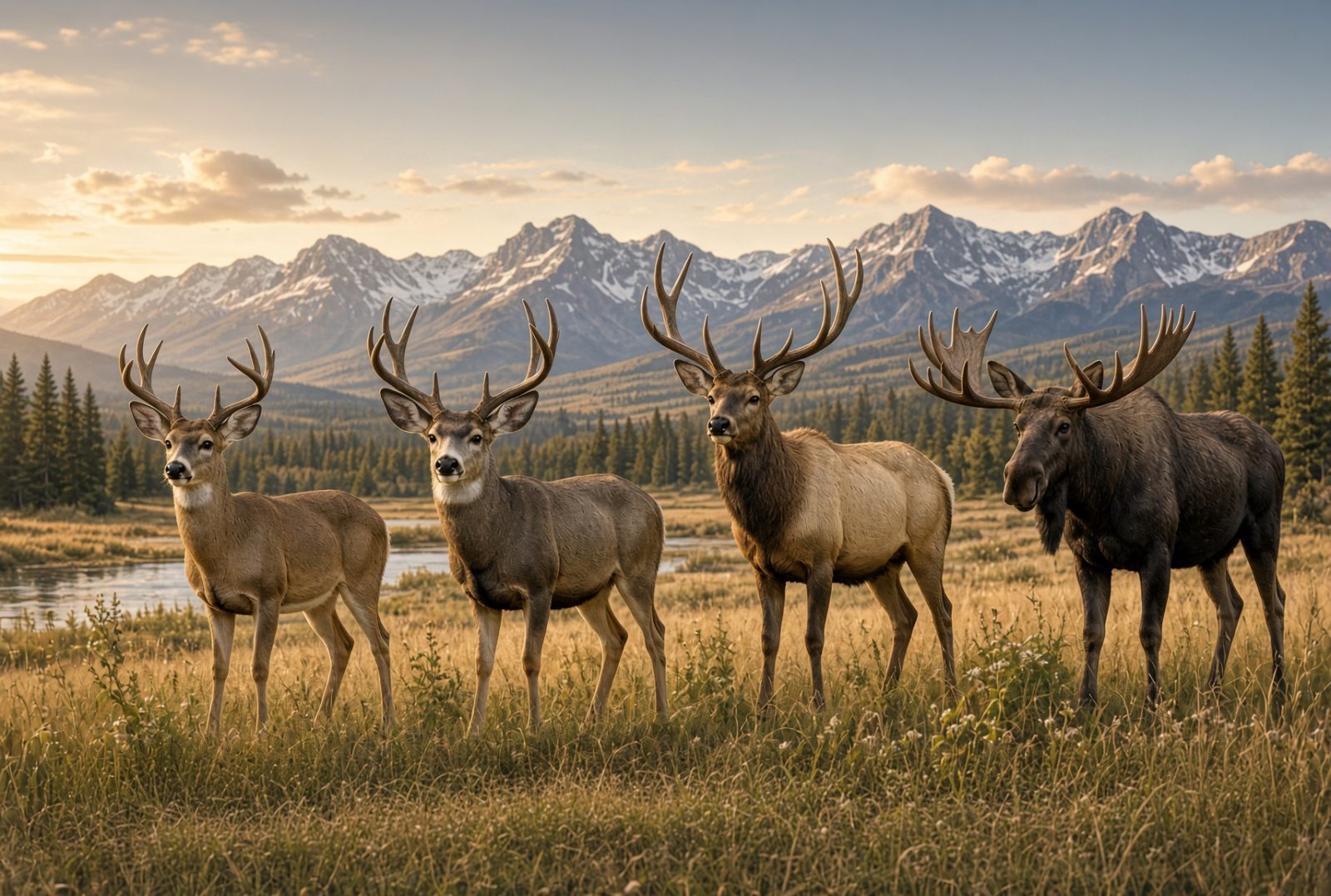
The Peace Country has long been celebrated as one of Alberta's last great wild places — a vast expanse of boreal forest, river valleys, and wetlands that supports some of the province's most robust populations of moose, elk, mule deer, and white-tailed deer. But beneath the scenic beauty of this region runs a growing concern that wildlife biologists, hunters, and conservationists are watching closely: Chronic Wasting Disease, or CWD.
What Is CWD?
Chronic Wasting Disease is a fatal, progressive neurological illness that affects members of the deer family — cervids. In Alberta, the disease has been confirmed in wild mule deer, white-tailed deer, elk, and moose, as well as in farmed cervid operations. CWD is caused by misfolded proteins called prions, which accumulate in the brain and other tissues of infected animals, gradually destroying neural tissue over months or years.
The disease was first detected in Alberta in 2002 in farmed elk and deer, and later in wild deer in 2005. Since then, it has spread steadily across the province, with the most severe concentrations in the southeastern corner of Alberta near the Saskatchewan border, where infection rates in some mule deer populations have reached as high as 85 percent .
In the 2024–25 surveillance season, Alberta tested 2,963 wild cervids and found 472 positive cases — an overall prevalence of 16.2 percent. That included 353 mule deer, 103 white-tailed deer, 9 elk, and 7 moose. Within individual Wildlife Management Units, prevalence continues to climb. In 2023–24, the numbers were even starker: 708 positive cases among 3,801 tested animals, with 30.5 percent of mule deer and 9.8 percent of male white-tailed deer testing positive.
Why the Peace Country Matters
The Peace Country comprises a string of Wildlife Management Units (WMUs) in northwestern Alberta — WMUs 520 through 527, collectively known as the Upper Peace River region and surrounding boreal zones. These units cover a vast landscape from the British Columbia boundary eastward along the Peace River corridor, encompassing communities like Fort MacLeod (in the broader north), Valleyview, Grande Prairie, and the surrounding hunt territories.
Unlike the southeastern zones where CWD has been entrenched for years, the Peace Country has historically been considered a stronghold of relatively healthy cervid populations. The region supports some of Alberta's most productive moose hunting, with WMU 526 recently surveyed at an estimated 4,644 moose across 7,104 square kilometres. Elk populations are also robust, with estimated resident harvests of nearly 1,500 elk across the Peace WMUs in 2024 alone. Mule deer and white-tailed deer populations, while smaller, remain well-established.
This relative disease-free status makes the Peace Country a critical area for surveillance. Wildlife officials monitor the region closely because once CWD becomes established in a cervid population, it is essentially impossible to eradicate. The disease prions persist in the environment — in soil, water, and vegetation — for years, infecting new animals long after the original carriers are gone.
The Spread Pattern
CWD in Alberta has followed a predictable expansion pattern. Since its initial detection, the disease has moved steadily westward and northward from its southeastern origin along major river corridors — the Bow River, Red Deer River, Battle River, and Vermillion River — following the natural movement and migration patterns of cervids. Each surveillance season, the Alberta government reports new CWD detections in previously unaffected WMUs on the outer perimeter of the known infected zone.
As of the most recent data, CWD has been documented in 53 Wildlife Management Units across Alberta. While the Peace Country WMUs (520–527) have not yet been confirmed as infected zones in the same way the southeastern units have, the disease's relentless westward advance means that proximity is only a matter of time. Conservation specialists with the Alberta Wilderness Association have expressed particular concern about the potential for CWD to reach healthy herds in the north, including caribou populations that are already under significant stress.
Symptoms and Detection
Infected cervids typically show a gradual decline in body condition over many months. Observable signs include:
- Unexplained weight loss — animals appear emaciated despite normal forage availability
- Behavioral changes — listlessness, lack of fear of humans, repetitive pacing, or isolation from the herd
- Physical symptoms — drooling, poor coordination, stumbling, head tilting, or difficulty swallowing
- Reduced appetite and increased thirst These symptoms can take months or even years to appear after initial infection, making early detection through surveillance essential.
Reporting Procedures: What Every Hunter and Resident Should Know
Alberta's CWD surveillance program depends on the participation of hunters, guides, and residents. Here is how the reporting and head submission process works:
For Hunters Harvesting Deer
-
Mandatory head submission. In designated WMUs in the Peace Country (including 521, 522, 523, 526, and 527 for white-tailed and mule deer), it is a mandatory requirement to submit the heads of harvested deer for CWD testing. This applies to all deer harvests in these units, regardless of whether the animal appears healthy.
-
Fill out the CWD identification label. Every submitted head must be tagged with a green CWD identification label, available at CWD freezer locations and Fish and Wildlife offices. The label requires:
-
GPS coordinates, or Section/Township/Range, or latitude/longitude
-
The Wildlife Management Unit (WMU) where the deer was harvested
-
Complete personal contact information so results can be communicated
-
Submit the head. The head must be frozen and delivered to a designated CWD freezer at a Fish and Wildlife or Environment and Protected Areas office, or other approved drop-off location. Call ahead to confirm freezer space is available. Note that submitted heads are not returned, so if you want to keep antlers for a European mount, remove them before submission.
-
Keep the label receipt. The bottom portion of the CWD label serves as your record of the CWD number identifying your specific sample.
-
Receive results. Hunters who submit heads and have an AlbertaRELM account will receive an email when test results are available. Since 2019, positive CWD results are sent to the email address on file, and hunters without an email address on file will be notified by phone. Negative results are only communicated through AlbertaRELM.
## For Observing Sick or Dead Wildlife If you encounter a wild cervid exhibiting symptoms of CWD — whether alive or dead — report it immediately to the Report All Poachers and Polluters (RAPP) Line, which operates 24 hours a day, 7 days a week at 1-800-622-9599 (in Alberta, dial 310-7297). You can also contact the Office of the Chief Provincial Veterinarian at 780-427-3448 or toll-free 310-0000 for suspected cases in farmed cervids.
CWD is a federally reportable disease under Canada's Health of Animals Act and a provincially reportable disease under Alberta's Animal Health Act.
What This Means for the Peace Country
The Peace Country's wildlife heritage is under threat not from overhunting or habitat loss alone, but from a disease that operates invisibly at the cellular level. Prions — the infectious agents behind CWD — are remarkably resilient. They bind tightly to soil particles, resist UV radiation, and can remain infectious in the environment for years. This makes containment nearly impossible once the disease takes hold.
The data from recent surveillance seasons tell a clear story: CWD prevalence is rising. In the 2024–25 season, 26.8 percent of tested mule deer were positive for CWD. Male mule deer consistently show higher infection rates than females — 263 males versus 90 females in 2024–25 alone — suggesting the disease may disproportionately affect one sex, possibly due to behavioral or hormonal differences.
The concern for the Peace Country is not just about deer and elk. Moose have tested positive for CWD in Alberta, with seven cases confirmed in the 2023–24 season and seven more in 2024–25. Moose are a keystone species in the boreal ecosystems of the Peace, and their populations have already been declining in parts of the province for reasons that are not fully understood. Adding CWD to that pressure could have devastating consequences.
Responsible Practices for Hunters and Outdoor Enthusiasts
While there is no cure or vaccine for CWD, hunters and outdoor enthusiasts can take practical steps to minimize the risk of spreading the disease:
Submit all deer heads from harvest in mandatory WMUs without exception. Avoid moving deer carcasses from high-risk areas to CWD-free zones. If transporting a whole carcass, field-dress it first and remove only the meat, head, and antlers. Do not transport high-risk tissues (brain, spinal cord, spleen, lymph nodes) from areas where CWD is known to occur into areas where it has not been detected. Use designated disposal areas for deer remains and avoid dumping offal in the bush, as prions in these tissues can contaminate soil and water sources. Report any sick or dead wildlife you encounter through the RAPP line. Stay informed about current WMU regulations and CWD surveillance data published by the Government of Alberta.
Looking Ahead
The Alberta government's surveillance program has been evolving alongside the disease. Annual surveillance updates, published by Alberta Environment and Protected Areas, provide detailed data on CWD prevalence by species, gender, and Wildlife Management Unit. The most recent data is from the 2024–25 surveillance season, and ongoing monitoring continues to map the disease's spread.
Conservation advocates are calling for greater investment in research, public education, and preventive measures. The Alberta Wilderness Association's Pamela Narváez-Torres has been clear about the stakes: "We're concerned about moving CWD-positive animals to parts of the province where the disease isn't present yet. We still have healthy herds, and we want to keep it that way — especially for caribou".
For residents and hunters in the Peace Country, vigilance is the best defense. The disease is silent, slow, and irreversible. But the community's collective participation in surveillance — through head submissions, reporting suspicious animals, and following responsible harvesting practices — is the only tool available to slow its advance and protect the wildlife that makes this region so extraordinary.
References
Government of Alberta, "Chronic Wasting Disease – History in Alberta" and "Chronic Wasting Disease – Surveillance and response." https://www.alberta.ca/chronic-wasting-disease-history-in-alberta | https://www.alberta.ca/chronic-wasting-disease-surveillance-and-response
Government of Alberta, "Chronic wasting disease in Alberta: surveillance update" (annual publication, open data portal, last updated April 2026). https://open.alberta.ca/publications/chronic-wasting-disease-in-alberta-surveillance-update
Government of Alberta, "Chronic wasting disease in farmed cervids – Overview." https://www.alberta.ca/chronic-wasting-disease-in-farmed-cervids-overview
Town and Country Today (Athabasca, Barrhead & Westlock News), "Alberta's new 'Harvest preserves' raise disease spread worries," 2025. https://www.townandcountrytoday.com/beyond-local/albertas-new-harvest-preserves-raise-disease-spread-worries-11539415
Government of Alberta, "Chronic Wasting Disease – Information for Hunters." https://www.alberta.ca/chronic-wasting-disease-information-for-hunters
Government of Alberta, "Northern Boreal WMU Seasons (500 Series & 841)" — Alberta Guide to Hunting Regulations. https://albertaregulations.ca/huntingregs/wmu500.html
Government of Alberta, Open Government data portal — "Chronic wasting disease in wild cervids – Alberta: surveillance season (final)" and "Chronic wasting disease in Alberta: CWD positive cases, white-tailed deer." https://open.alberta.ca/dataset?tags=chronic+wasting+disease