Forever Remembered: Sexsmith Museum Opens Veterans Exhibit for Remembrance Day
Remembering the People Behind the Uniforms
Remembrance Day in Sexsmith will include more than the traditional ceremony this year.
The Sexsmith and District Museum Society is presenting "Forever Remembered," a new exhibit honouring veterans and preserving their stories for future generations.
A reception will take place Wednesday, November 11, from 11 a.m. to 1:30 p.m. at Dr. David Leonard Memorial Hall, formerly the old firehall, at the corner of 99 Street and 100 Avenue.
Historical photographs and personal stories are among the materials featured in the exhibit.
For a community with deep agricultural and pioneer roots, the exhibit provides another opportunity to remember the residents and families whose lives were shaped by military service.
Remembrance Day in Sexsmith: Where and When
Two events are scheduled for November 11.
Remembrance Day Service
- Date: Wednesday, November 11, 2026
- Time: 10 a.m.
- Location: Sexsmith Civic Centre
- Host: Royal Canadian Legion Branch No. 60
"Forever Remembered" Veterans Exhibit Reception
- Date: Wednesday, November 11, 2026
- Time: 11 a.m. to 1:30 p.m.
- Location: Dr. David Leonard Memorial Hall
- Address: Corner of 99 Street and 100 Avenue, Sexsmith
- Organizer: Sexsmith and District Museum Society
The exhibit reception offers residents an opportunity to explore local military history as part of their Remembrance Day observance.
Admission arrangements have not been independently confirmed.
Sexsmith Built the Peace Country's First Cenotaph
Sexsmith has a particularly important place in the region's history of remembrance.
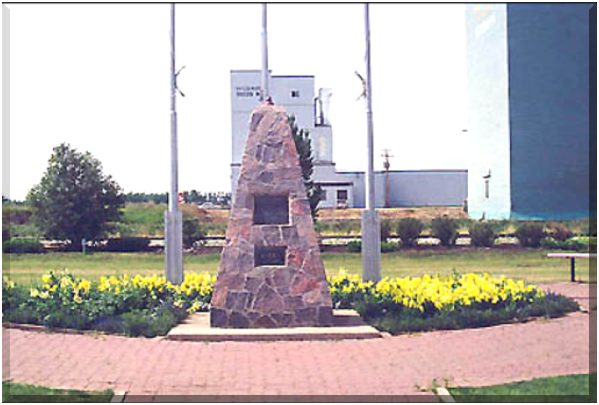
According to Veterans Affairs Canada, the Sexsmith Cenotaph was the first cenotaph erected in the Peace Country.
Built between 1936 and 1939, it was established by British Empire Service League Branch No. 60, now Royal Canadian Legion Branch No. 60.
The labour required for its construction was donated.
Originally dedicated to those who served and died during the First World War, the memorial was later expanded to recognize those lost during the Second World War and the Korean War.
The cenotaph stands in historic downtown Sexsmith at 9925 100 Street.
Its existence reflects the importance residents placed on remembrance even during the difficult economic years of the 1930s.
More than eight decades later, the memorial remains part of the community's public history.
Why Local Military History Matters
National histories explain battles, military campaigns and the decisions of governments.
Local history tells another part of the story.
It connects those events to individual families, farms, businesses and communities.
A photograph of a young soldier may be the only surviving image of someone who never returned home.
A letter may describe daily life overseas, while a family record can help explain what happened to those who remained behind.
For smaller communities, these personal records can be especially valuable.
They help preserve the identities of people who might otherwise become little more than names on a memorial.
They can also reveal how military service affected the development of a community long after a war ended.
A Museum Built Around Preserving Local Stories
The Sexsmith and District Museum Society has spent decades preserving the region's history.
Its origins go back to an organizational meeting held at Teepee Creek on April 16, 1977.
The group was incorporated in 1978 as the Sexsmith to the Smoky Historical Society.
One of its major early accomplishments was the publication of "Wagon Trails Grown Over" in 1980, a historical collection documenting the area's people and settlement.
The organization adopted its present name, the Sexsmith and District Museum Society, in 1988.
Over the years, volunteers have worked to preserve historic buildings, railway equipment, agricultural artifacts and the stories of people who helped build the community.
The new veterans exhibit adds another dimension to that work.
Rather than focusing only on buildings and equipment, it places attention on the lives and experiences of people connected to Sexsmith and the surrounding district.
The Importance of Family Photographs and Records
Much of a community's history remains in private hands.
Old photographs, service documents, letters, diaries and newspaper clippings may still be stored in family albums or boxes.
Such records can help establish where someone served, when they returned, and how military service affected their life.
They can also help correct errors or fill gaps in existing historical accounts.
Preserving that material requires care.
Names, dates and military units should be verified wherever possible, and original documents should be handled and reproduced with appropriate permission.
The names of individual veterans featured in the new exhibit have not yet been independently verified for this article.
The Story Isn't Over
The "Forever Remembered" exhibit creates an opportunity to explore several questions about Sexsmith's military history.
- Which local veterans and families are represented in the exhibit?
- How many Sexsmith-area residents served during the First and Second World Wars and the Korean War?
- Are there photographs, letters or military records that have not yet been preserved in a public collection?
- Will the exhibit remain available after Remembrance Day?
These questions may help residents appreciate how much local history has already been preserved and how much remains in family collections.
Swan City Speaks: What Do You Think?
- Does your family have photographs, letters or memories of someone from the Peace Country who served in the military?
- Have you visited Sexsmith's cenotaph or local museum?
- How can communities make sure the stories of their veterans are remembered by younger generations?
Share your thoughts in the comments. Your opinion matters.