From East Kleskun to Ortona: The Peace Country Soldiers Behind a Battle Canada Will Never Forget
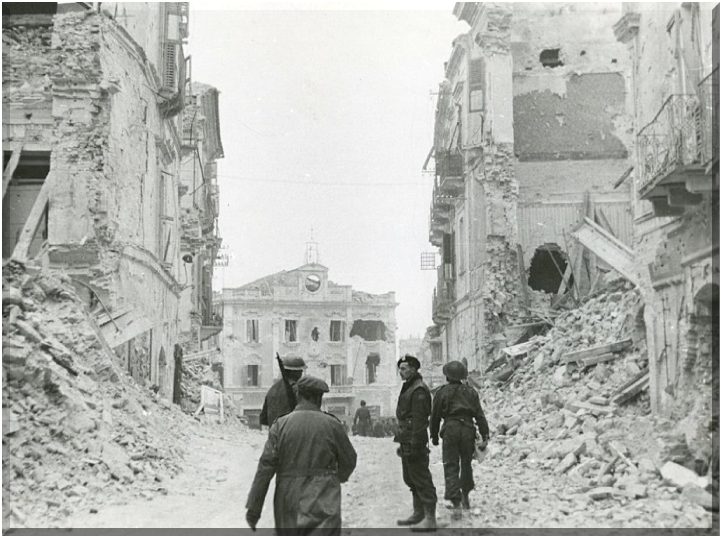
One was killed in battle. Another returned home wounded. A third survived three days trapped beneath the rubble. As Grande Prairie's Legion prepares a new mural and approaches its 100th anniversary, three Peace Country soldiers' stories reveal the human cost of the Second World War.
Back on top · first published Nov 8
The Battle That Reached Into the Peace Country
In December 1943, Canadian soldiers were fighting through the mountains, valleys and towns of Italy.
Thousands of kilometres away, families in the Peace Country waited for letters and news.
The war had reached farms, settlements and small communities across northern Alberta.
Young men who had grown up around Grande Prairie, East Kleskun and Spirit River were serving overseas.
Some had never travelled far beyond Alberta before joining the military.
Others had already worked on farms, in lumber camps or in local businesses.
Now they were participating in one of the most difficult campaigns of the Second World War.
Their destination was a small Italian coastal town called Ortona.
The fighting there would become one of Canada's most remembered battles.
But behind the military history are individual stories.
One soldier from East Kleskun was killed before the main battle inside Ortona began.
An artilleryman from Spirit River was wounded and eventually returned home.
A Grande Prairie infantryman survived the destruction of a building that killed 23 of his fellow soldiers.
Their stories survive because military records, local histories and South Peace Regional Archives preserved them.
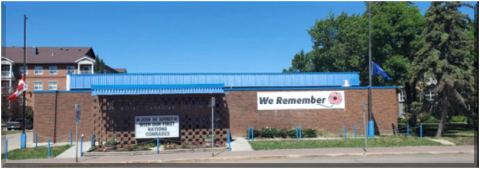
As Grande Prairie's Royal Canadian Legion Branch 54 develops a new military mural, those records provide a deeper understanding of the history being commemorated.
Why Were Canadians Fighting in Italy?
Canada entered the Second World War in September 1939.
For several years, Canadian soldiers trained in Canada and Britain while Allied forces prepared to confront Germany and its allies in Europe.
In July 1943, Canadian forces participated in the invasion of Sicily.
The operation was part of the Allied effort to weaken Axis forces in the Mediterranean and open another front against Germany.
Following the successful campaign in Sicily, Allied troops crossed to mainland Italy.
Italy's government surrendered to the Allies in September 1943, but German forces continued fighting.
The German army established defensive positions across the Italian peninsula.
Italy's geography made the Allied advance extremely difficult.
Mountains, rivers, narrow roads and steep valleys provided natural barriers.
German forces used these features to construct successive defensive lines.
Canadian soldiers frequently had to fight for one hill, river crossing or village at a time.
By December 1943, the 1st Canadian Infantry Division was advancing along the Adriatic coast.
Ahead lay the Moro River and the town of Ortona.
The Germans were determined to resist.
The Moro River: The Battle Before the Battle
The fighting associated with Ortona did not begin when Canadian soldiers entered the town.
It began farther south.
The Moro River and surrounding countryside were heavily defended.
Canadian troops faced artillery, machine guns, mines and difficult terrain.
Rain and mud complicated the movement of vehicles, supplies and wounded soldiers.
The campaign involved repeated attacks against German defensive positions.
One of the communities near the fighting was San Leonardo.
It was in this area that Lance Corporal John Purves of East Kleskun was killed on December 16, 1943.
Four days later, Canadian troops began their main assault into Ortona.
This distinction matters.
The broader campaign and the battle inside the town were connected, but they were not identical events.
A soldier killed near the Moro River should not automatically be described as having died in the street fighting inside Ortona.
The official Canadian Army history places the advance through the Moro River positions before the main assault on the town.
For the Purves family, however, the precise military boundary between operations could not change the outcome.
Their son was dead.
John (Jock) Purves: A Young Man From East Kleskun
The story of John Purves begins in Scotland.
His family immigrated to Canada in May 1926 and settled in the East Kleskun district, west of Bezanson.
The family was among the many immigrant households establishing farms and new lives in the Peace Country.
A detailed biography prepared by Wanda Zenner for the South Peace Regional Archives' Fallen Heroes collection describes the family's early hardships.
When their belongings were delayed after arriving in Canada, neighbours helped supply household necessities.
In 1932, the family home burned down.
While waiting for insurance money, the family joined two granaries together to create temporary living quarters.
Again, neighbours helped.
These details reveal something about the community in which Jock grew up.
Families faced difficult conditions, but they often depended on one another.
The Purves children attended East Kleskun School.
They helped with farm work and grew up in a close-knit household.
Jock eventually worked as a farmer and lumberjack.
A Young Man Eager to Serve
Jock enlisted in Grande Prairie on April 3, 1940.
He joined the Loyal Edmonton Regiment.
His regimental number was M/17199.
His military rank was lance corporal.
The archival records contain a discrepancy concerning his birth year.
A shorter South Peace Regional Archives biography gives November 8, 1920.
However, the more detailed Fallen Heroes biography states that Jock gave 1920 as his birth year when enlisting, while another service document recorded November 8, 1921.
The detailed biography explains that he wanted to appear older.
The discrepancy should be resolved against his original birth and service records before assigning a definitive birth year.
What is established is that Jock was a very young man when he volunteered.
He trained in Alberta before travelling to England in July 1940.
The Last Visit Home
The Fallen Heroes biography records that Jock returned home only once on leave before going overseas.
When he departed, he gave his mother, Sarah, a set of rosary beads.
According to the family account preserved in the biography, those beads were the only thing he had to give her.
It was the last time she saw her son.
That small detail makes the history personal.
A set of rosary beads became a lasting connection between a mother in Alberta and a son who would never return.
A Wife and Child in England
While serving in Britain, Jock met Lilian Rose Cornish.
They married in September 1942.
Their son, John Ernest, was born the following December.
Jock was now a husband and father.
In July 1943, his regiment landed in Sicily.
The Loyal Edmonton Regiment subsequently moved into mainland Italy and advanced northward.
By December, it was involved in the fighting around the Moro River.
On December 16, 1943, Jock was killed in action near San Leonardo.
He was buried at Moro River Canadian War Cemetery.
He left behind his wife, Lilian, and their young son in England, as well as his family in Canada.
A Mother Returns to Italy
One of the most moving details in the Fallen Heroes biography occurred more than 30 years after Jock's death.
In 1975, his mother Sarah, by then remarried to Robert Fleck and living in Sexsmith, travelled to Italy.
She visited her son's grave at Moro River Canadian War Cemetery.
The biography records that she brought the rosary beads Jock had given her during his last visit home.
She held them while placing a wreath from the family on his grave.
The story connects two moments separated by decades.
A young soldier leaving home.
And a mother standing at his grave in Italy, holding the gift he had left behind.
It is a reminder that the consequences of war do not end when the fighting stops.
For families, remembrance can last a lifetime.
Historical source: South Peace Regional Archives — John (Jock) Purves, Fallen Heroes biography by Wanda Zenner
Jim Porterfield: From Spirit River to the Italian Campaign
Jim Porterfield came from another Peace Country farming family.
His family moved from Dauphin, Manitoba, to the Spirit River area in 1928.
They settled in the Broncho Creek district.
Jim attended White Mountain School and later Broncho Creek School.
Like many young men from agricultural communities, his early life was closely connected to farming.
In 1941, he enlisted in the Canadian military.
He received initial training in Grande Prairie and at Shilo, Manitoba.
In November 1941, he was sent to England for further training.
By July 1943, Porterfield was serving with the First Canadian Division's artillery during the Allied invasion of Sicily.
What Did Artillery Soldiers Do?
Artillery played an essential role in the Italian campaign.
Canadian guns supported infantry attacks, targeted enemy defensive positions and helped defend Allied troops against counterattacks.
Artillery soldiers were responsible for operating weapons, moving ammunition and maintaining equipment.
They often worked under dangerous conditions.
Enemy artillery fire, air attacks, mines and difficult terrain could threaten both the gun crews and the supply lines supporting them.
Artillery was not simply a distant form of warfare.
The men serving in these units were part of the same dangerous campaign as the infantry.
Wounded at Ortona
South Peace Regional Archives records that Porterfield was wounded at Ortona in December 1943.
The available biography does not specify the precise circumstances of his injury.
He was returned to England and later transported to Canada aboard the hospital ship Lady Nelson.
He received treatment in hospitals in Calgary and Edmonton.
His military journey had taken him from a farm near Spirit River to Britain, Sicily and mainland Italy.
His injury brought him back to Alberta.
The Life He Built After the War
Porterfield returned to Spirit River in 1946.
He took over his parents' farm.
On June 28, 1947, he married Elsie Collins of Blueberry Mountain.
They had a daughter and a son.
In 1956, Porterfield took over the Massey Ferguson dealership in Spirit River.
He moved into town while continuing to farm the family quarter-section.
He sold the dealership in 1964.
In 1975, he returned to farming.
These details are important because military history often concentrates on what happened during the war.
For surviving veterans, life continued afterward.
Porterfield returned to agriculture, business and family life.
His biography provides an example of how veterans contributed to the development of Peace Country communities after the war.
It does not establish whether he experienced lasting medical or psychological effects from his injuries.
That information should not be assumed.
What is documented is that he was wounded in Italy, received treatment and returned to build a civilian life.
Historical source: South Peace Regional Archives — Soldier Spotlight: Jim Porterfield
The Archives identifies Chepi Sepe, page 755, and a historical obituary as sources for the biography.
Lance Corporal Roy Boyd: Three Days Beneath the Ruins
The experience of Lance Corporal Roy Boyd is one of the most extraordinary Peace Country stories associated with Ortona.
Boyd served with the Loyal Edmonton Regiment.
During the fighting, German forces demolished a building occupied by soldiers from the regiment.
Twenty-three men were killed.
Boyd survived.
According to South Peace Regional Archives, he remained trapped beneath the wreckage for approximately three days before being rescued.
The account appeared in the Archives' September 2016 newsletter.
A Building Becomes a Weapon
The fighting in Ortona was particularly dangerous because buildings themselves could become weapons.
German defenders prepared structures with explosives.
Canadian soldiers advancing through the town sometimes entered buildings that had been mined.
The destruction of an occupied building could kill or trap everyone inside.
The Canadian Army's official history documents how demolitions and booby traps contributed to the danger of urban combat.
Boyd's experience illustrates the human consequences.
He was trapped beneath rubble while the battle continued.
The archival account does not provide a complete firsthand description of his experience during those hours.
There is no need to invent what he thought, felt or heard.
The documented facts are extraordinary enough.
Twenty-three men died.
Boyd survived beneath the wreckage for approximately three days.
How His Story Was Rediscovered
The account was recovered through historical research.
South Peace Regional Archives volunteer Kaylee Dyck discovered material about Boyd while working on the Soldiers of the South Peace Memorial.
The Archives later published the story.
This illustrates an important aspect of local history.
Not every significant story appears in a history textbook.
Some remain in military records, family collections, newspapers and archival files.
It may take decades before someone brings them back into public view.
Boyd survived the Second World War.
He died on January 16, 1985, at the age of 64.
His story remains part of the documented military history of Grande Prairie.
Original archival source: South Peace Regional Archives — September 2016 newsletter, "Lance Corporal Roy Boyd: Lone Survivor," page 25
What Happened Inside Ortona?
The Canadian Army's official history describes the battle as one of the most difficult urban operations Canadian soldiers had experienced.
The principal German defenders were paratroopers of the 1st Parachute Division.
The Canadians had limited experience fighting in heavily fortified towns.
The Germans used the buildings and narrow streets to their advantage.
Machine guns covered approaches.
Snipers occupied concealed positions.
Explosives were used to destroy buildings and obstruct movement.
The fighting became a struggle for individual rooms, houses and streets.
The Technique Called Mouseholing
Canadian soldiers developed and used a technique known as mouseholing.
Rather than advancing along streets exposed to German fire, they blasted openings through the walls of adjoining buildings.
This allowed soldiers to move from one building to another without repeatedly crossing dangerous open ground.
The method helped Canadian troops advance.
But it was also hazardous.
Explosives could bring down weakened structures.
Enemy soldiers might be waiting on the other side of a wall.
A building that appeared secure could contain mines or demolition charges.
The experience at Ortona became an important subject of military study.
The Canadian Army examined how soldiers adapted to urban fighting and how those lessons could improve future training.
Christmas During the Battle
The fighting continued through Christmas 1943.
Some Canadian soldiers were briefly relieved from the front to share a Christmas meal.
Others remained in combat positions.
The Seaforth Highlanders are remembered for arranging a Christmas dinner during the battle.
It was a remarkable contrast.
A traditional holiday meal was being served while soldiers fought and died nearby.
For men far from home, Christmas also meant separation from families who did not know whether they were safe.
The Germans Withdraw
German forces withdrew from Ortona during the night of December 27–28, 1943.
Canadian troops secured the town on December 28.
The victory came at a terrible cost.
According to the Canadian Army, the fighting inside Ortona resulted in 275 Canadian casualties, including 104 killed.
The broader fighting along the Moro River and approaches to Ortona was considerably more costly.
The town itself was devastated.
The destruction also affected Italian civilians, whose homes and community had become a battlefield.
Original military sources:
- Canadian Army — The Capture of Ortona
- Canadian Army — Crossing of the Moro and the Capture of Ortona, report by Major-General Christopher Vokes
- Canadian Army — Assimilating Urban Battle Experience: The Canadians at Ortona
Why Is Ortona Sometimes Called Canada's Little Stalingrad?
The nickname Little Stalingrad appeared because of the ferocity of the urban fighting.
Stalingrad, in the Soviet Union, had become internationally known for devastating street battles and enormous casualties.
Ortona was much smaller.
The two battles were not comparable in scale.
But Canadian soldiers encountered similar dangers associated with fighting through buildings, rubble and fortified streets.
The nickname reflected the intensity of the fighting rather than the number of people involved.
It also helped Ortona become one of the best-known Canadian battles of the Italian campaign.
For Canadians, the battle demonstrated the courage and adaptability of the troops.
For the families of the dead, it became part of a much more personal history.
The War Did Not End When the Soldiers Came Home
The end of the Second World War in 1945 did not end its consequences.
Veterans returned to Canada with different experiences.
Some had survived combat without serious physical injuries.
Others returned with disabilities, chronic pain or injuries that affected their ability to work.
Some experienced psychological difficulties that were not fully understood at the time.
Families also had to adjust.
Children had grown older while fathers were overseas.
Relationships had been interrupted.
Some veterans returned to farms or businesses that had changed during their absence.
Others had to find new employment.
The federal government introduced programs intended to assist veterans with education, employment, rehabilitation and civilian life.
The postwar Veterans Charter became an important part of that transition.
But assistance and outcomes varied.
The experience of Jim Porterfield demonstrates one possible path.
He returned to Spirit River, resumed farming, married and operated a local business.
The experience of the Purves family was entirely different.
Jock never returned.
His wife, son, parents and siblings lived with the consequences of his death.
Roy Boyd survived an extraordinary ordeal and lived for decades afterward.
Each story reveals a different part of the war's lasting impact.
Grande Prairie Legion Branch 54: A History Beginning in 1927
The Royal Canadian Legion's Alberta–Northwest Territories Command records November 17, 1927, as the charter date for Grande Prairie Branch 54.
The branch was established when Grande Prairie was a much smaller community.
According to the Legion's published history, the local population was approximately 1,000 when the branch received its charter.
The Legion's first lot and building were donated by a local farmer.
Following the Second World War, veterans gathered in different locations before the branch developed its present facility.
The first phase of the current building was dedicated in September 1966.
A lounge was added in 1973.
By 1982, branch membership had exceeded 1,400.
Further renovations were completed in 1994.
The branch's Ladies Auxiliary has provided support since 1950.
The Legion's history reflects the development of Grande Prairie itself.
As the community grew, the branch became a gathering place for veterans, families and community activities.
Three Rooms With Military Names
The Legion's published history explains that three rooms were named to recognize different branches of Canada's armed forces.
The Lancaster Room honours the Royal Canadian Air Force and the Lancaster bomber associated with the Second World War.
The Ortona Room honours the Canadian Army and the soldiers who fought at Ortona.
The Corvette Room honours the Royal Canadian Navy and the corvettes used to escort Allied shipping.
These names demonstrate that the history of Ortona has been part of Branch 54's identity for decades.
The proposed new mural continues that tradition.
Original organizational source: Royal Canadian Legion Alberta–Northwest Territories Command — Branch Histories, Grande Prairie Branch 54
November 17, 2027: One Hundred Years of Branch 54
Grande Prairie Legion Branch 54 will mark its 100th charter anniversary on November 17, 2027.
That milestone provides an opportunity to consider the branch's role across a century of local history.
The story extends beyond the Second World War.
It includes veterans of the First World War, Korea, peacekeeping missions, Afghanistan and other military operations.
It includes military families, volunteers and people who supported veterans after their service ended.
It also includes the changing role of the Legion.
The needs of veterans in 1927 were different from those of veterans today.
Modern veterans may face challenges involving employment transitions, physical injuries, operational stress injuries, housing and access to services.
The Legion's centennial offers an opportunity to examine how the organization has adapted.
Important questions include how its membership has changed, what services are available locally and how the branch can remain relevant to younger veterans.
A centennial is not only a celebration of the past.
It is also an opportunity to understand an institution's present responsibilities.
The New Legion Mural: What Is Known?
Grande Prairie's Royal Canadian Legion Branch 54 has been developing a new military-themed mural for its building.
Public descriptions of the project identify three subjects:
- The Battle of Ortona.
- An RCAF photographer associated with the Goodfare area.
- The Canadian Forces Snowbirds.
Grande Prairie artist Tim Heimdal has been identified in reporting about the project.
However, the original project records needed to establish the mural's final design, complete budget, funding arrangements and installation status have not been independently obtained.
The mural's reported progress should therefore not be presented as a confirmed completion.
There is also no verified evidence that John Purves, Jim Porterfield or Roy Boyd is individually depicted in the artwork.
Their inclusion in this historical feature is based on their documented connections to the fighting around Ortona.
That is different from claiming that their portraits appear in the mural.
The Goodfare Photographer: An Unanswered Historical Question
One reported element of the mural recognizes an RCAF photographer associated with Goodfare.
Goodfare is a rural community west of Grande Prairie.
The connection could represent another important contribution by a Peace Country resident to Canada's military history.
Military photography played several roles during the Second World War.
Photographers documented personnel, aircraft, training and operations.
Aerial photography was also important for reconnaissance and intelligence.
However, those general facts do not establish the service history of the individual associated with Goodfare.
The photographer's name, military assignments, service number and connection to the mural remain unverified through original records.
A confirmed identity would allow that person's story to be placed alongside the documented histories of other Peace Country servicemen.
Until then, assigning a name or describing specific wartime achievements would be speculation.
The Snowbirds: Connecting Military Generations
The Canadian Forces Snowbirds are the Canadian Armed Forces' aerobatic demonstration team.
Based at 15 Wing Moose Jaw in Saskatchewan, the team is known for precision flying and public performances.
The Snowbirds represent a different era of Canadian military aviation from the Second World War.
Their reported inclusion in the mural connects historical military service with modern Canadian aviation.
It also broadens the mural beyond one battle or one period of military history.
The exact artistic meaning of the Snowbirds imagery should be confirmed from the Legion or the artist.
What Did the Mural Cost?
The mural's complete budget and funding sources have not been established from original project records.
That leaves several reasonable questions.
Was the project funded by the Legion, private donors, sponsorships, grants or a combination?
What was the artist's contract value?
Were installation costs included?
Who will maintain the artwork?
Will there be a historical display identifying its subjects?
These questions do not imply financial wrongdoing.
They are relevant to the long-term preservation of a public-facing community artwork.
An exterior mural may require maintenance as paint and surfaces are affected by weather, sunlight and age.
A preservation plan can help ensure that the historical imagery remains available to future generations.
Veterans Way: Remembering Military Service in Everyday Life
Grande Prairie's 101 Avenue is known as Veterans Way.
The Legion building and surrounding streets are part of the city's visible military remembrance landscape.
Two commemorative crosswalks have also been reported near 99 Street and 100 Street.
However, original municipal or Legion documentation confirming the full design, funding and completion details has not been established for this article.
Those details should be verified before being reported as settled facts.
The broader idea is worth examining.
Traditional memorials often stand in parks, cemeteries or designated public spaces.
A memorial incorporated into an everyday street can reach people who might not otherwise attend a remembrance ceremony.
It may prompt questions from children and other residents.
Why is the street called Veterans Way?
What do the memorial symbols mean?
Who are the people being remembered?
Public memorials can serve as starting points for learning about local history.
But their educational value depends on providing accurate information about the events and people they commemorate.
South Peace Regional Archives: Preserving the People Behind the History
The stories of Purves, Porterfield and Boyd demonstrate why local archives are essential.
National military histories explain campaigns, commanders, battles and casualty figures.
Local archives connect those events to individual people and communities.
South Peace Regional Archives maintains the Soldiers of the South Peace Memorial.
Its published research identifies more than 1,100 First World War veterans and more than 2,300 Second World War veterans connected to the region.
Volunteers have spent extensive time researching service records, community histories, newspapers, photographs and family information.
The Archives' work has helped preserve stories that might otherwise have disappeared.
Jock Purves is remembered not simply as a casualty of the Italian campaign, but as a son, husband and father from East Kleskun.
Jim Porterfield is remembered as a wounded artilleryman who returned to farming and business in Spirit River.
Roy Boyd is remembered as the lone survivor of a deadly building demolition during the Battle of Ortona.
These details transform military history from a collection of dates into a record of human lives.
They also demonstrate the importance of preserving family photographs, letters, diaries, medals and other historical materials.
Some of the most valuable evidence about the Peace Country's past may still be held by local families.
Remembrance Day 2026: Where and When to Attend
The City of Grande Prairie confirms that the 2026 Remembrance Day service will take place on Wednesday, November 11.
The service is presented by Royal Canadian Legion Branch 54.
Location: The Bowes, Bonnetts Energy Centre, Grande Prairie.
Official schedule:
- 9:45 a.m. — Doors open.
- 10:30 a.m. — Remembrance Day service begins.
- 12:30 p.m. — Closing remarks.
The ceremony is open to the public.
Original source: City of Grande Prairie — Remembrance Day Service
Why These Stories Still Matter
More than eight decades have passed since the Battle of Ortona.
The men who fought there belonged to a generation that experienced war on a scale difficult to imagine today.
For some, military service ended in death.
For others, it meant injury, separation from family and years spent rebuilding civilian lives.
The Peace Country's connection to the battle was not abstract.
It involved people who had attended local schools, worked on farms and belonged to families in the region.
John Purves never returned to East Kleskun.
Jim Porterfield returned wounded and resumed his life in Spirit River.
Roy Boyd survived a deadly explosion and lived for more than four decades after the war.
Their experiences were different, but all three belong to the region's history.
A new mural can help draw attention to Canada's military past.
The deeper value comes from understanding the people and events behind the images.
A painting can depict a battle.
An archive can tell us who was there.
A family photograph can reveal the face of someone who served.
A letter can preserve the words of a person who never returned.
Together, these records help ensure that remembrance remains connected to real lives.
The Story Isn't Over
Several questions remain unanswered about the mural and the local history it represents.
The mural itself
- Has the artwork been fully installed?
- Is a public unveiling planned?
- What is the final budget and how was it funded?
- Will the mural include a permanent explanation of its historical subjects?
The Goodfare photographer
- Who was the photographer?
- What was the person's military service history?
- Are original photographs or service records preserved in an archive?
- What specific connection does the person have to the mural?
The Peace Country's Ortona veterans
- Are there other local soldiers whose connections to the battle have not yet been documented publicly?
- Do families hold letters, photographs or military records that could expand the historical record?
- Are there surviving family accounts of what happened after veterans returned home?
The Legion's centennial
- What events are planned for the branch's 100th anniversary on November 17, 2027?
- How has the branch's role changed over the past century?
- What records should be preserved for future generations?
These are historical and public-information questions. They should not be confused with established findings.
Swan City Speaks: What Do You Think?
- Does your family have a connection to the Battle of Ortona or another military campaign? Are there photographs, letters or stories that deserve to be preserved?
- Should Grande Prairie's new Legion mural include a permanent display explaining the historical subjects and their connections to the Peace Country?
- As Legion Branch 54 approaches its centennial in 2027, which local veterans, military families or historical events should receive greater recognition?
Share your thoughts in the comments. Your opinion matters.
Original Sources and Historical References
South Peace Regional Archives
-
John (Jock) Purves — Fallen Heroes biography by Wanda Zenner — Detailed family history, military service, death near San Leonardo, wife and child, and his mother's later visit to his grave.
-
Soldier Spotlight: John Purves — Archival summary referencing military records, Commonwealth War Graves Commission records and Smoky River to Grande Prairie.
-
Soldier Spotlight: Jim Porterfield — Service in Sicily and Italy, injury at Ortona, medical treatment and postwar life in Spirit River. Underlying references include Chepi Sepe, page 755, and a historical obituary.
-
September 2016 Archives Newsletter — Lance Corporal Roy Boyd: Lone Survivor, page 25 — Archival account of Boyd's survival beneath a demolished building.
-
South Peace Regional Archives — Regional collections and Soldiers of the South Peace Memorial.
Official Canadian Military Records and Historical Research
-
Canadian Army — The Capture of Ortona — Military chronology, German defenders and casualties inside the town.
-
Canadian Army — Crossing of the Moro and the Capture of Ortona — Report by Major-General Christopher Vokes.
-
Canadian Army — Assimilating Urban Battle Experience: The Canadians at Ortona — Historical study of urban combat and Canadian tactics.
-
Department of National Defence — Italy, 1943–1945 — Official overview of the Italian campaign.
Royal Canadian Legion
-
Royal Canadian Legion Alberta–Northwest Territories Command — Grande Prairie Branch 54 History — Original organizational history, building development and military-themed rooms.
-
Royal Canadian Legion Alberta–Northwest Territories Command — Branch Charter Dates — Confirms Grande Prairie Branch 54's November 17, 1927 charter date.
City of Grande Prairie
- City of Grande Prairie — Remembrance Day Service, November 11, 2026 — Official event location and schedule.
Historical Accuracy and Verification Notes
-
The detailed John Purves biography contains a discrepancy with the shorter Archives account regarding his birth year. The detailed biography records that he altered his age when enlisting. His original birth record and service file would be needed to resolve the discrepancy definitively.
-
The detailed biography places Purves' death near San Leonardo on December 16, 1943, before the main fighting inside Ortona began on December 20.
-
The Canadian Army's figure of 275 casualties, including 104 killed, refers to the fighting inside Ortona and should not be confused with casualties throughout the larger December campaign.
-
The documented local connections of Purves, Porterfield and Boyd do not establish that they are individually depicted in the Legion mural.
-
Original Legion or municipal project records are still needed to establish the mural's completion, funding, final design, unveiling and the identity of the Goodfare-connected photographer.
-
The South Peace Regional Archives biographies are institutional historical research supported by identified earlier records. Where the original family or military documents have not been independently inspected, their accounts are attributed to the Archives rather than presented as newly verified firsthand evidence.