Giving Back the Keys: Cedar Point Backlash Deepens as Residents Question Money, Housing and Accountability

Getting the keys to a home can represent a new beginning. For someone who has experienced homelessness or housing insecurity, those keys can represent independence, dignity, stability and an opportunity to rebuild. Giving them back under uncertain circumstances can mean something entirely different.
Back on top · first published Nov 23
Giving Back the Keys
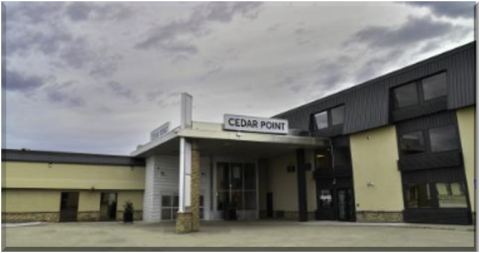
As Grande Prairie considers the future of Cedar Point, a growing community discussion is raising questions that extend well beyond the value of a building.
There are questions about public money, government priorities, charitable organisations and the effectiveness of housing programs.
And there is one question that risks being lost somewhere between the financial spreadsheets and government decisions.
Where will the residents go?
The Backlash Continues
Following our earlier coverage of public reaction to the proposed sale of Cedar Point, another lengthy Facebook discussion has emerged.
Read the original Facebook discussion initiated by Marissa L.
While the earlier discussion focused primarily on municipal spending and the proposed sale price, this latest conversation examines the relationship between governments, charitable organisations and publicly funded housing services.
Some participants are questioning the entire model.
Others are defending the people and organisations working within it.
The discussion suggests that Cedar Point is becoming considerably more than a municipal property transaction for those following the issue.
Are We Solving Homelessness or Managing It?
Facebook contributor Marissa L. raised a fundamental question about whether organisations receiving public funding to address homelessness are tackling its underlying causes or primarily managing its consequences.
She questioned the system under which governments fund outside organisations to provide housing and related services.
Her argument was that providing emergency assistance does not necessarily address the underlying conditions that cause people to become homeless.
She also suggested that Grande Prairie could have considered operating Cedar Point directly, potentially employing residents themselves in maintenance or caretaking roles where appropriate.
Her comments generated both support and disagreement.
Emergency shelters, food programs, clothing, counselling and transitional accommodation can provide essential assistance.
But another question is how effectively these services help people achieve lasting housing stability.
How many people become permanently housed?
How many return to emergency shelters?
How many develop the financial independence necessary to maintain accommodation?
And how are those outcomes measured against the public money being spent?
The Facebook discussion does not establish that any organisation has improperly benefited from homelessness funding. It does, however, raise questions about how the effectiveness of that funding should be evaluated.
In Defence of The Mustard Seed
Not everyone agreed with Marissa's assessment.
Doug W., who said he knew two of The Mustard Seed's founders and had experience working in street outreach in Calgary, offered a substantially different perspective.
He described an organisation that started with limited resources and grew into an established provider of services for vulnerable people.
He pointed to its housing programs, meals, counselling, addiction recovery services and other assistance.
He also raised a practical question.
If the funding needed to operate a housing program disappears, what is the service provider supposed to do?
His argument was that charitable organisations cannot necessarily continue operating programs indefinitely without sufficient financial resources.
Doug also cited figures attributed to Charity Intelligence Canada concerning The Mustard Seed's housing and support services across its wider network.
Those figures have not been independently verified for this article and are not specific to Cedar Point.
His contribution highlights an important distinction.
The closure of a housing program does not necessarily mean the people operating it failed.
It could also reflect a failure to establish a sustainable funding arrangement.
A $7.585-Million Contract — And One Bid
One participant in the Facebook discussion, Nolan R., asked a particularly relevant question.
"However why did the city contract the mustard seed?"
The City's original records provide part of the answer.
On November 24, 2023, the City announced that The Mustard Seed had been selected to provide services at what was then called the Coordinated Care Campus.
The announcement described a competitive procurement process and identified February 1, 2024, as the starting date.
Mayor Jackie Clayton expressed confidence in the organisation's experience and its ability to help residents maintain long-term housing while delivering social and economic benefits.
But another municipal document provides additional information.
On page 29 of the City's 2023 fourth-quarter financial report, the procurement record identifies:
- Contract: Supportive Housing for the Coordinated Care Campus.
- Successful applicant: The Mustard Seed.
- Contract duration: Four years.
- Awarded contract value: $7,585,000.
- Number of bids received: One.
Averaged over four years, the awarded contract value represents approximately $1.9 million annually.
That is a mathematical average, not confirmation of the actual annual payment schedule or the amount ultimately paid.
Receiving only one bid does not establish that procurement rules were breached or that the contract was inappropriate.
Specialised services can attract relatively few qualified applicants.
However, it raises additional questions about the alternatives available to the City at the time.
Was direct municipal operation evaluated?
How was the proposed cost assessed when there were no competing bids?
What performance requirements were included in the contract?
What provisions existed for funding interruptions or early termination?
And what obligations remain under the original four-year agreement?
The relationship between this supportive housing contract and the funding arrangements affecting Cedar Point's independent affordable housing residents also needs clarification.
The two should not automatically be treated as the same funding program.
Original source: City of Grande Prairie — 2023 Fourth-Quarter Financial Report, page 29
Being a Charity Does Not Remove the Need for Accountability
Several participants challenged descriptions of The Mustard Seed as a privately owned, profit-making business.
Stacey C. pointed out that a non-profit organisation does not have an individual owner in the conventional commercial sense.
Cindy N. similarly noted that registered charities operate under rules governing the use of their resources.
That distinction matters.
Charitable organisations can employ executives, pay salaries, hire contractors, receive government grants and generate operating surpluses.
However, they cannot simply distribute charitable resources to private owners or shareholders as corporate profits.
Charitable status does not eliminate the need for financial transparency, particularly when public money is involved.
Questions about administrative costs, executive compensation, contracted services, operating expenses and measurable outcomes are appropriate.
But those questions must be answered through financial statements, agreements, audits and documented results rather than assumptions or personal allegations.
The Money on the Table
The Cedar Point controversy involves several significant financial figures.
- $12.5 million for the original purchase of the former Stonebridge Hotel in 2021.
- Approximately $15.5 million in the original acquisition and renovation budget.
- More than $25 million in the subsequently published project budget.
- $7.585 million in the awarded four-year supportive housing service contract.
- Nearly $9 million associated with a potential property sale in the proposed 2027 municipal budget.
These figures represent different financial commitments and cannot simply be added together to calculate the total cost to taxpayers.
Neither can subtracting the proposed sale proceeds from the original project budget establish the final financial loss.
The project involved different funding sources, operating expenditures, borrowing and services delivered over time.
The public needs a consolidated accounting that explains how these pieces fit together.
How much was actually spent?
How much came from municipal taxpayers?
How much came from provincial and federal funding?
How much was paid under the operating contract?
How much debt remains?
What assets and liabilities would remain following a sale?
And what measurable public benefit was achieved?
Money has been committed, contracts have been awarded and services have been delivered.
A complete financial and operational assessment would help establish what the community received in return.
A Building Designed for the Long Term
The City's own description of Cedar Point explains why the facility was established.
It was intended to address an identified shortage of housing for people experiencing homelessness and housing insecurity.
The facility contains:
- 63 housing units with additional support services.
- 43 independent affordable housing units.
- On-site care, programming and other support facilities.
That represents 106 housing units designed to serve people with different needs.
The City also identified potential benefits including improved resident well-being, greater independence and reduced demand on emergency services.
Those were important objectives.
But the current situation raises questions about whether the funding and operating arrangements were sufficiently durable to sustain those objectives.
Why commit millions of dollars to a housing facility intended to serve the community over the long term if essential programs depend on funding that may expire after only a few years?
Was that risk anticipated?
Was there a contingency plan?
And if the property's use changes, how will its original housing objectives be addressed elsewhere?
What Happens When the Funding Runs Out?
Previous reporting established that The Mustard Seed learned on August 31, 2026, that funding for its Cedar Point housing program was scheduled to end on March 31, 2027.
Independent affordable housing residents subsequently faced uncertainty about a possible December 31, 2026, relocation date.
December 31 has been identified as a potential transition date, not a confirmed universal eviction date.
The future of each resident and the continued operation of the different housing programs require clarification.
There is an important distinction between owning a building and funding the services delivered inside it.
A municipality can invest millions of dollars in purchasing and renovating a property.
A charitable organisation can operate programs within that property.
A provincial government can provide funding for those programs.
But when those arrangements change, who is responsible for ensuring that residents do not fall through the cracks?
That question is particularly important when the original purpose of the investment was to reduce homelessness.
Did Residents Have a Seat at the Table?
Among the many comments posted during the Facebook discussion, Marissa raised one particularly important question.
"Are the people most affected by the decisions among those making them?"
The City's original Cedar Point information identifies community involvement and resident consultation as components of the project's long-term success.
It also identifies a Resident Advisory Committee as part of its engagement approach.
That raises further questions.
Was the Resident Advisory Committee consulted about the proposed changes?
Were residents informed before decisions concerning the property's future were advanced?
Were they given opportunities to suggest alternatives?
What concerns did they communicate?
And how were those concerns addressed?
The answers have not been established.
Another participant, Doreen L., said her brother had lived at Cedar Point and expressed disappointment with his experience.
Her individual account could not be independently verified, but it illustrates why residents' experiences deserve consideration alongside financial reports and government announcements.
Government officials, administrators and service providers can discuss funding arrangements and transition plans.
Residents experience their consequences.
Could Closing Housing Create Costs Somewhere Else?
One of the original arguments for Cedar Point was that stable housing could reduce pressure on other public services.
Those services include emergency shelters, policing, healthcare and other community supports.
If some residents are unable to secure suitable replacement housing, could those pressures increase again?
Could savings in one government budget result in additional expenses somewhere else?
Could reducing one housing program increase demand for another?
These are possible consequences, not established outcomes.
Their significance depends on what happens to Cedar Point, whether its supportive housing services continue and whether affected residents obtain suitable alternative accommodation.
A proper assessment should examine the overall public cost rather than looking at one budget in isolation.
It should also consider whether the original housing investment delivered the social and economic benefits it was intended to achieve.
Three Parties, Different Responsibilities
The Cedar Point situation involves at least three principal parties.
The City of Grande Prairie
The City purchased and renovated the property, selected its service provider and is now considering its future.
Its responsibilities include explaining the original investment, operating arrangements, municipal financial commitments and proposed property transaction.
The Government of Alberta
Provincial funding decisions and housing policies are central to the future of the facility.
Questions include what funding will continue, what services may change and how affordable housing capacity will be maintained.
The Mustard Seed
As the service provider, the organisation faces questions about its contractual commitments, financial arrangements, program outcomes and support for affected residents.
The precise legal and contractual responsibilities of each party require further examination.
It would be premature to assign responsibility for the entire situation to any one of them.
The Story Isn't Over
Several important questions remain unanswered.
- What are the complete terms of the original $7.585-million supportive housing contract?
- How much has actually been paid under that contract?
- What happens to the contract if the property changes ownership or use?
- Which funding arrangements are ending, and which will continue?
- Was a long-term operating plan established before the original capital investment was approved?
- Were alternative operating models properly evaluated?
- What measurable housing outcomes has Cedar Point achieved?
- Were residents and their advisory committee consulted about the proposed changes?
- How many residents have secured suitable alternative accommodation?
- How many remain uncertain about where they will live?
- What affordable housing capacity will remain if the proposed changes proceed?
- Will taxpayers receive a comprehensive financial and operational accounting of the project?
Giving Back the Keys — But What Comes Next?
A property sale can be recorded in a financial statement.
A contract can be completed, amended or terminated.
A government grant can expire.
A budget can be balanced.
But none of those administrative outcomes necessarily answers the question facing someone who may have to leave their home.
Where do they go next?
For taxpayers, Cedar Point represents a substantial public investment.
For governments, it represents a series of policy and financial decisions.
For The Mustard Seed, it represents a housing service operating within funding and contractual arrangements.
For the residents, it represents something considerably more personal.
It represents home.
Years ago, Cedar Point's doors were opened with the intention of helping people find stability and maintain housing.
As its future is debated, the question is whether that original promise can still be fulfilled.
Giving someone the keys to a home can be the beginning of a new chapter in their life.
If those keys must eventually be returned, what assurance do residents have that another door will open?
Have Your Say
Should Grande Prairie operate publicly owned affordable housing directly, or should experienced charitable organisations continue delivering those services?
Should governments establish long-term operating commitments before investing millions of dollars in housing facilities?
Should residents have a formal voice in decisions affecting the future of their homes?
And should the public receive a complete accounting of Cedar Point's financial and operational history?
Share your experiences, questions and suggestions.
Previous Coverage and Original Sources
- Cedar Point Backlash: Residents Question City Spending as Grande Prairie Lowers Tax Increase
- Original Facebook discussion — Marissa Loewen and community responses
- City of Grande Prairie — Cedar Point project information
- City of Grande Prairie — November 24, 2023, announcement of The Mustard Seed service agreement
- City of Grande Prairie — 2023 Fourth-Quarter Financial Report, procurement activity, page 29
- City of Grande Prairie — Council agendas, minutes and budget records
- The Mustard Seed
Editor's note: This article examines community opinions, original municipal records and previously reported financial information. Facebook comments are drawn from a supplied copy of the linked discussion. The live post and its participants have not been independently authenticated. Ordinary participants are identified by first name and last initial. Unsubstantiated personal allegations have been excluded. Contract values do not necessarily represent actual payments, and the proposed property sale has not been independently confirmed as completed.