Grande Prairie's New Police Service: From $19 Million to a Reported $23 Million — What Will Taxpayers Actually Pay?
A New Police Service — and a New Financial Question
Grande Prairie has entered a new chapter in local policing.
On October 21, 2026, the Grande Prairie Police Service (GPPS) officially replaced the RCMP as the police service responsible for the city.
The transition was completed approximately two years earlier than originally scheduled.
City officials have presented the change as an opportunity for greater local accountability, improved policing services and more control over spending.
But with the transition now complete, another question deserves attention.
What has the change actually cost taxpayers, and what will it cost in the years ahead?
Swan City Now examined the City's original police transition estimates, the Grande Prairie Police Service's financial information and the City's published 2026 budget.
The documents provide important answers, but they also raise questions about the final transition cost, provincial contributions and future operating expenses.
The Original Price Tag Was $19 Million
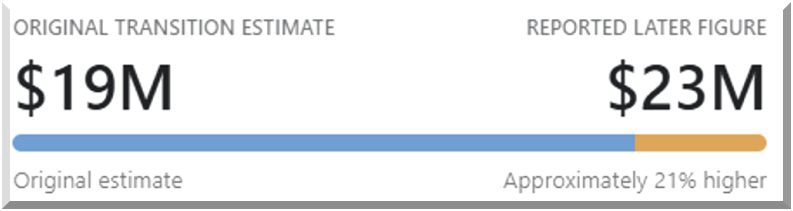
When Grande Prairie City Council approved the transition to a municipal police service in March 2023, the estimated cost was approximately $19 million.
The estimate included:
- Recruiting and training police officers.
- Transitional staffing.
- Police vehicles and equipment.
- Information technology and communications systems.
- Infrastructure and professional services.
- A contingency allowance of approximately 20%.
The City's original financial analysis placed the estimated costs at $16.34 million, plus a contingency of up to $2.65 million.
Together, those amounts produced an estimate of approximately $18.99 million.
The City said its financial analysis had been independently reviewed by accounting firm MNP.
Importantly, these were start-up and transition expenses.
They were not the annual cost of operating the new police service once fully established.
Where Did the Reported $23 Million Come From?
A subsequent media report quoted Mayor Jackie Clayton describing the transition price tag as approximately $23 million.
That would be about $4 million above the original $19-million estimate, an increase of roughly 21%.
However, the publicly accessible financial information reviewed by Swan City Now does not yet provide a complete reconciliation showing how that $23-million figure was calculated.
Several explanations are possible.
The amount could reflect additional transition expenses, revised accounting, accelerated implementation costs or expenditures not included in the original estimate.
Those possibilities have not been confirmed.
The City should publish a final transition financial statement showing:
- Original budget.
- Approved budget amendments.
- Actual expenditures.
- Outstanding commitments.
- Provincial funding received.
- Net municipal contribution.
Without that reconciliation, residents cannot determine exactly how much the transition cost or whether the project remained within its revised financial plan.
How Much Did Alberta Contribute?
The Province initially committed $9.7 million to support Grande Prairie's transition away from RCMP policing.
According to the Grande Prairie Police Service's updated municipal policing information, Alberta announced an additional $7 million in 2025.
That brought the stated provincial commitment to $16.7 million.
This is an important distinction.
A provincial funding commitment is not necessarily the same as money already received and spent.
The City should confirm how much of the $16.7 million has been received, how much remains outstanding and whether any conditions apply.
If the final transition cost were $23 million and the full $16.7 million provincial contribution were applied against it, the difference would be approximately $6.3 million.
That is a simple calculation, not a verified final municipal cost.
The actual amount borne by Grande Prairie taxpayers depends on the complete accounting of revenues, expenditures and other funding sources.
What Does the City's 2026 Budget Reveal?
The City's approved 2026 budget provides a clearer picture of how policing expenses are changing.
Appendix C, beginning on page 161 of the public budget report, separates transition expenses from the ongoing Police Service and Office of the Chief budget.
For 2026, the City budgeted:
Transition operations
- Revenue: $2 million.
- Operating expenses: approximately $4.59 million.
- Net municipal funding required: approximately $2.59 million.
Police Service and Office of the Chief
- Operating expenses: approximately $13.88 million.
- Revenue: approximately $423,000.
- Net municipal funding required: approximately $13.46 million.
The second category is projected to grow substantially in subsequent years as the municipal service reaches full operation.
The published figures are:
| Year | Police Service and Office of the Chief — Net Budget |
|---|---|
| 2025 | $4.43 million |
| 2026 | $13.46 million |
| 2027 | $22.58 million |
| 2028 | $23.59 million |
| 2029 | $24.63 million |
These figures are from the City's approved budget, not estimates created by Swan City Now.
However, they represent one specific policing budget category.
They are not the complete citywide policing cost and should not be compared directly with the full former RCMP contract without including all related departments and expenses.
That broader comparison is necessary to determine whether municipal policing will ultimately cost less.
Are Property Taxes Already Being Affected?
Yes.
The City's 2026 budget explicitly identifies policing services as one of the reasons for the year's property tax increase.
The approved budget includes:
- A 2.42% increase for general City services and capital investment.
- A 1.92% increase attributed to policing services.
- A combined property tax increase of 4.34%.
For a representative single-family home assessed at $350,000, the City estimated the overall increase at approximately $12 per month compared with 2025.
That $12 figure reflects the total municipal budget impact described by the City, not policing alone.
The important point is that the police transition is already part of the City's tax-supported budget.
In 2023, the City expressed confidence that provincial transition assistance would help avoid placing the start-up burden on ratepayers.
The 2026 budget now identifies both transition costs and the ongoing establishment of the municipal service as financial pressures.
These statements are not necessarily contradictory: start-up funding and long-term operating costs are different expenses.
But the distinction deserves a clear explanation from City officials.
Was Finishing Two Years Early a Financial Advantage?
The transition was originally expected to take approximately five years.
Instead, GPPS became Grande Prairie's police of jurisdiction on October 21, 2026.
Completing the process early may have produced benefits.
For example, it could have reduced the period during which two policing organizations required overlapping administrative, staffing and operational arrangements.
It may also have allowed Grande Prairie to establish local policing priorities sooner.
But faster completion does not automatically mean lower total costs.
Accelerated recruitment, equipment purchases, technology implementation and training could also bring expenditures forward.
To determine whether the accelerated schedule saved money, the City would need to compare the original five-year transition forecast with actual spending under the shortened schedule.
That comparison has not been established in the public records reviewed for this article.
What Happened to the RCMP?
The transition does not mean the RCMP has disappeared from the Peace Country.
The Grande Prairie Police Service now has responsibility for policing within the city.
The RCMP continues to serve surrounding jurisdictions, including the County of Grande Prairie through its regional detachments.
In an official October 21 statement, Alberta RCMP Commanding Officer Trevor Daroux acknowledged the end of the RCMP's long history as Grande Prairie's municipal police service.
The RCMP had served as the city's police of jurisdiction since 1943.
The transition also creates an opportunity to examine how the new municipal service and the RCMP will cooperate across jurisdictional boundaries.
Criminal investigations, emergency responses and regional public safety concerns do not always stop at municipal borders.
Residents should understand which organization responds to which calls and how costs are shared when services cooperate.
Will the New Service Actually Cost Less?
One of the central arguments for establishing GPPS was the prospect of greater control over policing expenditures.
The City's original financial analysis suggested that a municipal police service could eventually cost less than continuing with the RCMP contract, after adjusting for inflation and other factors.
Local control could also allow the City to set staffing priorities and develop specialized services tailored to Grande Prairie.
But projections are not the same as results.
The new police service has only recently assumed full responsibility.
Its long-term financial performance has not yet been demonstrated.
A meaningful comparison should include:
- Total annual operating expenses.
- Capital equipment and vehicle replacement.
- Employee salaries, benefits and pension obligations.
- Dispatch and communications expenses.
- Training and recruitment.
- Specialized policing units.
- Insurance, legal and liability costs.
- Shared services and regional agreements.
- Provincial and federal contributions.
- Changes in the number of officers and services delivered.
It should also account for the fact that a new municipal police service may provide capabilities that were previously delivered differently under the RCMP.
Comparing two budgets without comparing the services being provided could produce misleading conclusions.
More Local Control Also Means More Local Accountability
The new municipal policing model changes who makes important decisions.
Grande Prairie City Council approves the police budget.
The Grande Prairie Police Commission provides civilian oversight and determines policing priorities within its legal responsibilities.
The Chief of Police manages police operations.
This arrangement offers the potential for greater local influence.
But it also places greater responsibility on local officials to explain financial decisions.
If policing costs rise, residents should be able to see why.
If savings are achieved, those savings should be documented.
And if the new service produces better public safety outcomes, the improvements should be measurable.
The financial transition is only one part of the story.
The larger question is whether Grande Prairie residents receive better value and effective policing from their investment.
The Story Isn't Over
Swan City Now will continue tracking the financial and operational performance of Grande Prairie's new police service.
The most important unanswered questions include:
- What is the final, independently reconciled transition cost?
- What explains the difference between the original $19-million estimate and the subsequently reported $23-million figure?
- How much of the Province's $16.7-million commitment has actually been received?
- What is the final net cost to Grande Prairie taxpayers?
- Did completing the transition two years early save money or increase short-term spending?
- How does the complete GPPS operating budget compare with what RCMP policing would have cost over the same period?
- What additional long-term pension, equipment replacement and infrastructure obligations will the City carry?
- What public safety improvements will be measured to determine whether the investment is delivering value?
The City has published substantial financial information, but a clear final reconciliation of the transition remains essential.
Swan City Now will report meaningful developments as they are verified.
If there is no meaningful change, we will say so.
Swan City Speaks: What Do You Think?
- Do you believe Grande Prairie will benefit from having its own police service, even if the transition costs more than originally estimated?
- Should the City publish a detailed final accounting of every dollar spent on the transition, including provincial contributions?
- What matters most to you: lower policing costs, more officers, faster response times or greater local accountability?
Share your thoughts in the comments. Your opinion matters.
Swan City Now — Because the story doesn't end with the headline.
Original Sources
- City of Grande Prairie — 2026 Budget Report, Appendix C, pages 161–162
- City of Grande Prairie — Municipal Policing FAQ and Original Financial Estimates
- Grande Prairie Police Service — Updated Municipal Policing FAQ
- Grande Prairie Police Service — Transition Financials
- Grande Prairie Police Service — Transition Timeline
- Grande Prairie Police Service — July 21, 2026 Transition Update
- RCMP — Official October 21, 2026 Transition Statement