Peace Country Bears: Are We Still Relying on a 15-Year-Old Safety Assessment?
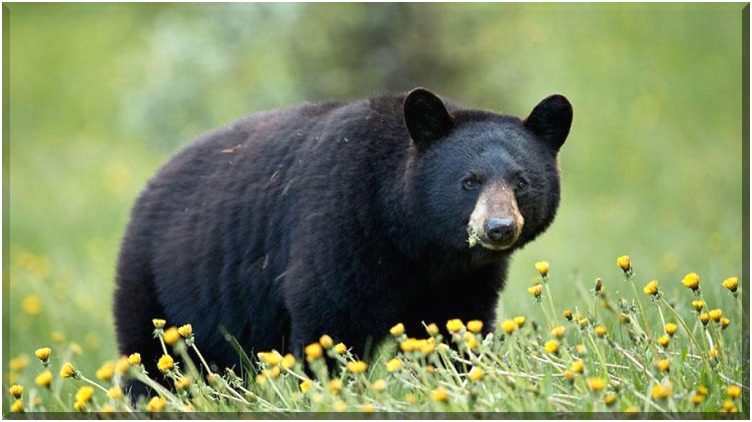
Alberta identified bear-conflict hotspots near Grande Prairie in 2011. Fifteen years later, important questions remain about population numbers, public safety and whether communities are doing enough to prevent dangerous encounters.
Back on top · first published Nov 6
We Share the Peace Country With Bears
For many residents of Grande Prairie and the surrounding Peace Country, seeing a bear is part of living in northern Alberta.
Black bears and grizzly bears occupy portions of the region's forests, river valleys and agricultural landscapes.
Most encounters do not result in injury.
But when bears begin visiting residential neighbourhoods, farms, campgrounds and recreational areas, the consequences can become serious for both people and wildlife.
The Alberta government's Grande Prairie BearSmart program was established to help reduce these conflicts.
Its published information identifies several locations where bear-human encounters were historically concentrated.
There is one important detail.
The assessment behind those findings was completed in June 2011.
That raises a reasonable question in 2026: how well does the information describe the risks residents face today?
Where Were the Bear Hotspots?
Alberta's Grande Prairie BearSmart information identifies three general areas of concern.
South of Grande Prairie and the Wapiti River
Subdivisions and smaller communities near the Wapiti River experienced elevated levels of black bear encounters in the assessment.
The government associated many of these incidents with garbage attracting bears into populated areas.
The river valley provides natural wildlife habitat, but residential development can also introduce food sources that bears learn to exploit.
Sturgeon Lake
The Sturgeon Lake area was another historical hotspot for black bear encounters.
Again, garbage was identified as an important attractant.
For rural residents and recreational property owners, this highlights the importance of how household waste, food and other attractants are stored.
Goodfare and Rio Grande
The assessment identified higher levels of grizzly bear encounters in the Goodfare and Rio Grande areas.
Unlike the black bear hotspots, these encounters were associated largely with agricultural attractants, including dead livestock disposal sites.
These findings do not mean every bear in those areas was dangerous.
They identify historical patterns of reported conflict and the conditions that contributed to them.
Nor do they establish that these remain the region's highest-risk locations today.
Source: Government of Alberta — Grande Prairie BearSmart
The Garbage Problem: Are We Attracting Bears Into Our Communities?
One of the clearest findings from Alberta's BearSmart guidance is that human behaviour can contribute to bear encounters.
Bears have an excellent sense of smell.
Food scraps, unsecured garbage, birdseed, pet food, fruit and poorly maintained compost can attract them.
When a bear repeatedly finds food near people, it may return to the same location.
That can create a dangerous cycle.
A bear that learns to associate homes or farms with easy meals may become increasingly difficult to discourage.
In some circumstances, wildlife officers may have to intervene.
Relocation is not always successful, and bears involved in serious conflicts may ultimately be destroyed.
That means preventing food-conditioning is important not only for human safety but also for protecting bears.
What Happened to the Bear-Resistant Garbage Bin Program?
The provincial BearSmart page describes a partnership with the Peace Parkland Naturalists to make Bearsaver bear-resistant garbage containers available at reduced cost to rural residents and people living in subdivisions around Grande Prairie.
It is a practical approach.
Rather than waiting until a bear repeatedly enters a neighbourhood, residents can reduce access to the food sources that attract it.
However, the published information does not establish how many bins were distributed, whether the subsidy remains available in 2026 or how much the initiative reduced bear encounters.
Those are measurable questions.
They could help determine whether the program should be expanded, updated or replaced.
The provincial page lists the Grande Prairie Fish and Wildlife office at 780-538-5265 for information about bear-resistant bins. Residents should confirm current program availability before relying on that listing.
The Demmitt Attack: A Reminder of the Risks
In July 2025, a serious grizzly bear attack occurred in the Demmitt area northwest of Grande Prairie.
Local reporting on July 18 described a temporary area closure north of Demmitt following the incident.
The attack illustrates why bear safety remains an important regional issue.
However, the publicly verified information reviewed for this article does not establish a complete official chronology of the encounter, including all circumstances leading to the attack.
It would be inappropriate to assume the bear was attracted by garbage, livestock or human activity without evidence.
The incident also should not be used by itself to suggest that bear attacks are becoming more frequent.
Determining a trend requires comparable statistics across multiple years.
That is information the public deserves to have explained clearly.
How Many Bears Are Actually Living in the Peace Country?
This is one of the most important unanswered questions.
Alberta has conducted grizzly bear population research in different Bear Management Areas.
However, a current, independently verified population estimate specifically covering Grande Prairie and the surrounding Peace Country was not established for this article.
There is also a distinction between black bear and grizzly bear populations.
The two species have different conservation histories, habitat requirements and patterns of interaction with people.
An estimate for Alberta as a whole cannot simply be divided among regions to calculate how many bears live locally.
Likewise, an increase in reported sightings does not necessarily prove an increase in the bear population.
More residents, more cameras, changes in reporting practices and greater human activity in bear habitat can all influence the number of observations.
Reliable local population estimates and consistent encounter records would help separate these possibilities.
Are Bear Encounters Becoming More Common?
There is no verified annual Peace Country dataset in the material reviewed that establishes whether bear encounters have increased or decreased over the past decade.
That matters because several different types of incidents are often grouped together in public discussion.
A bear sighted along a rural road is not the same as a bear repeatedly entering a residential yard.
A bear damaging agricultural property is not the same as a defensive encounter involving a person.
And a serious attack is different again.
A meaningful public safety report should distinguish among:
- General bear sightings.
- Bears accessing garbage or other attractants.
- Property damage and livestock-related incidents.
- Encounters requiring wildlife officer intervention.
- Human injuries and fatal attacks.
- Bears relocated or destroyed following conflicts.
Without consistent definitions and annual figures, it is difficult to establish whether conditions are improving or deteriorating.
What Has Changed Since 2011?
The 2011 assessment remains useful historical evidence.
But the Peace Country has continued to change.
Residential development, industrial activity, agricultural operations and outdoor recreation all influence where people encounter wildlife.
The relevant question is whether these changes have altered the location or frequency of conflicts.
An updated assessment could examine whether the historical hotspots remain the same, whether new areas have emerged and whether earlier prevention measures have been effective.
This is a question about the currency of public safety information, not evidence that the original assessment was inadequate.
What Can Residents Do Right Now?
Alberta's BearSmart guidance offers several practical recommendations.
Around the home:
- Store garbage and recyclables in secure, bear-resistant containers.
- Avoid putting garbage outside earlier than necessary.
- Remove bird feeders during the months when bears are active.
- Clean barbecues and remove food residue.
- Keep pet food indoors.
- Pick ripe fruit and remove fallen fruit.
- Never intentionally feed bears.
On farms and rural properties:
- Secure grain and other feed.
- Manage dead livestock and other animal remains appropriately.
- Consider suitable electric fencing around attractants such as bee yards.
- Keep food waste away from buildings and frequently used areas.
While enjoying the outdoors:
- Stay alert for tracks, droppings and other signs of bear activity.
- Make reasonable noise to avoid surprising a bear.
- Keep dogs under control.
- Carry bear spray where appropriate, keep it accessible and know how to use it.
- Never approach a bear for a photograph.
If a bear is encountered, Alberta advises against running. The appropriate response depends on the bear's behaviour and circumstances.
Residents should familiarize themselves with official bear safety guidance before travelling in bear country.
Alberta BearSmart — Safety Information
Who Is Responsible for Preventing Bear Conflicts?
Responsibility is shared.
The provincial government manages wildlife and provides BearSmart education and enforcement resources.
Municipalities can influence garbage collection, waste storage, land-use planning and public education.
Farmers and rural property owners can reduce attractants.
Residents and visitors can take precautions around homes and recreational areas.
Alberta's BearSmart community guidance specifically recommends measures such as bear-resistant garbage containers, limiting how early garbage is placed at the curb and securing waste facilities.
This raises a local policy question.
Should communities in known bear habitat rely primarily on voluntary precautions, or should additional measures be considered where repeated conflicts occur?
The answer may differ between urban neighbourhoods, rural subdivisions and agricultural areas.
Any proposed requirements would need to consider effectiveness, affordability and enforcement.
The Questions That Remain
The historical assessment identifies problems that were already recognized 15 years ago.
What remains unclear is how much progress has been made.
Several questions could be answered through updated public records:
- Has a newer Grande Prairie-area bear hazard assessment been completed?
- How many black bears and grizzly bears are currently estimated to occupy the region?
- How many bear-human conflicts have been reported annually since 2011?
- How many incidents involved garbage, livestock or other attractants?
- How many bears have been relocated or destroyed following conflicts?
- Is the bear-resistant garbage-bin program still operating, and what results has it achieved?
- What changes, if any, have followed the July 2025 Demmitt attack?
These are requests for information, not evidence that authorities have failed to act.
An updated public assessment would allow residents to understand both the risks and the effectiveness of existing prevention efforts.
Why This Matters
Bears are an important part of the Peace Country's natural environment.
Their presence also requires people to make responsible decisions about how communities grow and how food waste is managed.
The objective should not be to eliminate bears from the landscape.
It should be to reduce preventable conflicts while protecting residents, livestock, property and wildlife.
The 2011 BearSmart assessment provides a useful starting point.
But in 2026, residents have good reason to ask whether more recent information is available.
We know where some of the problems were 15 years ago. The unanswered question is where they are today — and whether our prevention efforts are working.
Swan City Speaks: What Do You Think?
-
Have you encountered black bears or grizzly bears near your home, farm or recreational area? Where and when did it happen?
-
Should rural subdivisions and communities near known bear habitat have greater access to affordable bear-resistant garbage containers?
-
Would an updated public bear hazard assessment help residents better understand the risks in the Peace Country?
Share your thoughts in the comments. Your opinion matters.