STARS Receives $1 Million from Co-op — But How Much Emergency Air Ambulance Service Does the Peace Country Need?
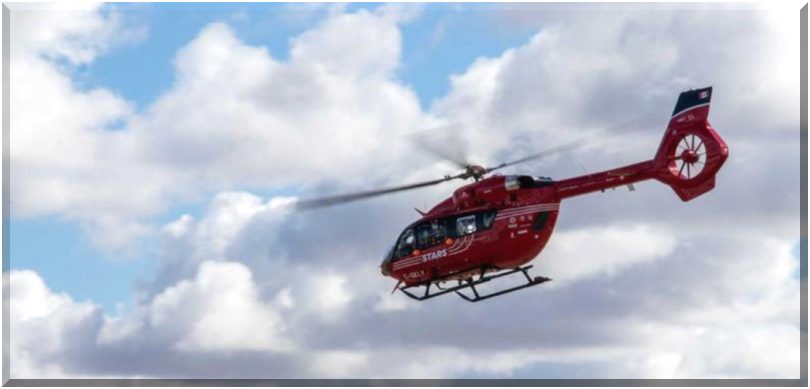
A Million-Dollar Commitment to Emergency Care
A new $1-million partnership between Federated Co-operatives Limited and STARS will help support critical care and medical transport across Western Canada.
The commitment was announced November 6 and involves nearly 150 local Co-ops represented through the Co-operative Retailing System.
The funding will support STARS operations across Alberta, Saskatchewan and Manitoba, where the organization operates six bases.
The entire $1 million is not specifically earmarked for Grande Prairie in the announcement.
For Peace Country residents, the news raises a larger question: how much emergency air ambulance service does our region need, and who pays to keep it available?
Twenty Years of Flying from Grande Prairie
The Grande Prairie STARS base opened in 2006 and celebrated its 20th anniversary this year.
Its role is particularly important in a region where communities, farms, industrial sites and remote worksites can be considerable distances from specialized hospital care.
STARS operates around the clock, providing critical care and transport when patients require urgent medical attention.
The service is more than a helicopter ride.
Specialized medical crews can begin critical care during transport, helping patients who may need treatment unavailable at the location where the emergency occurred.
How Often Is STARS Needed in the Peace Country?
STARS publishes annual mission records identifying communities associated with its responses.
For the 2025–26 fiscal year, its records include the following Peace Country locations:
| Community | Reported missions |
|---|---|
| High Prairie | 25 |
| Grande Prairie | 22 |
| Peace River | 16 |
| Valleyview | 16 |
| Grande Cache | 15 |
| Beaverlodge | 14 |
| Fox Creek | 12 |
| Grovedale | 8 |
| Fairview | 6 |
| Spirit River | 6 |
| Wembley | 5 |
| Teepee Creek | 5 |
| DeBolt | 4 |
| Sexsmith | 3 |
| Bezanson | 3 |
These figures come from STARS' published mission-location records.
They should not be interpreted as the number of missions flown specifically from the Grande Prairie base. STARS operates a regional network, and missions may involve different bases or transport arrangements.
The records also list additional northern communities and smaller locations.
STARS — Official Mission Records
The Grande Prairie Base Has a Long History of Service
In July 2024, STARS reported that its Grande Prairie base had completed 4,787 missions since opening in 2006.
That included 317 missions during 2023.
Those historical figures demonstrate the scale of the base's operations, but they are not current annual totals.
The number of missions originating from the Grande Prairie base during the most recent fiscal year has not been independently established from the records reviewed for this article.
That distinction matters when evaluating local demand and funding.
Who Pays to Keep STARS Flying?
STARS reports that approximately 50 per cent of its funding across Western Canada comes from community fundraising and charitable donations.
The organization also receives government and other funding.
Maintaining an emergency air ambulance service requires aircraft, specialized medical equipment, pilots, medical crews, maintenance, training and around-the-clock operational readiness.
The new Co-op commitment contributes to that broader system.
But it does not establish how much of the money will be spent at any individual base.
The financial question for Peace Country residents is not simply how much STARS receives in donations.
It is how the cost of providing regional emergency care is shared among governments, municipalities, businesses and individual donors.
Grande Prairie Has Contributed for Years
The City of Grande Prairie has been a municipal supporter of STARS since 2006.
In July 2024, STARS announced that the City's cumulative contributions had reached $1.5 million over 18 years.
The City also participated in a multi-year funding agreement supporting critical care operations.
That $1.5-million figure represents historical cumulative support, not an annual contribution.
Current municipal commitments and their relationship to STARS' operating costs would be needed for an up-to-date financial comparison.
Local Fundraising Remains Significant
The Peace Country has also demonstrated substantial fundraising support.
On October 2, 2026, STARS announced that two Grande Prairie fundraising initiatives — Rescue in the North and A Night with STARS — had raised a combined $575,000.
The events coincided with the Grande Prairie base's 20th anniversary.
The money supports critical care and transport across Alberta.
Combined with the new Co-op partnership, the fundraising demonstrates the important role private and community contributions play in maintaining the service.
However, these fundraising amounts should not be added together and presented as funding specifically allocated to the Grande Prairie base.
Does the Peace Country Receive Enough Coverage?
Emergency air ambulance services face challenges that ordinary ground ambulances do not.
Aircraft must be maintained and crewed, weather can affect flying conditions, and remote destinations may require specialized landing arrangements.
At the same time, the distances involved in northern Alberta can make timely access to advanced medical care particularly important.
A full assessment of service adequacy would require information about:
- Annual missions originating from the Grande Prairie base.
- Calls that could not be completed and the reasons.
- Response times across different Peace Country communities.
- The number and types of critical care transfers.
- Operating costs and available funding.
- Changes in demand over recent years.
Those figures have not all been established for this article.
Without them, it would be premature to conclude that the region has either too much or too little emergency air ambulance capacity.
The Story Isn't Over
The new $1-million donation is a confirmed commitment to STARS' Western Canadian operations.
What remains unclear is how the funding will be allocated among bases and how it compares with the actual cost of maintaining emergency air ambulance coverage in the Peace Country.
STARS' published mission records provide a starting point for understanding where its services are used.
More detailed base-level information would help residents understand the service they depend upon and how its costs are shared.
Swan City Speaks: What Do You Think?
- Should municipalities and provincial governments contribute more toward maintaining emergency air ambulance services?
- Is charitable fundraising an appropriate way to support a service that can be essential during a medical emergency?
- Have you or someone you know experienced the difference STARS can make in a rural or remote emergency?
Share your thoughts in the comments. Your opinion matters.