Who Decides What Is a Wetland? Alberta's New Rules Give Farmers More Freedom — But Questions Remain
Who Decides What Is a Wetland?
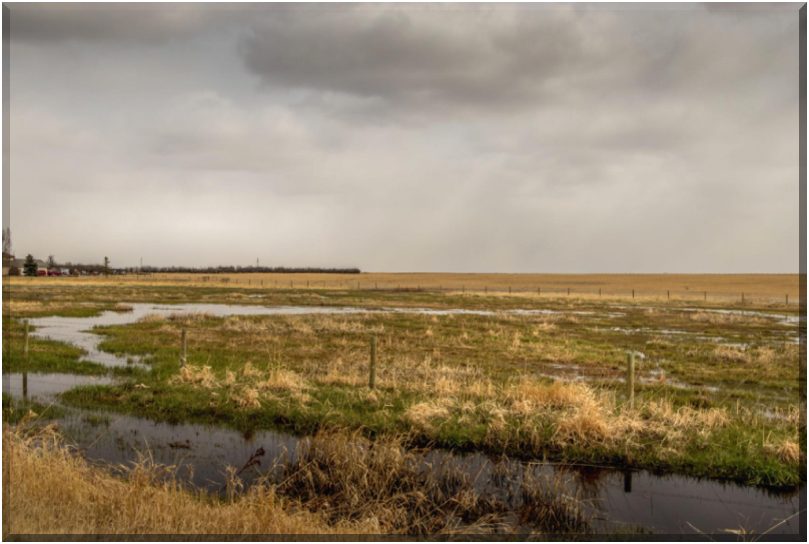
Imagine owning a quarter-section of farmland in the Peace Country.
Every spring, snow melts, water collects in a low spot, and part of the field becomes too wet to cultivate.
Some years, the water disappears within weeks. Other years, it remains well into summer.
To the farmer, it may be a wet spot that has interfered with farming for generations.
To the province, it could be a legally recognized wetland.
And under Alberta's new regulations, that distinction matters.
The provincial government has introduced exemptions intended to give agricultural producers greater freedom to manage certain wet areas on their own property.
But whether those exemptions apply depends partly on how the water body is classified.
That raises a practical question for farmers: Who makes that determination?
What Changed on October 20?
Amendments to Alberta's Water (Ministerial) Regulation and Water (Offences and Penalties) Regulation took effect October 20, 2026.
The changes remove Water Act approval requirements for specified agricultural activities affecting ephemeral water bodies and temporary or seasonal wetlands.
For qualifying activities on privately owned land already under agricultural crop production, farmers can now:
- Cultivate the soil.
- Direct seed agricultural crops.
- Spray pesticides as part of crop production.
These activities do not require Water Act approval or notification when all exemption conditions are met.
The government has also created exemptions for certain surface-water drainage, ditching and filling activities.
However, those activities require notification through Alberta Environment and Protected Areas' Digital Regulatory Assurance System at least 14 days before work begins.
The province has also removed wetland replacement obligations for the exempt activities.
For farmers who previously faced approval costs, professional assessments or wetland replacement payments, the changes could be significant.
Not All Wetlands Are Treated Equally
The new rules distinguish between different types of wetlands.
In simple terms:
Ephemeral water bodies: Areas that hold water briefly, often during spring snowmelt or following heavy precipitation.
Temporary wetlands: Areas that typically hold water for a relatively short period during the growing season.
Seasonal wetlands: Areas that generally retain water longer but may dry out later in the season.
Semi-permanent wetlands: Areas that normally remain wet for much longer periods and may retain water into autumn or winter.
The first three categories may qualify for the new agricultural exemptions.
Semi-permanent wetlands do not.
Neither do permanent wetlands, bogs, fens, swamps or other specifically protected areas.
But nature does not always follow a predictable calendar.
A wetland that dries out in June during a drought might remain flooded into September during a particularly wet year.
Does one wet year change its classification?
Does a farmer's decades of experience count?
And if a provincial inspector disagrees with the landowner, who has the final say?
How Is a Wetland Classified?
Alberta has an established Wetland Classification System and technical guidance for identifying wetlands.
Classification considers characteristics such as water permanence, soils, vegetation and other physical or biological indicators.
The province also uses qualified professionals in its wetland assessment framework.
However, the new agricultural exemptions raise an important procedural question.
When an activity no longer requires an approval application or advance notification, what evidence must a farmer have to establish that the wetland qualifies?
The amendments identify which wetland categories are eligible, but the documents reviewed do not clearly establish a new dispute-resolution procedure specifically for farmers relying on these exemptions.
That distinction matters.
A farmer might reasonably believe a wet area is temporary, only to discover later that the province considers it semi-permanent.
The potential consequences of that disagreement deserve a clear public explanation.
What About Draining a Wet Field?
Drainage is another important part of the new rules.
Farmers may qualify to drain surface water, construct ditches or fill certain temporary wet areas without obtaining a Water Act approval.
But they must notify the province at least 14 days before beginning the activity.
The exemption is not unlimited.
Among other conditions, the activity must not adversely affect the aquatic environment or change the flow or volume of water on an adjacent parcel of land.
This is particularly important in agricultural areas where drainage from one quarter-section can affect neighbouring farms.
A landowner cannot simply assume that because water is on private property, it can be redirected wherever convenient.
The new rules reduce approval requirements, but they do not eliminate responsibility for the consequences.
Farmers No Longer Face Certain Wetland Replacement Costs
Another significant change involves wetland replacement.
Under Alberta's broader wetland policy, activities that permanently eliminate wetlands can trigger requirements to replace the lost wetland area or value.
That may involve restoration work or payments to the province.
For activities covered by the new agricultural exemptions, those replacement obligations have been removed.
The change could reduce costs for farmers dealing with wet spots that interfere with crop production.
However, it does not mean every wetland on private farmland can be eliminated without compensation or approval.
The exemption applies only where its conditions are satisfied.
Why This Matters in the Peace Country
Across the Grande Prairie region, farmland contains numerous low-lying areas that collect water during spring runoff and wet weather.
For producers, these areas can create practical problems.
They may delay seeding, interrupt field operations, reduce usable acreage or complicate harvest.
A small wet area can also divide a field, forcing machinery to work around it.
From a farmer's perspective, removing unnecessary regulatory obstacles may make sense.
From an environmental perspective, temporary wetlands can still provide wildlife habitat, store runoff and contribute to local water systems.
Both considerations are legitimate.
The challenge is establishing rules that farmers can understand and apply consistently while maintaining protections for neighbouring properties and important aquatic environments.
The Questions That Still Need Answers
The new regulations provide exemptions, but several practical questions deserve clarification.
-
Who has the authority to determine whether a particular wetland is ephemeral, temporary, seasonal or semi-permanent?
-
Can a farmer rely on historical knowledge of the land, photographs and cropping records, or is a professional assessment necessary when classification is uncertain?
-
If a farmer and Alberta Environment and Protected Areas disagree about a wetland's classification, what process is available to resolve the dispute?
-
How does the province distinguish land already under agricultural crop production from land being brought into production for the first time?
-
What happens if a farmer undertakes work believing the exemption applies, but the province later determines that it does not?
-
What records should producers retain to demonstrate compliance with the new rules?
These are not reasons to dismiss the changes.
They are questions that could determine whether the new system works as intended.
The Story Isn't Over
Alberta has taken a significant step toward reducing regulatory requirements for agricultural producers.
For farmers who have struggled with wet fields, delayed cultivation and the cost of approvals, the changes may provide welcome flexibility.
But the success of the new rules will depend partly on whether landowners can confidently determine which activities qualify.
A regulation intended to reduce red tape should not leave farmers guessing about where the legal boundaries lie.
And that brings the discussion back to the question at the beginning.
Who decides what is a wetland — and how can a farmer know the answer before starting work?
Until the practical classification and dispute procedures are clearly explained, that remains one of the most important questions arising from Alberta's new agricultural water rules.
Sources:
- Government of Alberta, Water (Ministerial) Amendment Regulation, Alberta Regulation 251/2026, Ministerial Order 11/2026.
- Government of Alberta, Alberta Wetland Policy and Alberta Wetland Classification System.
- Government of Alberta, Alberta Wetland Policy Implementation.
- Government of Alberta, October 20, 2026, agricultural Water Act exemption amendments.