$6-Million Vehicle Theft Investigation Raises Questions for Alberta Car Buyers — Could You Be Driving a Stolen Vehicle?
Five people face charges after a two-year RCMP investigation uncovered alleged vehicle theft, fraudulent identification numbers and the resale of former police vehicles that were supposed to be destroyed
A Vehicle Can Look Legitimate — Even When It Isn't
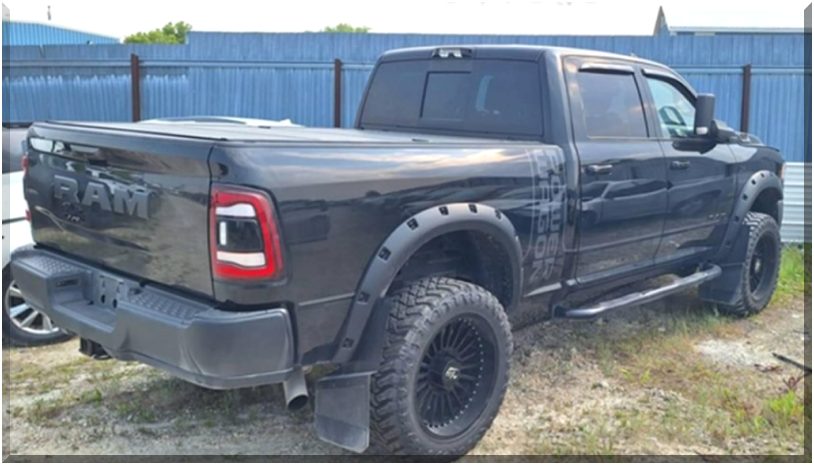
Imagine buying a used pickup truck.
The seller provides a vehicle identification number, registration documents and what appears to be a reasonable explanation of the vehicle's history.
The truck looks legitimate.
But what if its identification number was taken from another vehicle?
That is one of the concerns raised by a major Alberta RCMP investigation into an alleged vehicle theft and fraud network.
On November 4, the Alberta RCMP Auto Theft Unit announced that five people had been charged following a multi-year investigation involving stolen vehicles, fraudulent identification numbers, insurance fraud and international vehicle exports.
Investigators linked more than 80 stolen, fraudulently obtained or illegally exported vehicles to the alleged operation, with an estimated combined value of approximately $6 million.
That number does not include former government vehicles allegedly obtained through a separate part of the operation.
The investigation began in June 2024 and involved police agencies across Canada.
Source: Alberta RCMP — November 4, 2026
What Is Re-VINing?
Every vehicle manufactured for the North American market has a vehicle identification number, commonly called a VIN.
The 17-character identifier is used to track a vehicle's manufacturer, specifications and history.
It is also used by registration systems, insurers and police.
Re-VINing involves fraudulently changing or replacing a vehicle's identifying information.
For example, criminals may use identification details associated with a legitimate vehicle to disguise the identity of a stolen one.
The result can be a vehicle that appears to have a different history from the one it actually has.
That creates problems for police, insurers and unsuspecting buyers.
A vehicle might have a registration record that does not reflect its true identity.
Its accident or theft history could be concealed.
And if police eventually establish that the vehicle was stolen, a buyer could face serious financial and legal complications, even if they purchased it without knowing about the fraud.
Not every VIN irregularity is evidence of criminal activity, and a vehicle history report cannot guarantee that sophisticated fraud will be detected.
Hundreds of Former Police Vehicles Were Supposed to Be Destroyed
One of the most unusual parts of the RCMP investigation involves government vehicles.
Beginning in spring 2025, the federal government's GC Surplus program entered into contracts with Penny Metal Recycling for the destruction of 950 decommissioned RCMP vehicles.
According to the RCMP, there was no indication when the contracts were awarded that the vehicles would be handled contrary to the agreements.
But in November 2025, investigators discovered that an alleged criminal group had potentially received hundreds of government vehicles intended for disposal.
Police allege that some of those vehicles were instead resold within Canada or exported overseas.
The exact number diverted, recovered or destroyed has not been established in the published RCMP release.
This raises a separate issue beyond ordinary vehicle theft.
How can governments verify that vehicles contracted for destruction are actually destroyed?
Disposal contracts, documentation and verification procedures are important safeguards.
The investigation raises questions about whether those safeguards operated as intended and whether changes are needed.
The allegations do not establish that everyone associated with the recycling company participated in criminal activity.
What Else Did Investigators Find?
Between December 2025 and March 2026, police executed multiple search warrants.
Investigators reported recovering stolen vehicles and obtaining evidence related to alleged fraud, theft and fraudulent vehicle identification.
The investigation also uncovered more than four million illegal cigarettes.
RCMP estimated their value at:
- More than $1 million on the illicit market.
- Approximately $3.7 million at legitimate retail value.
- Approximately $400,000 in deferred taxes.
The cigarette seizure demonstrates that the investigation extended beyond stolen automobiles.
However, the tobacco-related charges and vehicle-related charges involve different allegations and should not be treated as interchangeable.
Five People Charged
The Alberta RCMP identified five accused individuals.
Mohamed Mark Hajar, 41, of Edmonton
- Eleven counts of trafficking in property obtained by crime.
- Eight counts of smuggling under the Customs Act.
Peter Huy Nguyen, 41, of Edmonton
- Possession of stolen property valued over $5,000.
Jamal Andy Ghnaim, 34, of St. Albert
- Theft over $5,000.
- Obtaining property under false pretences.
- Trafficking in property obtained by crime.
- Fraud over $5,000.
Ghassan Fayad, 47, of Edmonton
- Possession of unstamped tobacco.
Hamzee Fayad, 41, of Edmonton
- Possession of unstamped tobacco.
The RCMP release identifies November 16, 2026, as a scheduled Edmonton court date for Hajar and Nguyen.
The release does not provide a confirmed court date for every accused.
Police also identified a person they believed played a central role in the alleged operation who died before charges could be laid.
That person was not named.
All charges are allegations. Every accused person is presumed innocent unless proven guilty in court.
Source: Alberta RCMP — Investigation and Charges
What Does This Mean for Grande Prairie and the Peace Country?
There is no verified evidence in the published RCMP announcement that vehicles connected to this investigation were stolen from, sold in or recovered in Grande Prairie.
That distinction is important.
However, the case has relevance to vehicle owners and buyers throughout Alberta.
Grande Prairie and the Peace Country have substantial markets for used pickup trucks, SUVs, commercial vehicles and work trucks.
Vehicles may be bought and sold privately, through dealerships, at auctions or across provincial boundaries.
A vehicle's registration history may involve several jurisdictions.
That makes accurate identification and ownership records important for buyers everywhere.
The investigation also raises a broader question:
How much of Alberta's vehicle theft problem involves vehicles being stolen for transportation or other crimes, and how much involves organized resale for profit?
The RCMP investigation demonstrates that organized resale and export schemes exist.
It does not establish the proportion of Grande Prairie vehicle thefts associated with those schemes.
That would require local police data and investigative findings.
Could Vehicle Theft Affect Your Insurance Rates?
Auto theft creates costs beyond the value of the missing vehicle.
Insurers may incur expenses associated with replacing stolen vehicles, investigating claims and addressing fraud.
Those costs can contribute to overall insurance claims expenses.
RCMP Staff Sergeant Luke Halvorson stated that investigators believe the alleged network affected insurance rates across Alberta.
However, the police announcement does not quantify how much an individual Grande Prairie driver's insurance premium may have been affected.
Insurance rates depend on numerous factors, including claims experience, vehicle type, driver history, location and insurer pricing.
It would therefore be misleading to attribute a particular insurance increase directly to this investigation without supporting data.
The larger issue is whether organized vehicle theft creates costs shared across the insurance system.
Buying a Used Vehicle? Here Are Some Practical Precautions
Vehicle fraud can be difficult for ordinary buyers to detect.
The following are general precautions that may reduce risk. They are not guarantees that a vehicle is legitimate.
1. Check the VIN
Compare the vehicle identification number displayed on the dashboard with the number on the registration documents and other manufacturer identification labels.
Any unexplained discrepancy deserves investigation before money changes hands.
2. Obtain a Vehicle History Report
A vehicle history report may identify previous registrations, collision records, insurance claims or other reported events.
But remember that these reports depend on the accuracy and completeness of available records.
3. Check Whether the Vehicle Is Reported Stolen
The Canadian Police Information Centre provides a public search service for checking whether a vehicle has been reported stolen.
Canadian Police Information Centre — Search Vehicles
A negative result does not guarantee that a vehicle has never been stolen or that its identity has not been altered.
4. Verify the Seller
Confirm that the person selling the vehicle has the legal authority to sell it.
Be cautious about unexplained differences between the seller's identification and ownership documents.
5. Consider an Independent Inspection
A qualified mechanic can assess a vehicle's mechanical condition.
If identification fraud is suspected, specialized verification may also be necessary.
An ordinary mechanical inspection should not be assumed to detect sophisticated VIN fraud.
6. Be Cautious About Unusual Payment Arrangements
A seller who refuses reasonable verification, pressures a buyer to complete the transaction immediately or provides inconsistent paperwork may warrant additional scrutiny.
A low price alone does not prove fraud.
But unexplained inconsistencies should be resolved before completing a purchase.
What Happens If You Discover You Bought a Stolen Vehicle?
A buyer who discovers that a purchased vehicle may be stolen should contact police and avoid attempting to resolve the matter through confrontation with the seller.
The buyer should preserve the bill of sale, payment records, messages, advertisements and any other relevant documents.
Whether the buyer can recover their money depends on the circumstances, including the transaction, available insurance coverage and potential legal remedies.
A person who bought a vehicle in good faith should not assume that possession automatically establishes legal ownership.
Alberta buyers may wish to consult a qualified legal professional if ownership is disputed.
A Bigger Question: How Do We Protect Vehicle Buyers?
The RCMP investigation highlights weaknesses that organized vehicle fraud can attempt to exploit.
These include:
- Vehicle identification and registration systems.
- The verification of ownership documents.
- Cross-provincial vehicle sales.
- Government vehicle disposal procedures.
- The movement of stolen vehicles across international borders.
The investigation involved the Alberta RCMP, Edmonton Police Service, Canada Border Services Agency, British Columbia's Integrated Municipal Provincial Auto Crime Team and other law enforcement partners.
That cooperation reflects the challenges of investigating vehicle theft operations that cross jurisdictional boundaries.
The Story Isn't Over
The November 4 announcement establishes the scale of the allegations and the charges laid.
But several important questions remain unanswered.
The government vehicles: How many of the 950 decommissioned RCMP vehicles were actually destroyed, and how many were diverted?
The buyers: Were any vehicles sold to people who did not know their true history?
The Peace Country: Were any vehicles connected to the investigation sold, registered or recovered in Grande Prairie or surrounding communities?
The public costs: What financial losses were incurred by government, insurers and vehicle owners?
The court proceedings: What will be established through the legal process, and what will the eventual outcomes be?
These are unresolved questions, not established findings of additional wrongdoing.
Why This Matters
For most vehicle buyers, a VIN is simply a number on a dashboard or registration document.
But that number is central to how vehicles are identified, insured, financed and sold.
When criminals allegedly manipulate vehicle identities, the consequences can extend well beyond the original theft.
A vehicle can change hands, cross provincial boundaries or leave the country before its history is questioned.
The Alberta RCMP investigation provides a reminder that vehicle theft is not always an isolated crime involving a single missing car.
It can also involve sophisticated financial transactions and organized resale operations.
For Peace Country buyers, the practical lesson is straightforward:
Verify a vehicle's identity, ownership and history before completing a purchase — particularly when buying privately or from an unfamiliar seller.
Swan City Speaks: What Do You Think?
-
Have you ever encountered suspicious vehicle paperwork, questionable VIN information or an unusual private vehicle sale in the Peace Country?
-
Should Alberta require additional identity verification before certain used vehicles can be registered or transferred?
-
Should governments publish more detailed records showing how decommissioned police and other government vehicles are disposed of?
Share your thoughts in the comments. Your opinion matters.