Beyond Addiction Treatment: Darry Willier Wants to Give People a Life After Recovery
Getting sober can be an enormous achievement. But what happens when treatment ends and someone has no stable home, no employment and nowhere to turn? A Grande Prairie resident believes the missing piece is long-term support.
Treatment May End. Recovery Does Not.
Imagine spending months working to overcome addiction.
You complete treatment, learn coping skills, begin addressing years of trauma and make plans for a different future.
Then comes discharge day.
Where do you live?
Who will hire you?
What happens if your old friends are still using drugs?
What if returning home means returning to the same circumstances that contributed to your addiction?
These are questions that Darry Willier wants Grande Prairie to confront.
Willier is developing a non-profit initiative called the Napichew Program, intended to help people transition from addiction treatment into stable, independent lives.
He presented the proposal to Grande Prairie City Council on November 2, seeking advocacy and collaboration to advance the project.
Council received the presentation for information.
That is not the same as approving funding, land or construction.
But it placed an important issue before municipal leaders: recovery does not necessarily end when someone leaves a treatment facility.
Who Is Darry Willier?
Willier is a member of Driftpile First Nation who has spoken publicly about his experiences with personal and intergenerational trauma.
In a November 5 interview with EverythingGP, he described how people leaving treatment can struggle when the structured environment and professional support suddenly disappear.
His concern is that people may understand what they need to do to remain well but lack the stable circumstances needed to put those lessons into practice.
The proposed program is named Napichew in honour of his father.
Willier's organization, Training and Development Out of Trauma (T.D.T. Ltd.), describes itself as an Indigenous-led, survivor-led non-profit focused on healing, reconnection and long-term wellness.
The proposed facility is intended to support people affected by trauma, including intergenerational trauma.
Its approach would combine practical independence with continued personal development.
More Than a Bed for the Night
The Napichew concept includes housing, but Willier is proposing more than temporary shelter.
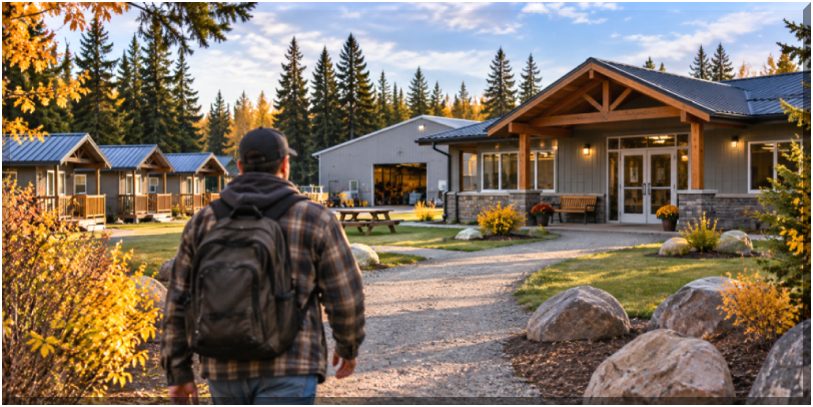
He has described a model that could provide participants with individual accommodation, potentially including tiny homes, while they work toward education and employment goals.
The proposal also includes opportunities to learn skilled trades, accumulate work experience and reconnect with culture.
Participants would have a role in directing their own progress.
Willier has described a longer-term ambition in which people leaving the program could have meaningful education and trades experience behind them.
Those are proposed outcomes, not results already demonstrated by an operating facility.
The central idea is that stable housing and purposeful daily activity can provide a foundation for rebuilding a life.
That makes the proposal different from simply providing another short-term bed.
Why Housing Matters After Addiction Treatment
Housing is one of the most basic conditions needed for stability.
Someone without a reliable place to sleep may struggle to attend appointments, maintain employment, store medication or build healthy routines.
Unstable housing can also expose people to environments where substance use is common.
A person may complete treatment successfully but return to conditions that make recovery harder to sustain.
Stable housing does not guarantee recovery.
But it can remove a major source of uncertainty.
The Napichew proposal attempts to address that problem by combining accommodation with ongoing support.
Important details remain unanswered, including how residents would qualify, how long they could stay and what professional services would be available.
The Connection Between Trauma and Addiction
Addiction does not have one simple cause.
Genetics, mental health, social circumstances, exposure to substances, trauma and other factors can all contribute to substance-use disorders.
For some people, traumatic experiences are part of that history.
Intergenerational trauma can also affect families and communities, particularly where experiences of displacement, residential schools and discrimination have had lasting consequences.
Willier's proposal places cultural reconnection and trauma-informed support at the centre of its approach.
That is significant because recovery programs do not necessarily work equally well for everyone.
Some people benefit from culturally grounded services, peer support and opportunities to rebuild relationships and identity.
However, the effectiveness of any new program should ultimately be assessed through participant outcomes, safety standards and independent evaluation.
A compelling idea still needs evidence that it works.
Could Employment Be Part of the Solution?
Willier wants participants to develop skills that can help them support themselves.
That could be particularly relevant in Grande Prairie, where construction, trades, transportation and other industries offer potential career pathways.
But employment opportunities must be realistic.
People rebuilding their lives may face barriers involving education, transportation, identification documents, criminal records, health conditions or gaps in employment history.
A successful program would need employers willing to participate, suitable training arrangements and appropriate supervision.
It would also need to distinguish between meaningful paid employment, recognized apprenticeship training and informal work experience.
Willier has discussed a vision of participants gaining substantial trades and education experience.
Whether that could lead to recognized credentials would depend on partnerships with training institutions, employers and apprenticeship authorities.
Those arrangements have not yet been publicly confirmed.
Grande Prairie Already Has a Recovery Community Planned
There is another important development in the background.
The Alberta government lists a Grande Prairie recovery community among its planned and developing facilities.
Provincial recovery communities are intended to provide long-term residential addiction treatment, with individualized care plans and support that may include counselling, employment training and housing assistance.
The province says clients can stay in these programs for up to one year, depending on the facility and individual circumstances.
The Grande Prairie recovery community is not listed as open.
And it is not the same project as the proposed Napichew facility.
That distinction matters.
If both projects advance, the community will need to understand how they differ and whether they could complement one another.
Would Napichew serve people after they complete a provincial recovery program?
Could referrals come from hospitals, treatment centres or Indigenous organizations?
Would the programs share services or operate independently?
These questions are particularly important when public money, professional services and vulnerable clients may be involved.
What Will It Cost?
The Napichew facility remains a proposal.
Willier told EverythingGP that the organization is seeking volunteers, awareness and funding, with the goal of constructing a full facility around 2029.
He has described an ambition to establish a financially self-sustaining operation after approximately five years.
He also wants to collect information that could help evaluate the model.
However, several financial details have not been established publicly.
There is no verified construction budget, confirmed financing package or operating-cost estimate available from the information reviewed.
The proposed number of residents and the amount of land required also remain unclear.
Without those details, it is not possible to calculate the cost per participant or compare the proposal fairly with existing services.
A sustainable project would need to explain how it intends to pay for housing, staffing, utilities, maintenance, insurance and professional support.
It would also need a clear plan for what happens if anticipated revenue or donations fall short.
These are reasonable questions for any organization proposing a substantial residential facility.
Should the City Help?
Willier's November 2 presentation asked City Council to consider opportunities for advocacy and collaboration.
That does not necessarily mean a request for direct municipal operating funding.
Municipal governments can sometimes assist community initiatives through planning processes, partnerships, referrals or support for grant applications.
However, public resources are limited.
Any municipal involvement should be evaluated alongside other community needs, including affordable housing, homelessness prevention, mental health services and existing non-profit programs.
The key question is not simply whether the proposal has a worthwhile purpose.
It is whether the project can demonstrate a practical operating plan, appropriate safeguards and measurable community benefits.
A promising initiative should be able to withstand careful questions.
How Would Success Be Measured?
Opening a building would be one milestone.
But the more important measure would be what happens to the people who participate.
Useful indicators could include:
- How many participants obtain and maintain stable housing.
- How many complete education or recognized trades training.
- How many find and retain employment.
- Whether participants report improvements in health and well-being.
- Whether people maintain connections with family, culture and community.
- How many participants require additional treatment or crisis support.
- What the program costs compared with its measurable outcomes.
Relapse should not automatically be treated as personal failure. Substance-use disorders can require continuing or repeated care.
Any evaluation would also need to respect participants' privacy, dignity and informed consent.
Willier has spoken about collecting data over a five-year period.
The methods, oversight and safeguards for that research would need to be established.
The Bigger Question for the Peace Country
Grande Prairie has invested significant attention in policing, emergency response, addiction treatment and public safety.
Those services matter.
But the Napichew proposal raises a different question.
What would happen if more people leaving treatment had a stable home, useful skills, supportive relationships and a realistic path toward employment?
Could that reduce repeated crises?
Could it help families rebuild relationships?
Could it allow people who have struggled with addiction to become employees, neighbours, mentors and community contributors?
Those possibilities are worth examining.
But they should be treated as goals to be tested, not guaranteed results.
The real test of the Napichew proposal will be whether it can turn its ambitions into a safe, sustainable program that improves people's lives.
The Story Isn't Over
Several important questions remain.
1. Funding: What is the estimated construction and operating budget, and which funding sources have been confirmed?
2. Location: Has a suitable site been identified, and what municipal approvals would be required?
3. Capacity: How many people would the facility accommodate, and how long could they remain?
4. Professional support: What qualifications, clinical partnerships and safety standards would apply?
5. Employment: Which employers or training institutions would recognize participants' work and education?
6. Relationship with existing services: How would Napichew fit alongside the province's planned Grande Prairie recovery community and other local programs?
7. Accountability: How would the organization measure results, protect participant privacy and report its finances?
The proposal's next significant milestone will be evidence of secured funding, confirmed partnerships, an approved location or a formal development plan.
Swan City Now — Because the story doesn't end with the headline.
Swan City Speaks: What Do You Think?
1. Does Grande Prairie need more support for people after addiction treatment, particularly stable housing and employment opportunities?
2. Should municipalities help community organizations develop long-term recovery programs, or should that responsibility rest primarily with provincial health services?
3. What would make a program like Napichew successful and accountable to the people it serves?
Share your thoughts in the comments. Your opinion matters.
Sources
EverythingGP — Grande Prairie Residents Launching Non-Profit for Post-Recovery Trauma Victims, November 5, 2026
City of Grande Prairie — City Council Highlights, November 2, 2026
Grande Prairie & District Chamber of Commerce — Training and Development Out of Trauma
Government of Alberta — Recovery Communities
https://www.alberta.ca/recovery-communities
Napichew Program
Editor's note: Napichew is a proposed initiative, not an operating residential facility. No construction funding, site approval, opening date or participant capacity has been independently confirmed. The planned provincial Grande Prairie recovery community is a separate project.