Beyond the Sawmill — Could the Peace Country Build More Products From Its Own Timber?
The Peace Country has long been associated with forestry, logging, sawmills and the production of lumber.
But what happens to that lumber after it leaves the mill?
How much of the economic value generated by the region's forests stays within the community, and how much is generated elsewhere when lumber is manufactured into finished products?
Alberta's latest investment in wood-products manufacturing brings those questions into focus.
On November 20, the provincial government announced $1.7 million in support for 13 projects intended to diversify Alberta's forestry industry and expand manufacturing opportunities.
For a region with an established forestry industry, the announcement raises possibilities that extend well beyond the sawmill.
What is value-added forestry?
Traditional forestry operations harvest trees and process them into lumber, pulp and other primary products.
Value-added manufacturing takes those materials further, transforming them into products ready for construction, commercial applications or consumer use.
Examples include:
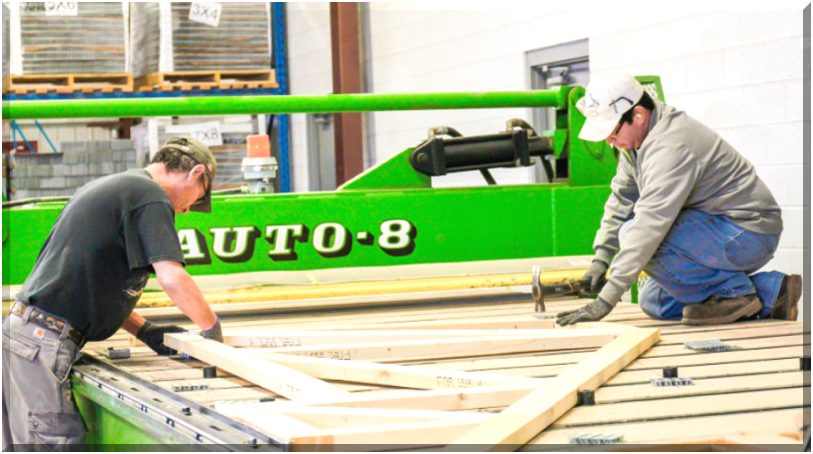
- Engineered roof and floor trusses.
- Prefabricated houses and wall panels.
- Laminated structural beams.
- Kitchen cabinets and furniture.
- Doors, windows and flooring.
- Industrial wooden packaging and pallets.
- Manufactured building components.
Each additional stage of manufacturing creates opportunities for employment, investment and business activity.
A piece of lumber manufactured into a structural building component requires additional design, equipment, labour and expertise.
Where that work takes place helps determine which communities receive the associated economic benefits.
Sexsmith already has an example
The Peace Country is not starting from scratch.
Eldor Trusses, located in Sexsmith, has been manufacturing engineered truss systems since 1995.
The company supplies residential, agricultural and commercial construction projects across Northern Alberta and British Columbia.
Its products include roof and floor systems for houses, barns, shops and other buildings.
Rather than simply selling lumber, the company manufactures structural components designed for individual construction projects.
The business demonstrates that specialized wood manufacturing can operate outside Alberta's largest urban centres.
It also raises the question of what other types of wood-based manufacturing could be established or expanded within the region.
What Alberta is offering
The Alberta Value-Added Wood Products Program includes an Innovation Support Program administered through WoodWorks Alberta and the Alberta Forest Products Association.
The program publishes a funding range of $30,000 to $250,000 for qualifying capital projects.
Participating businesses are generally required to contribute at least 50 per cent of their project costs in cash.
Potential investments include new manufacturing equipment, production technology and infrastructure that enables businesses to expand their capabilities.
For example, an eligible $300,000 manufacturing investment could potentially receive $150,000 in program support, subject to approval and applicable funding conditions.
The program is intended to encourage private-sector investment rather than replace it.
The most recently published application period closed on July 31, 2026. Businesses interested in future funding opportunities should consult the program administrator for upcoming application dates.
Could the Peace Country manufacture more locally?
Imagine a future where more of the lumber produced around Grande Prairie is also manufactured into finished building components within the region.
Those products could include prefabricated housing, engineered structural systems, modular buildings and products designed specifically for northern climates.
The region already has experience in industrial construction, agricultural buildings, transportation, forestry and commercial development.
Those existing industries could provide opportunities for new manufacturing businesses.
There may also be opportunities to produce components used in construction camps, rural housing, farm buildings and commercial developments.
However, access to timber alone does not guarantee that a manufacturing business will succeed.
Manufacturers must also consider:
- Transportation costs.
- Availability of skilled workers.
- Equipment and energy costs.
- Access to customers and export markets.
- Building certification requirements.
- Competition from established manufacturers.
- Availability of suitable industrial land.
The economics of each proposed operation would need to be evaluated individually.
Could forestry help address housing shortages?
One potential area of opportunity is prefabricated housing.
Instead of constructing every building component individually at a development site, manufacturers can produce walls, floors, roofs and other components in controlled factory environments.
Those components can then be transported to construction sites for assembly.
This approach can reduce the amount of outdoor construction work required during winter and potentially shorten on-site construction schedules.
For northern communities, where weather and labour availability can affect construction timelines, factory-built components may offer practical advantages.
Local manufacturing could potentially serve housing developments in Grande Prairie, surrounding rural communities and more remote northern regions.
Whether such operations would reduce overall housing costs would depend on production volumes, transportation, land costs and other factors.
Diversifying an established industry
The Peace Country's forestry sector is exposed to fluctuations in lumber prices, international demand, transportation expenses and trade policies.
Developing additional wood-based manufacturing industries could broaden the region's economic base.
It would not eliminate the challenges facing traditional sawmills or guarantee protection from changing market conditions.
However, it could provide additional sources of revenue and employment by serving different markets and customers.
It could also create opportunities for workers with skills in engineering, drafting, automation, computer-controlled manufacturing, equipment maintenance and construction.
The opportunity is not necessarily to replace traditional forestry operations, but to build additional industries alongside them.
The story isn't over
Alberta's latest investment raises several questions for the Peace Country:
- How many regional manufacturers have applied for or received provincial wood-products funding?
- What additional manufacturing opportunities exist near Grande Prairie's established forestry operations?
- Could locally manufactured building components help meet northern Alberta's housing needs?
- Are regional municipalities actively pursuing value-added forestry businesses?
- Could existing industrial lands accommodate additional wood manufacturing facilities?
- How much of the economic value generated by the Peace Country's timber currently remains within the region?
For generations, the Peace Country has harvested and processed timber.
The next chapter could involve manufacturing more of what ultimately gets built from it.
Original sources
Government of Alberta — Branching out with Alberta's wood products, November 20, 2026: https://www.alberta.ca/news
Alberta Value-Added Wood Products Program — Innovation Support Program, eligibility and funding: https://avawpp.com/
Eldor Trusses — Company information: https://eldortrusses.com/pages/about6/
Eldor Trusses — Truss manufacturing: https://eldortrusses.com/pages/trusses/