Cedar Point Backlash: Residents Question City Spending as Grande Prairie Lowers Tax Increase
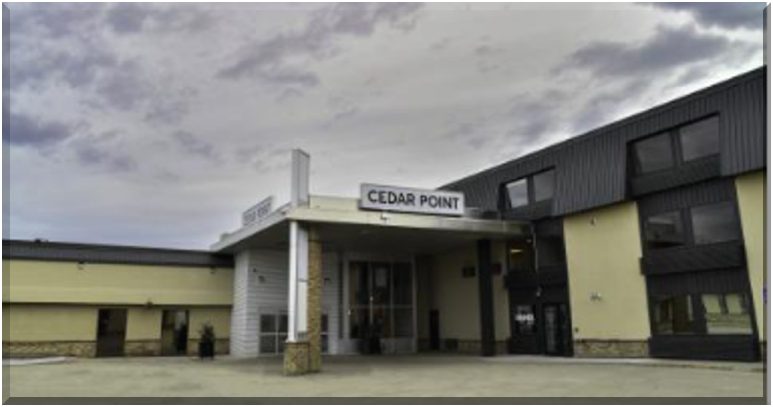
Grande Prairie residents may be facing a smaller municipal property-tax increase next year, but a growing discussion about Cedar Point suggests that some taxpayers are looking beyond the annual tax bill.
Back on top · first published Nov 23
A Smaller Tax Increase, but Bigger Questions About Spending
They want to know what happened to money already spent.
A Facebook discussion following a November 18 article about Cedar Point has attracted criticism, questions about accountability and suggestions for what should happen to the property.
The discussion centres on a striking comparison.
The City purchased the former Stonebridge Hotel for $12.5 million in 2021, originally budgeting another $3 million for renovations.
The project's published budget subsequently grew to more than $25 million.
Now, nearly $9 million associated with a possible sale to the Alberta government appears in the City's proposed 2027 budget.
The difference between those figures has become a focus of public frustration.
But the figures do not, by themselves, establish a final financial loss.
What Residents Are Saying
The Facebook discussion reveals several recurring concerns: municipal spending, accountability, public involvement and the long-term consequences of major decisions.
Shirley R. questioned why the City entered the property business in the first place.
"First of all why is the city in real estate?"
Her comment raises a legitimate policy question about the role municipalities should play in owning and operating housing facilities.
Ron K. expressed his frustration more directly:
"That's our city. Wasting tax dollars."
Scott G. asked:
"When will we all start to hold Governments accountable."
Other residents argued that voters need to pay closer attention to municipal decisions and become more involved in local elections.
Glyn G. responded to the question of who would ultimately pay for the difference between the project's cost and the proposed sale proceeds.
"The tax payers do... it's even more once you take into account the interest being paid on the debt."
His observation raises an important financial issue.
Borrowing costs can add to the total public expense of a capital project. But determining the actual cost requires knowing how much was borrowed, the interest paid, grants received and the amount of debt still outstanding.
These are individual opinions and questions expressed in a public discussion. They are not evidence of wrongdoing or a representative survey of Grande Prairie residents.
Could Cedar Point Have Another Purpose?
Among the criticism was a constructive suggestion.
Wendy S. proposed converting Cedar Point into housing for seniors.
"Why not clean it up turn it into a senior home for assisted living,turn the parking lot into a courtyard at least there would be income coming in."
Her suggestion introduces another question into the debate.
Before selling a publicly owned building, should the City examine whether it could serve another community purpose?
Grande Prairie has continuing needs involving housing, seniors' services and affordable accommodation.
However, converting Cedar Point into an assisted-living facility would require more than a change of occupants.
Building standards, accessibility, licensing, operating funding, staffing and renovation costs would all need to be considered.
There is no verified evidence that such a conversion would be financially practical.
But the suggestion illustrates that residents are interested not only in how much money might be recovered, but also in whether the property could continue providing public benefits.
Why Cedar Point Was Purchased
The original Cedar Point project was intended to address homelessness and provide housing with supports.
In July 2021, City Council approved purchasing the Stonebridge Hotel and Conference Centre.
The property offered an opportunity to convert an existing building rather than construct a new facility.
The City's plans included supportive housing, independent-living accommodation and access to community services.
Those were legitimate public-policy objectives.
The project's costs, however, increased substantially.
The original $15.5-million purchase-and-renovation budget eventually became a project budget exceeding $25 million.
City records have identified building-related challenges, including fire separation, structural and mechanical issues, electrical work and increased construction costs.
The question is not simply whether the City spent too much.
It is whether the original investment was adequately assessed, whether subsequent spending decisions were justified and what public benefits the project ultimately delivered.
What Does the Proposed $9-Million Sale Actually Mean?
The proposed 2027 budget includes nearly $9 million associated with a possible sale of Cedar Point to the Alberta government.
The City has indicated that proceeds would first be used to address outstanding project debt.
That distinction is important.
If the property sells, the full sale amount would not necessarily become available for other municipal spending.
Outstanding loans, transaction costs and other obligations could reduce the amount remaining.
And while subtracting $9 million from a project budget exceeding $25 million produces a difference greater than $16 million, that is not a complete calculation of the financial outcome.
The original project involved capital spending, borrowing and outside funding. Some expenditures may also have delivered public services and benefits during the building's operation.
A meaningful accounting would identify:
- The original purchase and final renovation costs.
- The amount actually spent compared with budgeted amounts.
- Municipal contributions and funding from other governments.
- Interest paid and outstanding debt.
- Operating costs and revenues.
- The property's current market value.
- Net proceeds from any completed sale.
Until those figures are reconciled, the final cost to municipal taxpayers remains uncertain.
How Does This Connect to the 2027 City Budget?
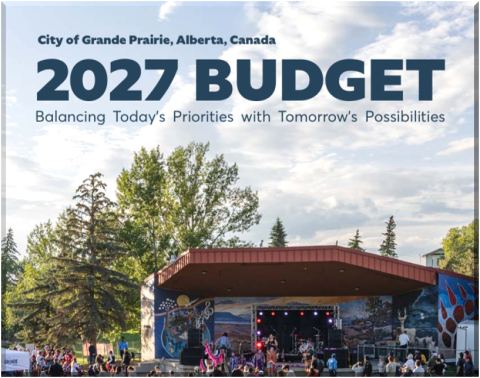
On November 20, Grande Prairie City Council concluded its budget deliberations with a tentative municipal property-tax increase of 1.74%.
That is down from the original 2.81% proposal.
According to the City's estimates, the revised increase would add approximately $5.15 per month, or $61.80 annually, to the municipal tax bill for an average home.
That is a smaller increase than initially anticipated.
But it does not mean every household will necessarily pay less for City services.
Council also supported increasing many municipal user fees by 3.4% and reducing Eastlink Centre operating hours by one hour daily beginning January 1, 2027.
The Eastlink change is expected to save approximately $156,000 annually.
Other budget discussions have included policing costs, recreation facilities, infrastructure improvements and reserve funding.
The Cedar Point proposal introduces a different financial consideration.
A property sale can reduce debt or provide one-time revenue. It does not automatically create recurring operating savings.
Residents therefore have reason to ask how much of the City's improved budget position comes from permanent efficiencies, increased fees, outside funding, reserves or transactions involving public assets.
The distinction matters because a one-time financial adjustment cannot be repeated indefinitely.
The People Behind the Property
The Cedar Point discussion is not exclusively about money.
The facility was developed to provide housing for people who needed it.
More than 40 affordable housing residents have faced uncertainty about a possible December 31, 2026 move-out.
The Mustard Seed has indicated that funding for its Cedar Point housing program is scheduled to end March 31, 2027, while December 31 has been discussed as a possible transition date.
That does not establish that every resident must leave on December 31.
The proposed provincial purchase has also raised questions about whether the building could be repurposed for health services.
There may be important public benefits from a different use of the property.
But the consequences for existing residents must be part of any assessment.
If supportive or affordable housing units are lost, what replaces them?
Where will affected residents go?
And will the City or province incur additional costs elsewhere because the original housing capacity is no longer available?
Those questions are just as relevant to the public interest as the sale price.
Accountability Without Accusations
The Facebook discussion included strong criticism of elected officials and municipal decision-making.
Public officials are accountable for decisions involving taxpayer money, and residents have every right to question those decisions.
But criticism and evidence are not the same thing.
An expensive project, an unexpected renovation cost or a proposed sale below the original investment does not automatically establish misconduct.
Nor does an unfavourable financial result prove that every decision leading to it was unreasonable.
The appropriate examination is through records.
What information did Council have when the property was purchased?
What inspections and financial assessments were completed?
When were additional expenditures approved?
What alternatives were considered as costs increased?
And what financial and social results can be demonstrated today?
Those questions can be examined without making personal allegations or presuming the answers.
The Story Isn't Over
The Cedar Point debate and the 2027 budget leave important questions for residents:
- What was the final actual expenditure on Cedar Point, including acquisition, renovations and financing?
- How much was funded directly by municipal taxpayers, and how much came from outside grants?
- What debt remains on the property, and how much would a sale repay?
- Is the nearly $9-million figure a negotiated sale price, an independent valuation or a budget estimate?
- What alternative uses were evaluated before considering a sale?
- What happens to the affordable and supportive housing capacity originally created?
- How much of the 2027 budget's lower tax increase reflects lasting savings rather than temporary financial adjustments?
- When will the public receive a complete accounting of the Cedar Point investment?
More Than a Tax Bill
The City has reduced its proposed municipal property-tax increase for 2027.
For homeowners, that is meaningful.
But the Cedar Point reaction illustrates another side of municipal finances.
Residents want to know not only what they will pay next year, but what value they received from money spent in previous years.
Cedar Point was purchased with a public purpose in mind.
The project has provided housing and services, but its financial history and proposed future now raise difficult questions.
The challenge is to establish what the investment accomplished, what it ultimately cost and whether changing the property's use serves the public interest.
Those answers matter more than any individual Facebook accusation.
A smaller tax increase may be welcome.
A complete accounting of public spending is still necessary.
Original Sources and Further Reading
- City of Grande Prairie — Cedar Point project information: https://cityofgp.com/cedarpoint
- City of Grande Prairie — Council agendas, minutes and budget records: https://pub-cityofgp.escribemeetings.com/
- Public Facebook discussion — Cedar Point: https://www.facebook.com/groups/789585733396588/posts/1020813013607191/
- Previous coverage — Cedar Point: More Than $25 Million Invested, a $9-Million Sale Proposed: https://swancitynow.com/stories/cedar-point-more-than-25-million-invested-a-9-million-sale-proposed-who-answers-
- Previous coverage — Grande Prairie's 2027 Tax Increase Drops to 1.74%: https://swancitynow.com/stories/grande-prairies-tax-increase-shrinks-but-will-residents-pay-more-for-city-servic
Editor's note: This article uses selected comments from a supplied record of a public Facebook discussion. Ordinary residents are identified by first name and last initial. Their comments represent personal opinions and questions, not independently verified allegations or findings. The live Facebook discussion could not be independently retrieved for this article. The proposed Cedar Point sale has not been established as completed, and the 2027 municipal budget remains subject to formal approval.