Cedar Point Residents Told to Leave: Who Cut the Funding, and Where Will They Go?
Back on top · first published Nov 4
A Housing Project Built to End Homelessness Now Faces Difficult Questions
A Grande Prairie housing project designed to help people escape homelessness is facing a troubling question: could some of the people it was meant to protect soon be without a home again?
On October 29, Town & Country News reported that some residents of Cedar Point had been told to find alternative accommodation by December 31, following the loss of grant funding involving The Mustard Seed.
The report raises questions that go well beyond one organization's finances.
Who withdrew the funding? Was it a provincial decision, a municipal decision, an expired grant or a funding application that was not renewed?
And perhaps most importantly, what happens to the residents?
Swan City Now reviewed publicly available City of Grande Prairie documents and historical funding information. Those records provide important background, although they do not yet establish why the reported move-out notices were issued.
What Exactly Is Cedar Point?
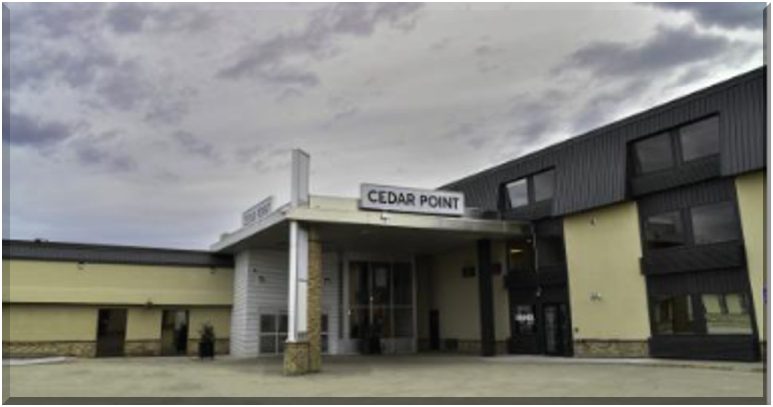
Cedar Point, located on 100 Street in Grande Prairie, was formerly known as the Coordinated Care Campus.
The City purchased the former hotel and conference facility in 2021 and converted it into a combination of supportive housing, affordable housing and municipal offices.
The project was designed to address chronic homelessness through permanent accommodation combined with support services.
According to the City's published information, Cedar Point includes:
- 63 permanent supportive housing units for people who have experienced homelessness.
- Approximately 42 to 43 independent affordable housing units, depending on the published source.
- On-site support workers and round-the-clock services for supportive housing residents.
- Access to health, mental health, addiction recovery and life-skills supports.
- Food services, cultural spaces and recreational programming.
The distinction between permanent supportive housing and an emergency shelter matters.
Residents of the supportive housing units sign leases and pay rent. The City describes the independent affordable units as being governed by Alberta's Residential Tenancies Act.
Cedar Point was never presented as simply a temporary place to sleep.
It was promoted as a long-term solution that would help residents maintain stable housing and reduce pressure on emergency shelters, policing and health services.
That makes the reported December 31 deadline particularly significant.
What Grant Was Lost?
This is the central unanswered question.
Town & Country News reports that The Mustard Seed lost grant funding, but the accessible portion of its October 29 article does not identify the specific grant, its value, the funding authority or the reason it was lost.
Public City records show Cedar Point has received funding from several sources.
The City's Cedar Point information lists the following historical funding:
Capital funding
- Federal Reaching Home Grant: $411,275.
- Provincial Affordable Housing Block Funding: $95,902.
- Canada Mortgage and Housing Corporation seed funding: $143,910.
- Aquatera in-kind contribution: approximately $20,548.
Operational funding
- Provincial Outreach Support Services Funding: $1.8 million.
- Health Canada Substance Use and Addiction Program: $1.8 million.
These are historical amounts listed by the City, not confirmed 2026 operating grants.
There is no verified evidence that any particular grant on this list is the one involved in the reported move-out notices.
That distinction is essential.
A capital grant helps acquire, build or renovate a facility. An operating grant pays for ongoing services, staffing and programming.
Losing operating funding could affect the ability to provide the support services that make permanent supportive housing possible.
But losing a service contract does not automatically explain why residents would have to leave their homes.
The City and The Mustard Seed need to explain exactly what changed.
A Funding Change Was Already Recorded in 2025
One of the most important findings in the public records comes from a September 2, 2025, City administrative report.
The report explained that some provincial housing funding had begun flowing directly to service providers in March 2025.
It then stated that provincial funding for Cedar Point Permanent Supportive Housing would return to City administration beginning in October 2025.
The same report identified approximately $4.2 million in provincial funding and $890,000 in federal funding supporting Grande Prairie's broader housing and homelessness system in 2025–26.
Those figures cover the wider system, not Cedar Point alone.
This creates a clear line of inquiry.
If provincial funding for Cedar Point was returned to City administration in October 2025, what happened to that funding in 2026?
Was it renewed?
Was it reduced?
Was it redirected to another program?
Did the Province change its funding model?
Or did The Mustard Seed lose a separate grant unrelated to that provincial arrangement?
There is not enough publicly verified information to answer these questions.
The 2025 funding transfer cannot be assumed to be the cause of the current situation.
However, the financial history deserves a full explanation.
Who Made the Decision?
There are several organizations involved in Cedar Point.
The City of Grande Prairie owns the facility and oversees its housing operations.
The Mustard Seed was selected through a competitive procurement process to provide housing support services beginning February 1, 2024.
Provincial and federal governments have provided funding for different parts of the housing system.
Other community agencies contribute health, housing and support services.
These overlapping responsibilities make accountability particularly important.
The public needs to know whether the reported move-out notices resulted from:
- A decision by a provincial funding department.
- A municipal funding or budget decision.
- The expiration or non-renewal of a grant.
- A decision by The Mustard Seed concerning its operations.
- A change in the housing program or eligibility requirements.
- Some combination of these circumstances.
None of those explanations has been independently established.
The organization that communicated the move-out deadline is not necessarily the organization that made the underlying funding decision.
Residents deserve to know both.
How Many Residents Are Affected?
Cedar Point has more than 100 housing units across its supportive and independent housing programs.
But that does not mean more than 100 residents are being displaced.
The October 29 report refers to some residents, and Swan City Now has not independently established the number.
We also do not know whether the notices apply to supportive housing units, independent affordable housing units or a particular group within the facility.
This distinction matters because different residents may have different legal rights, support requirements and relocation options.
A person who needs round-the-clock assistance may not be able to move into an ordinary apartment without additional services.
The first question to the City and The Mustard Seed should be straightforward:
How many residents have received notices, and which housing program are they in?
Where Are Residents Supposed to Go?
This may be the most immediate concern.
Cedar Point was developed partly because the City recognized that traditional rental housing was not meeting the needs of some residents experiencing chronic homelessness.
The City's own description explains that supportive housing provides services to people who may face physical, mental health, behavioural or other barriers to maintaining housing.
Moving those residents is not necessarily as simple as finding another vacant apartment.
Appropriate accommodation may require accessibility, health supports, affordable rent, transportation and ongoing case management.
Several questions need answers.
Are alternative housing units already available?
Will residents receive help with applications, deposits, transportation and moving expenses?
Will their existing support services follow them?
What happens if suitable housing cannot be found before December 31?
And will anyone be required to enter an emergency shelter after living in what was supposed to be permanent housing?
No verified relocation plan was located during this review.
That does not prove that no plan exists. It means the City and service provider need to make the arrangements clear.
What Rights Do Residents Have?
The legal position also deserves examination.
The City's description of Cedar Point distinguishes between its supportive housing units, which are licensed under supportive living accommodation rules, and its independent affordable housing units, which the City says fall under Alberta's Residential Tenancies Act.
The legal rights and notice requirements may therefore differ depending on the accommodation and agreement involved.
A funding loss does not, by itself, establish that every resident can legally be required to leave by a particular date.
Residents should receive clear information about the legal basis for any notice, their available remedies and where to obtain independent advice.
Swan City Now has not reviewed the actual notices or tenancy agreements.
It would be premature to conclude that the notices are either lawful or unlawful without those documents.
What Happens to the Public Investment?
There is another question for taxpayers.
The City's published Cedar Point project information lists a budget exceeding $25 million.
The project involved converting an existing facility into supportive and affordable housing, along with space for municipal services.
The City argued that using an existing building would save time and money while providing a sustainable long-term response to homelessness.
If funding problems now threaten some residents' housing, the public deserves an explanation of how that investment will be protected.
Will the affected rooms remain available for housing?
Could another service provider take over the program?
Could the City temporarily maintain services while longer-term funding is negotiated?
Would keeping residents housed cost less than moving them into emergency accommodation and rebuilding support arrangements elsewhere?
Those possibilities require financial and operational analysis, not assumptions.
The facility's future has not been independently confirmed to be at risk.
Is This Part of a Larger Funding Problem?
Cedar Point is not the only Grande Prairie housing program to encounter funding uncertainty.
Earlier in 2026, Wapiti Community Support Association representatives told City Council that a $1.45-million provincial funding reduction affected transitional housing services.
EverythingGP reported that the City agreed to seek further information and request an extension from provincial ministers.
That was a separate program, and there is no established evidence connecting the Wapiti funding reduction to Cedar Point.
Nevertheless, the two situations raise a broader policy question.
How secure is supportive and transitional housing when programs depend on grants or contracts that can change from year to year?
Permanent housing requires more than a permanent building.
It requires dependable operating support.
If housing is intended to help people who cannot easily find or maintain conventional accommodation, uncertainty over annual funding can create serious consequences.
That is a legitimate issue for the City, Province and service organizations to address together.
Could the Community End Up Paying More?
There is also a financial question that deserves attention.
If a supportive housing program loses funding, the immediate savings to one department or government may not represent savings to the community as a whole.
Depending on what happens to residents, costs could shift toward emergency shelters, outreach workers, policing, hospitals or other publicly funded services.
That does not mean those additional costs will necessarily occur in this case.
It means the consequences of a funding decision should be measured beyond the budget line where the reduction occurs.
The relevant question is not simply how much money was withdrawn.
It is what the withdrawal ultimately costs, financially and socially.
The Story Isn't Over
Swan City Now will continue seeking answers to the following questions:
- Which specific grant or funding agreement was lost, and what was its annual value?
- Who decided to cancel, reduce or not renew it, and why?
- How does the reported loss relate, if at all, to the provincial funding arrangement recorded by the City in 2025?
- How many residents received December 31 move-out notices?
- Which residents and housing programs are affected?
- What written relocation plan has been prepared?
- What legal protections apply to residents receiving notices?
- Could the City, Province or another service provider maintain the affected housing?
- Will any Cedar Point housing units close or change their purpose?
- What steps will ensure that residents do not return to homelessness?
We will report meaningful developments as they can be verified.
If there is no meaningful change, we will say so.
Swan City Speaks: What Do You Think?
- Should permanent supportive housing receive stable, long-term operating funding rather than depend on short-term grants?
- If a government-funded housing program loses support, who should be responsible for ensuring residents have somewhere appropriate to go?
- Should the City and Province publicly explain funding decisions before residents receive notices to leave?
Share your thoughts in the comments. Your opinion matters.
Swan City Now — Because the story doesn't end with the headline.