Cedar Point: More Than $25 Million Invested, a $9-Million Sale Proposed — Who Answers for the Difference?
Five years ago, Grande Prairie City Council approved the purchase of a hotel that was supposed to help address one of the city's most persistent problems: homelessness.
Back on top · first published Nov 18
A $12.5-million purchase. A $25-million-plus project. A possible $9-million sale.
The former Stonebridge Hotel on 100 Street would become a coordinated care campus, bringing supportive housing, health services and social programs together under one roof.
It was an ambitious plan, presented as an opportunity to provide housing more quickly by converting an existing building rather than constructing a new one.
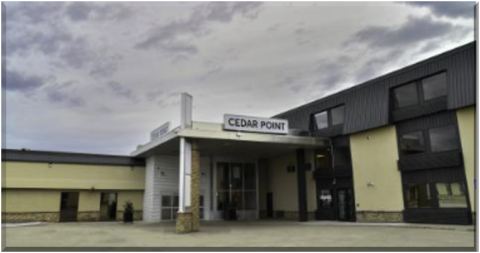
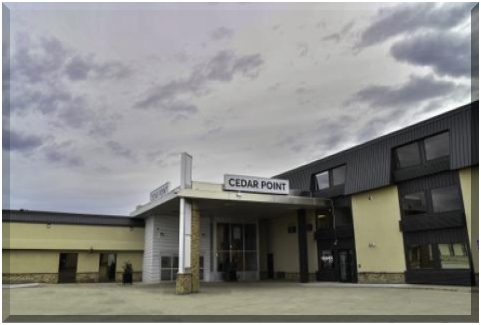
Today, that building is known as Cedar Point.
The city has invested in a project with a budget exceeding $25 million. Now, the proposed 2027 municipal budget includes nearly $9 million connected to a possible sale of the property to the provincial government.
At the same time, vulnerable residents have been told they may need to find somewhere else to live.
How did a project intended to provide long-term housing reach this point in just five years?
And before another major financial decision is made, shouldn't Grande Prairie taxpayers receive a complete accounting of the first one?
The original purchase: What did taxpayers buy?
On July 12, 2021, Grande Prairie City Council approved the purchase of the Stonebridge Hotel and Conference Centre.
The price was $12.5 million.
Another $3 million was initially allocated for renovations, bringing the original project budget to $15.5 million.
The city approved a borrowing plan to finance the project. Its original financial projections anticipated that operating revenues would cover debt payments without requiring a tax increase to balance the budget.
That was the expectation in 2021.
The city's published Cedar Point information now puts the project budget at more than $25 million.
The difference between the original $15.5-million budget and the later project budget exceeds $9.5 million.
That is a substantial increase requiring explanation.
The city's own records identify unexpected fire-separation problems, structural and mechanical issues, electrical work and construction-related cost increases.
Those explanations matter. Renovating an older commercial building can reveal problems that were not apparent before work began.
But they also raise questions.
What building inspections were completed before the purchase?
Was an independent engineering assessment obtained?
What renovation risks were identified before council approved the transaction?
What contingencies were included in the original $3-million renovation estimate?
And at what point did administration and council recognize that the original budget would not be sufficient?
Was the hotel already for sale?
An independent commercial real estate report provides an important piece of the transaction's history.
Colliers Hotels recorded the Stonebridge Hotel sale in August 2021 as a $12.5-million transaction involving 125 rooms.
That works out to approximately $100,000 per room.
Colliers classified the transaction as an alternate-use or redevelopment sale.
What the available record does not establish is whether the Stonebridge Hotel had been publicly listed for sale before the city became involved.
Was the property being actively marketed?
Was there an asking price?
Were other potential buyers considering the property?
Did the city approach the seller, or did the seller approach the city?
Was an independent market appraisal obtained before the purchase price was negotiated?
These are reasonable questions whenever public money is used to acquire a privately owned commercial property.
The transaction's existence and price are documented. Its full marketing and negotiation history remains to be established.
The mayor's recusal: What did it cover?
There is another aspect of the original purchase that deserves examination.
Jackie Clayton, then serving as interim mayor, had previously worked for Pomeroy Lodging, the company associated with the sale of the Stonebridge Hotel.
Clayton publicly acknowledged the connection and recused herself from council discussions and voting on the project.
Contemporaneous reporting indicates her recusal began during the project's consideration in May 2021.
She explained at the time that she was no longer employed by the company and did not have a personal financial interest in the transaction, but wanted to avoid a perceived conflict or bias.
That was an appropriate concern to recognize publicly.
The documented recusal is not evidence of wrongdoing.
Nor is there verified evidence that Clayton privately lobbied councillors or administration to approve the purchase.
But the public record leaves a legitimate governance question.
What was the full scope of the recusal?
Did it include informal discussions, meetings with administration, correspondence and conversations outside council chambers?
Was the mayor involved in any preliminary consideration of the property before the recusal was declared?
Were written conflict-of-interest procedures followed and documented?
The purpose of asking these questions is not to suggest that improper conduct occurred.
It is to establish whether the process was transparent, consistent and properly documented from beginning to end.
A public recusal should protect both the integrity of a decision and the reputation of the person declaring it.
The records should be able to demonstrate how that protection worked.
Not everyone was comfortable with the original decision
The 2021 purchase was not approved without debate.
During the July 12 council meeting, Councillor Wade Pilat questioned the amount of time councillors had been given to review important financial information.
Contemporaneous reporting indicates he was concerned about receiving a report late on the Friday before Monday's council meeting.
Pilat also raised questions about operating costs, including security, food and garbage services.
City administration disputed the suggestion that councillors had insufficient information, maintaining that the project had been under discussion for an extended period and that proper procurement procedures had been followed.
Pilat was the only councillor to vote against the proposal.
Alternative housing proposals were also brought forward during the public discussion.
Five years later, those original concerns deserve another look.
Were the financial assumptions presented to council realistic?
Were alternative properties or construction options evaluated on an equivalent basis?
Did the city compare the full long-term costs of converting the hotel against other ways of providing supportive housing?
And did the project ultimately deliver the financial and social benefits council was told to expect?
The renovation bill kept growing
By July 2023, the city's own administrative reporting identified additional construction requirements.
An unexpected fire-separation issue had been discovered in early 2022.
Further renovations brought structural, mechanical, electrical and supply-chain challenges.
The project continued, eventually incorporating 63 supportive housing units, 43 affordable housing units and municipal office space.
A 2024 city report anticipated full building occupancy following completion of the third renovation phase.
The facility was designed to combine housing with services for people facing significant barriers to stable accommodation.
That objective should not be forgotten.
A project's financial performance and its social value are different questions. Both deserve examination.
The city maintains that Cedar Point's per-unit capital costs remained below comparable projects in other municipalities.
That claim should be tested against the final project costs, the number of completed housing units and the cost of comparable facilities.
The public deserves more than an initial budget and a later total.
It deserves a full reconciliation.
Now another sale is being considered
The city's proposed 2027 budget introduces a new chapter.
Nearly $9 million is associated with a proposed sale of Cedar Point to the Alberta government.
The city has indicated that proceeds would first be used to address outstanding debt from the original purchase and renovations.
That creates several immediate financial questions.
How much debt remains?
How much interest has been paid?
What is the property's current independent market value?
Is the nearly $9-million figure an actual negotiated purchase price, an appraisal-based estimate or simply a budget assumption?
Would the province acquire the entire building and property?
Would the city retain any offices, leases or other interests?
And after paying outstanding debt and any transaction costs, how much money would actually remain?
There is an important distinction between the amount budgeted for a project and the amount ultimately lost on an investment.
The difference between more than $25 million in project budget and a proposed sale figure near $9 million is more than $16 million.
But that difference is not, by itself, proof of a $16-million taxpayer loss.
A proper calculation requires actual expenditures, grants, outstanding debt, asset values and the complete terms of any sale.
Those figures should be presented together before the public is asked to judge the financial outcome.
What happens to the people living there?
While the financial questions are significant, another issue may be even more immediate.
People are living in Cedar Point.
More than 40 affordable housing residents have faced notices concerning a possible December 31, 2026 move-out.
The Mustard Seed has explained that it learned on August 31 that funding for its Cedar Point housing program would end March 31, 2027.
The organization has also clarified that December 31 was identified as a potential transition date and that individual circumstances are being reviewed.
That distinction matters. It has not been established that every resident will be required to leave on that date.
The province has acknowledged discussions about using existing facilities to expand critical health services in Grande Prairie.
But the relationship between the proposed property sale, the funding decision and the possible displacement of residents remains unclear.
Was a change in the building's use being considered before the housing funding decision?
Did the possible provincial purchase influence plans for the existing residents?
What services would replace the current housing program?
Where would residents go?
Would alternative housing be available at comparable rents and with comparable supports?
And if the building becomes a provincial health facility, will the community retain the supportive housing capacity that justified the original purchase?
Those questions concern real people, not simply accounting entries.
A public investment deserves a public accounting
The original Stonebridge purchase was promoted as a way to address homelessness, improve access to services and reduce pressure on other public systems.
The city identified potential benefits including more stable housing, better access to treatment and reduced demands on policing and emergency services.
Those are meaningful public objectives.
But achieving them requires more than purchasing and renovating a building.
It requires stable operating funding, long-term planning, accountable management and a clear understanding of what happens when circumstances change.
Five years after the original purchase, Grande Prairie is facing a proposed sale, questions about substantial public expenditures and uncertainty for residents.
There may be sound reasons for changing the property's use.
The province may have an important health-service purpose for the building.
A sale may reduce municipal debt.
And some of the money invested may have produced lasting community benefits.
Those possibilities deserve consideration.
But none removes the need to explain the financial history or the consequences of the proposed change.
The Story Isn't Over
Before Cedar Point changes hands again, Grande Prairie residents deserve answers to several fundamental questions:
- Was the Stonebridge Hotel publicly listed for sale in 2021, and what was its asking price?
- Who initiated the purchase negotiations, and was an independent appraisal obtained?
- What was the complete scope of the mayor's recusal, and what records document it?
- What was the final actual cost of purchasing, renovating and operating Cedar Point?
- How much of that investment came from municipal taxpayers, borrowing and outside grants?
- What debt remains, and how much would a provincial sale actually recover?
- Why is a property developed for long-term supportive housing now being considered for another use?
- What will happen to the residents, and how will the city replace any housing capacity that is lost?
The questions do not presume wrongdoing.
They ask whether decisions involving millions of public dollars can be fully explained.
The original purchase was made in the name of the public interest.
Any decision to sell should be held to the same standard.
Grande Prairie taxpayers helped finance Cedar Point. The people living there helped give it a purpose. Both deserve to know what comes next.
Original sources and records
- City of Grande Prairie — July 12, 2021 Council Highlights
- City of Grande Prairie — Borrowing Bylaw C-1440
- City of Grande Prairie — 2023 Coordinated Care Campus Capital Report
- City of Grande Prairie — 2024 Cedar Point Detailed Budget
- City of Grande Prairie — Cedar Point Project Information
- Colliers Hotels — Q3 2021 Hotel Transaction Report
One important editorial point: Because budget deliberations begin today, November 18, this about the proposed sale, not a completed transaction. The outstanding purchase agreement, appraisal and recusal records remain open investigative questions.