Forgotten, Not Gone: Beaverlodge's Bypass Has Been Discussed for 24 Years — Is It Finally Moving Forward?
Back on top · first published Nov 11
A Highway Proposal That Has Outlasted Generations of Planning
Twenty-four years ago, residents of Beaverlodge were already discussing a future in which Highway 43 traffic might no longer travel through their community.
Today, the bypass remains part of regional transportation planning.
On November 9, County of Grande Prairie Council received an infrastructure update from Derek Young, Regional Director with Alberta Transportation and Economic Corridors.
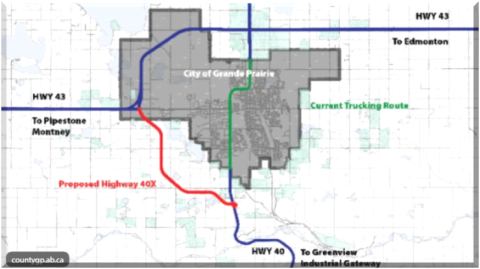
The presentation covered several projects, including Highway 40X, the Highway 40X/Highway 43 interchange, Highway 724, the Highway 722 bridge crossing and the Beaverlodge bypass.
The County's published Council highlights confirm the projects were discussed but do not provide detailed construction schedules, funding commitments or decisions for each one.
For Beaverlodge, the update revives a question that has been around for almost a quarter-century.
Is the Province finally preparing to build the bypass, or is this another chapter in a long history of planning?
Back to 2002: When the Bypass Was Controversial
On January 9, 2002, Truck News reported that a functional planning study for Highway 43 had been completed.
The proposed highway realignment would take traffic south of Beaverlodge and north of Hythe.
Not everyone welcomed the idea.
According to the contemporary report, residents worried that removing highway traffic from their communities could threaten businesses that depended on passing motorists and commercial truck drivers.
A group called Friends of Highway 43 opposed the proposed routing.
The concerns were understandable.
For highway communities, passing traffic can represent customers for restaurants, fuel stations, accommodation and other services.
But the competing argument also deserves attention.
A bypass can move heavy trucks away from busy streets, reduce conflicts between local and through traffic, and potentially improve safety.
The question was never simply whether a new highway could be built.
It was whether the community would be better off once it was.
The Plans Did Not Disappear
The bypass was still part of formal planning years later.
A 2010 provincial functional planning study identified a Beaverlodge bypass concept.
That proposed alignment subsequently appeared in the Town of Beaverlodge and County of Grande Prairie's Intermunicipal Development Plan.
The 2024 plan explicitly recognizes that Highway 43 may eventually be realigned around Beaverlodge.
It also calls for the Town and County to coordinate with Alberta Transportation to protect future access opportunities into the community.
This is significant.
Even when construction has not begun, a proposed transportation corridor can influence development planning, road connections and future land-use decisions.
It raises another question:
How long should communities plan around infrastructure that has no publicly confirmed completion date?
A New Clue in Provincial Tender Records
There is another development worth examining.
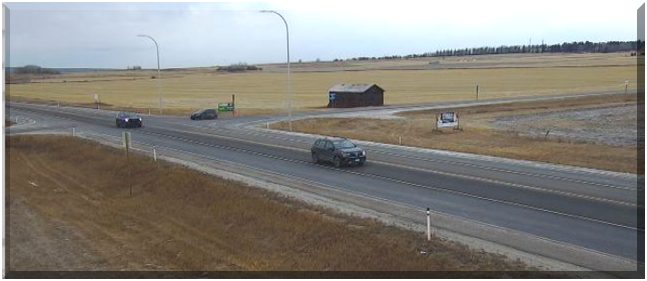
Alberta Transportation's October 2025 three-month tender list identified work associated with the Beaverlodge bypass at Harold Creek.
A related tender described bridge culvert installation and other work on Highway 43 southeast of Beaverlodge, with an October 31, 2026, contract completion date.
That does not establish that the entire bypass is being constructed.
The work could relate to an existing highway structure or a component of future corridor improvements.
However, it provides a specific project record that deserves follow-up.
Establish whether the culvert work was completed, how it relates to the bypass alignment and whether additional construction has been approved.
Unlike a general planning discussion, a tender offers a concrete document against which future statements can be checked.
What Has Actually Changed?
The Province has invested in Highway 43 over the years.
In November 2010, Alberta announced the opening of 13 kilometres of divided highway between Wembley and Beaverlodge, following a $22.6-million investment.
Other sections have received paving and rehabilitation work.
Those improvements are real.
But improving the existing highway is not the same as completing the proposed Beaverlodge bypass.
The November 9 Council briefing brings the project back into public discussion without, in the published summary, resolving its construction timetable.
The distinction matters.
Residents should be able to separate completed work, approved construction, engineering studies and long-term concepts.
Each represents a different level of government commitment.
Would Beaverlodge Be Better Off With a Bypass?
The original economic concerns deserve another look.
A bypass could offer benefits for local traffic safety and regional freight movement.
It could also create challenges for businesses that rely on motorists travelling directly through town.
The effects would depend on the route, interchange locations, signage, travel patterns and whether the community can attract visitors off the new highway.
There is also a question of local growth.
Would diverting through traffic make Beaverlodge's existing commercial areas more attractive to residents and pedestrians?
Or would fewer passing vehicles mean fewer customers for local businesses?
Neither outcome should be assumed.
The Town, its business community and residents should have an opportunity to assess both possibilities using current traffic and economic information rather than relying only on assumptions made decades ago.
What the Province Needs to Explain
After nearly 24 years of public discussion, the Province should be able to clarify the project's status.
Swan City Now is seeking answers to several questions:
- Is the Beaverlodge bypass an active, funded construction project or a long-term transportation concept?
- Has the proposed route changed since the 2010 planning study?
- What work has been completed, including the Harold Creek culvert project?
- What is the latest estimated construction cost?
- Are traffic volumes and collision records being used to justify the project?
- How would the bypass affect existing businesses and access to Beaverlodge?
- What would need to happen before construction could begin?
The Town of Beaverlodge and County of Grande Prairie also have important roles in explaining how the proposed route affects their future development plans.
The Story Isn't Over
Highway infrastructure is not built overnight.
Planning, engineering, land acquisition, environmental assessment and funding can take years.
But when a proposal remains under discussion for almost a quarter-century, residents are entitled to understand why.
The Beaverlodge bypass has survived changes in governments, transportation priorities and municipal planning documents.
Now it has returned to the County Council agenda.
Swan City Now will seek the detailed November 9 presentation, the current provincial project status, the results of the Harold Creek tender and responses from Beaverlodge businesses.
The question is no longer whether somebody once thought a bypass was necessary. It is whether the Province still intends to build it — and when.
Swan City Speaks
Should Highway 43 continue through Beaverlodge, or would a bypass make the community safer and more prosperous?
If you operate a business in Beaverlodge, how important is passing highway traffic to your customers?
And should Alberta be required to provide clearer timelines for transportation projects that remain on municipal planning maps for decades?
Forgotten, Not Gone — The headlines faded. The questions remain.
Swan City Now — Because the story doesn't end with the headline.