One City, One County, One Tax Bill — Who Would Pay More?
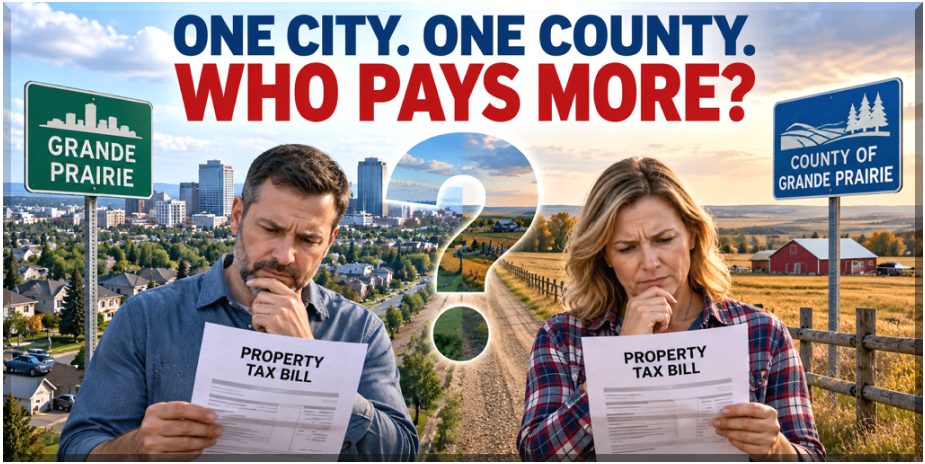
Would amalgamation save taxpayers money, or would City and County residents end up paying more? And if there were only one government, who would decide where the money goes?
Back on top · first published Oct 30
Swan City Now Follow-Up | Part 2: Is It Time to Reunite Grande Prairie and the County?
In our earlier article, Is It Time to Reunite Grande Prairie and the County?, we raised a question that has surfaced repeatedly over the years: Would Grande Prairie and the surrounding County be better served by one municipal government instead of two?
The discussion raises questions about identity, representation, services and economic development.
But sooner or later, nearly every conversation about amalgamation comes around to one subject.
Money.
Would property taxes increase or decrease? Could one government operate more efficiently than two? And would rural residents receive their fair share of municipal spending?
Perhaps those are the questions we should answer before deciding whether amalgamation makes sense.
The Concern: Would the City Get All the Money?
In discussions with former County councillors, one concern comes up repeatedly.
If Grande Prairie and the County were amalgamated, the argument goes, most of the money would eventually be spent in the City, while rural roads, agricultural services and County infrastructure would receive less attention.
It's a concern worth examining.
Grande Prairie has expensive urban infrastructure, including roads, recreation facilities, policing and water and sewer systems.
The County has different demands. It must maintain an extensive rural road network, support agricultural communities and deliver services across a much larger geographic area.
Neither set of needs disappears through amalgamation.
But there's another way to consider the argument.
If the City and County became one municipality, there would no longer be a separate City government receiving money from a separate County government.
There would be one municipal government, one council and one consolidated budget.
The distinction matters.
Instead of asking whether the City would take the County's money, perhaps we should ask:
How would a united municipality ensure that urban and rural taxpayers receive fair value for the taxes they pay?
Of course, changing municipal boundaries would not automatically eliminate competing priorities. Residents would still need a system of representation and accountability that works for both urban and rural communities.
That's where the discussion becomes interesting.
Would One Government Cost Less Than Two?
At first glance, combining two municipal governments might appear to offer savings.
Consider the administrative functions each municipality currently maintains.
Both have elected councils, senior administrators, finance departments, planning operations and other administrative services.
Could some of those functions be consolidated?
Possibly.
Would one council and one administrative structure cost less than two?
Perhaps.
But the savings should not be assumed.
Amalgamation could involve transition costs, changes to employee agreements, technology integration, service harmonization and other expenses.
And many municipal services would still be required regardless of how many councils exist.
Roads would still need maintenance. Emergency services would still operate. Water and sewer infrastructure would still need investment.
The important question is not how many positions could theoretically be eliminated.
It's how much money could actually be saved after accounting for the cost of combining the municipalities.
That calls for a financial analysis, not a political prediction.
One Tax Bill — But Would Everyone Pay the Same?
A united municipality would not necessarily mean every property owner paid the same tax rate.
Alberta municipalities can apply different tax rates to different assessment classes, subject to provincial legislation.
A newly amalgamated municipality would have to establish its tax policies and determine how the costs of services would be shared.
Consider four taxpayers:
- A homeowner in Grande Prairie.
- A homeowner in Clairmont.
- A rural acreage owner.
- A farmer or industrial property owner in the County.
Would their property taxes go up, down or stay about the same?
The answer would depend on the combined municipality's assessment base, budget, tax policies and service obligations.
And without studying those figures, nobody can responsibly promise lower taxes.
Wouldn't it be useful to see a comparison showing what a typical property owner currently pays and what that bill might look like under several amalgamation scenarios?
That could be one of the most valuable pieces of information in this entire debate.
The Industrial Tax Question
There is another financial issue that deserves attention.
The County of Grande Prairie has industrial properties that contribute to its municipal tax base.
Grande Prairie is the region's major urban service centre, providing housing, shopping, recreation, employment and other services used by residents throughout the region.
Both municipalities contribute to the area's economic success, although in different ways.
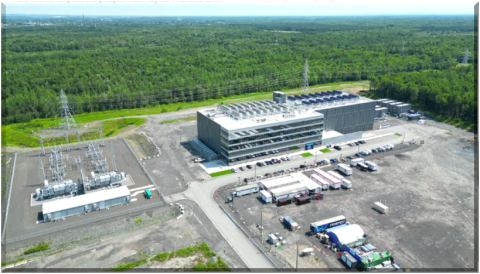
The proposed data centres and other large industrial developments make the question particularly relevant.
If a major industrial development is located in the County, the municipal property taxes generally flow to the County.
But what if its employees live in Grande Prairie, its suppliers operate in the City and its activities place demands on infrastructure throughout the region?
Does the current municipal structure fairly reflect those shared costs and benefits?
Or would a regional government be better positioned to make decisions for the entire area?
There is another possibility worth considering.
Could the City and County negotiate better revenue-sharing and service agreements without amalgamating at all?
That deserves examination alongside the proposal for one government.
Would Rural Residents Lose Their Voice?
This may be the strongest argument raised by people concerned about amalgamation.
If a united council had more representatives from urban neighbourhoods, could rural residents find themselves consistently outvoted?
Would rural road maintenance lose priority to urban infrastructure?
Would agricultural concerns receive the same attention?
Those are reasonable questions.
But representation is something that could be considered when designing a new municipal structure.
A united municipality could explore electoral wards, representation for different geographic areas, service-level commitments and transparent reporting of urban and rural expenditures, within the requirements of Alberta law.
Such arrangements would not guarantee that every community received everything it wanted.
They could, however, help ensure that taxpayers understood how decisions were being made.
Perhaps the question for former County councillors and rural residents should be:
If you believe rural communities would lose out under amalgamation, what specific protections would make a united municipality acceptable?
That is a more constructive question than simply assuming rural interests would be ignored.
Amalgamation and Annexation Are Not the Same Thing
This distinction is especially important.
Annexation generally involves transferring a defined area of land from one municipality to another.
Amalgamation involves combining municipalities into a new municipal structure.
If Grande Prairie annexed additional County land, the City and County could continue to exist as separate governments.
If the entire City and County amalgamated, there would be one municipal government responsible for the combined territory.
Those arrangements would have very different consequences for taxpayers, representation, municipal assets and services.
Before debating whether the region should become one municipality, we should be clear about exactly what is being proposed.
Are we discussing the entire County, the developed areas surrounding Grande Prairie, or simply better ways for the existing governments to work together?
Each option deserves its own financial comparison.
What Would an Independent Financial Study Tell Us?
Rather than relying on predictions from either side, Swan City Now believes residents would benefit from seeing the numbers.
A useful study could examine:
-
Property taxes: What do comparable residential, agricultural, commercial and industrial properties currently pay in each municipality?
-
Municipal revenues: How much does each government collect from property taxes, grants, fees and other sources?
-
Administrative costs: Which functions could realistically be consolidated, and what savings might result?
-
Infrastructure obligations: What roads, buildings, water systems and other assets would a combined municipality inherit, and what are their future costs?
-
Service levels: Would urban and rural residents continue receiving the services they currently receive?
-
Representation: How could a united council fairly represent communities with different needs?
-
Transition costs: How much would amalgamation itself cost, and how long might it take to recover those expenses?
-
Alternatives: Could shared services, annexation or revenue-sharing agreements deliver comparable benefits without combining the municipalities?
The purpose would not be to produce a predetermined answer.
It would be to give residents the information needed to form their own opinions.
The Bigger Question: Are We Better Together?
Grande Prairie and the County are already connected in countless ways.
People live in one municipality and work in the other.
They shop, attend events, use recreational facilities, operate businesses and travel across municipal boundaries every day.
Our regional economy does not stop at the City limits.
But does that mean our municipal governments should be combined?
Not necessarily.
Some communities may benefit from maintaining separate governments that understand their different needs.
Others may find that regional coordination, shared infrastructure and a broader tax base offer advantages.
The answer should depend on evidence.
Would one municipal government deliver better services at a lower overall cost, while protecting the interests of both urban and rural residents?
If the answer is yes, amalgamation deserves serious consideration.
If the answer is no, perhaps the better approach is improving cooperation between the two existing municipalities.
Either way, taxpayers deserve to know.
Swan City Speaks: What Do You Think?
1. Would you support amalgamation if it lowered your property taxes?
And would your answer change if your taxes increased but regional services improved?
2. Do you believe rural residents would lose their voice in a united municipality?
What safeguards would you want before considering amalgamation?
3. Should industrial tax revenue benefit the entire region?
Or should it remain primarily with the municipality where the development is located?
4. Are we paying for two governments when one might do the job?
Or do separate councils provide important representation that would be lost?
5. Should the City and County jointly commission an independent financial study?
Would you support examining the numbers before taking a position?
What Have We Missed?
Perhaps you have worked in municipal government, served on council or been involved in earlier discussions about annexation or amalgamation.
Maybe you have seen examples of municipalities elsewhere in Canada that successfully combined their operations — or experienced unexpected problems.
We would like to hear those perspectives.
We're neighbours. We don't all have to agree, but we can all benefit from asking better questions.
Share your thoughts in the comments.
Join the conversation: https://swancitynow.com/join
This article is Part 2 of Swan City Now's ongoing discussion about the future of Grande Prairie and the County. Read Part 1: Is It Time to Reunite Grande Prairie and the County?.