When One Farmer Drains a Field, Who Gets the Water? Alberta's Wetland Changes Spark Debate
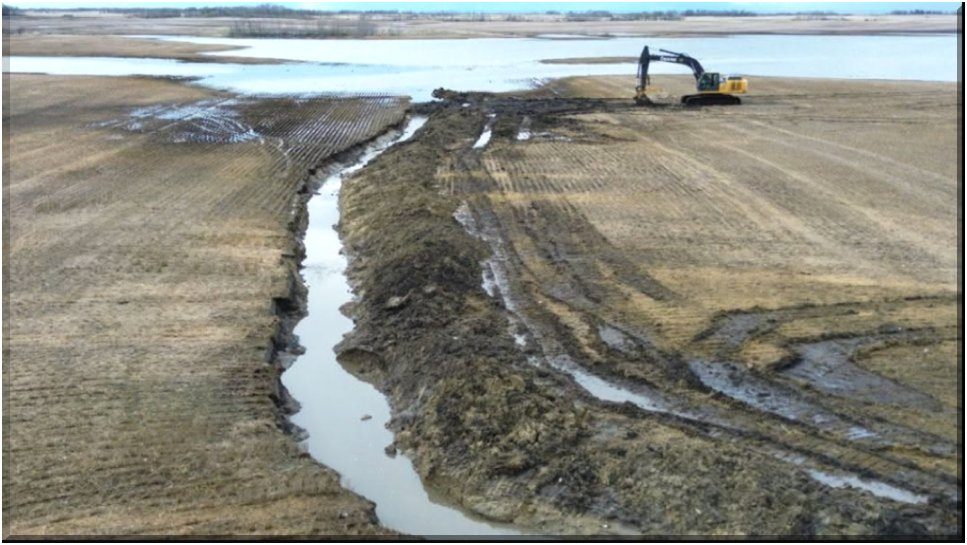
For a farmer, a wet spot in the middle of a field can mean delayed seeding, lost production and machinery working around an area that cannot be cultivated.
When One Farmer Drains a Field, Who Gets the Water?
For a neighbouring landowner, drainage from that same field could raise a different concern: Where will the water go?
And for those concerned about wildlife and the environment, the question may be whether removing temporary wetlands comes at a greater cost than the additional farmland gained.
These competing concerns have surfaced in a public Facebook discussion about Alberta's new wetland regulations.
The debate illustrates why the changes are about more than farmers being allowed to work their own land.
They are also about water, property rights and what happens beyond the fence line.
What Has Changed?
On October 20, 2026, amendments to Alberta's Water (Ministerial) Regulation and Water (Offences and Penalties) Regulation took effect.
The changes exempt specified activities on privately owned land already under agricultural crop production from Water Act approval requirements.
Cultivation, direct seeding and pesticide spraying in qualifying ephemeral water bodies and temporary or seasonal wetlands require neither approval nor notification.
Qualifying surface-water drainage, ditching and filling also no longer require Water Act approval, but farmers must notify Alberta Environment and Protected Areas through its Digital Regulatory Assurance System at least 14 days before beginning work.
The province has also removed wetland replacement obligations for activities covered by the exemptions.
These changes do not give landowners unrestricted permission to drain every wetland. Other wetland categories and applicable environmental protections remain subject to regulation.
Farmers Say Drainage Is Part of Producing Food
In the Facebook discussion, Ralph Hinz argues that people unfamiliar with agriculture should recognize how much farmland depends on drainage.
He also points to cities and towns, where land has routinely been drained or filled to accommodate development.
Tom Wilson makes a similar argument, asking what is wrong with a farmer drying out a field to grow crops again.
Marcus Bauer questions why urban development is often accepted while agricultural drainage attracts criticism.
Their comments raise a legitimate issue.
If society expects farmers to produce affordable food, how much flexibility should they have to improve land already in agricultural production?
And are the standards applied to rural and urban land development consistent?
Those questions deserve examination rather than assumptions about either farmers or environmental advocates.
Good Drainage and Bad Drainage
One of the more detailed contributions came from Chris Paterson.
He describes how properly planned drainage can make irregularly shaped fields easier to farm, reduce overlapping equipment passes and allow earlier field operations.
He also suggests that moving water from short-lived wet spots into larger, more persistent water bodies can sometimes improve habitat conditions.
But Paterson acknowledges another side of the issue: poorly planned drainage can create downstream problems and harm biodiversity.
That distinction may be central to the debate.
Drainage is not automatically beneficial or harmful in every circumstance. Its consequences depend on the land, the drainage design, the receiving area and the surrounding watershed.
Moving water does not make it disappear.
What Happens to the Neighbour Downstream?
Another commenter, Britney Moore, describes a situation in Saskatchewan in which she says a cattle operation lost approximately 70 acres of usable land because water from surrounding properties accumulated downstream.
Her account has not been independently verified and does not establish that a similar incident occurred in Alberta.
Nevertheless, it illustrates a concern that applies to agricultural drainage anywhere.
A field that becomes easier to farm after drainage may be connected to another property that receives the water.
Who is responsible if that neighbouring property floods?
Who investigates?
And what happens if several landowners each make small drainage changes that collectively alter how water moves across a watershed?
Alberta says the new exemptions do not permit water management that adversely affects neighbouring properties. The province has also stated that water managed under the exemptions must remain on-site.
Those protections are important.
But the practical question is how compliance will be checked when qualifying projects no longer undergo the same approval process.
Temporary Wetlands Still Have Environmental Value
Some commenters expressed concern about wildlife, water quality and the long-term consequences of removing wetlands.
Conservation organizations have raised similar concerns.
Temporary and seasonal wetlands can provide breeding habitat for waterfowl and other wildlife. They can also hold runoff, slow the movement of water and contribute to water quality.
The Alberta Native Plant Council has argued that small prairie wetlands provide environmental benefits that should not be overlooked simply because they dry out during part of the year.
Meanwhile, agricultural organizations have supported the new flexibility, arguing that excessive moisture can damage crops and delay essential fieldwork.
Both considerations matter.
A wetland can interfere with farming while still providing important environmental functions.
The policy challenge is determining which activities can proceed without unacceptable consequences.
What About Cities?
Another recurring argument in the Facebook discussion concerns urban development.
Commenters ask why farmland drainage faces scrutiny when cities have historically drained wetlands and filled low-lying land to build streets, houses and commercial properties.
It is a reasonable comparison to investigate.
Urban development and agricultural drainage may fall under different regulatory processes, but both can affect natural water storage and drainage patterns.
If temporary wetlands provide important environmental benefits on farmland, those benefits do not disappear when the land is designated for residential or commercial development.
The relevant question is whether Alberta's wetland protections are being applied consistently across different types of land use.
Who Decides What Is a Temporary Wetland?
The new exemptions also depend on wetland classification.
Ephemeral water bodies and temporary or seasonal wetlands may qualify.
Semi-permanent and permanent wetlands generally do not qualify under these agricultural exemptions.
But the difference is not always obvious.
A low spot may dry out quickly during a drought and hold water much longer during a wet year.
Alberta has technical wetland classification standards, but questions remain about how a farmer can confidently establish eligibility when an approval application is no longer required.
What evidence should be kept?
When is professional advice necessary?
And what happens if a farmer and the province disagree?
Clear answers would benefit both landowners and regulators.
The Story Isn't Over
Alberta's changes may reduce costs, paperwork and delays for farmers dealing with temporary water on established cropland.
They also place greater importance on understanding the limits of the exemptions and the consequences of drainage decisions.
The Facebook discussion demonstrates that the public disagreement is not simply between farmers and environmentalists.
It includes concerns about agricultural productivity, private property, wildlife, urban development and fairness between neighbours.
Several questions remain:
- How will Alberta monitor drainage activities that no longer require approval?
- What happens when a neighbouring landowner alleges that drainage has caused flooding?
- How will the province assess the cumulative effects of many smaller drainage projects?
- How can farmers establish the classification of a wetland before proceeding?
- Are comparable environmental standards applied to agricultural and urban development?
Ultimately, the question is not only whether a farmer should be allowed to drain a field.
It is whether the benefits of that decision can be achieved without transferring the costs to someone else.
Because when water leaves one place, what happens next matters.
Sources and Community Discussion
Government of Alberta — Alberta Wetland Policy implementation: https://www.alberta.ca/alberta-wetland-policy-implementation
Government of Alberta — Digital Regulatory Assurance System: https://www.alberta.ca/digital-regulatory-assurance-system
Alberta Native Plant Council — Wetland Policy amendments: https://anpc.ab.ca/undervaluing-prairie-wetlands-allows-continued-losses-through-alberta-water-act-and-wetland-policy-amendments/
Editorial note: Facebook comments reflect the opinions and experiences of their authors. Individual claims about drainage impacts have not been independently verified.