2026 Alberta Forestry Overview
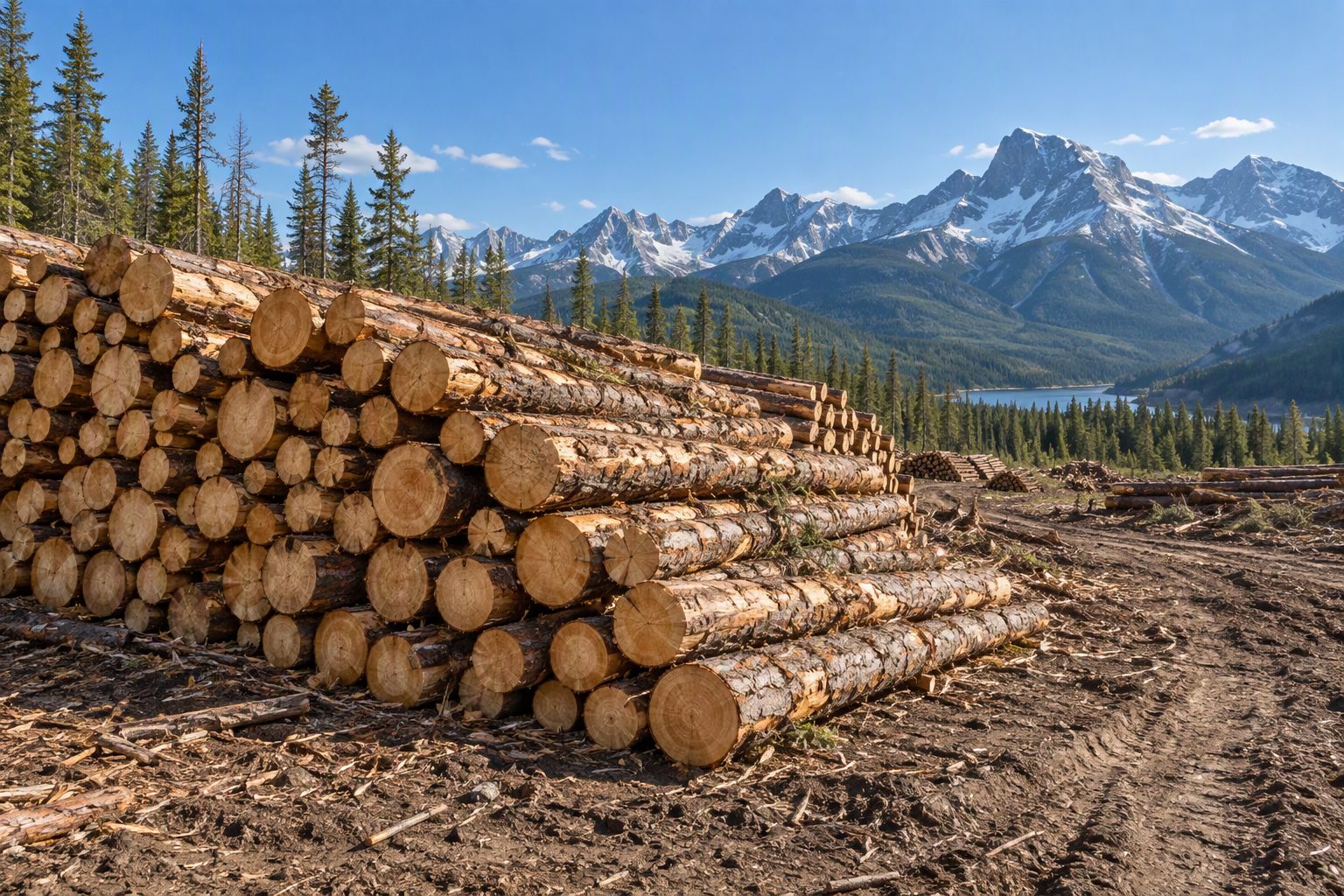
Key Proposed Changes and Their Effects on the Grande Prairie Area
Alberta’s forestry sector is moving through several important changes in 2026. Locally, the main developments include a new long-term forest management plan being developed by Canfor, five-year operational planning, new provincial harvesting rules; and updated area-specific requirements for Weyerhaeuser Company Limited. [1][2][3]
Important distinction: Proposed harvest plans, timber permits and approved volumes should not be confused with timber actually harvested.
A new long-term forest plan for Grande Prairie
One of the largest local forestry developments is Canfor's work on a new Forest Management Plan for its Grande Prairie Forest Management Agreement area. The existing 2015 plan remains in effect while the next plan is being developed. Canfor listed November 1, 2026 as its revised submission timeline. [1] This is much more than a plan for one logging season. The Forest Management Plan is intended to guide forest management over a 200-year planning horizon. [1]
Among its major components are:
-a Timber Supply Analysis to determine a sustainable Annual Allowable Cut; -a 20-year Spatial Harvest Sequence to guide operational planning; -wildlife habitat and biodiversity; -fish and aquatic ecosystems; -water quality and watershed function; -wildfire risk and forest resilience; -insects, disease and forest health; -cultural, social and economic values; and -monitoring and adaptive management. [1]
What could this change?
The biggest effect is on long-term decision-making. The Timber Supply Analysis will be used to determine a sustainable Annual Allowable Cut, while the 20-year Spatial Harvest Sequence will guide future operational planning. [1] The plan is also broader than timber production. Canfor explicitly lists wildlife, water, fish, wildfire risk, forest health and cultural, social and economic values among the issues considered in the plan. [1] The actual direction and action versus the proposed plan remains to be documented and noted. That makes the final plan and its harvest sequence important documents for residents who want to understand the direction of future forest management around Grande Prairie.
Proposed operations become more specific
The next layer is the General Development Plan. Canfor published a P19/P52 General Development Plan dated June 26, 2026. It describes proposed timber operations for periods of up to five years. [2] The General Development Plan provides a connection between the longer-term Spatial Harvest Sequence and operational forestry planning. It may include proposed temporary camps lasting less than 12 months and temporary log-storage sites. [2] The planning process also provides more information about where structures and facilities are proposed and is intended to help identify concerns involving other forest users. Canfor says Indigenous consultation occurs at this stage of operational planning. [2]
Why the maps matter
For residents, the General Development Plan maps may be particularly useful because they move the discussion from broad forest policy toward the location of proposed operations. However, a proposed operation shown in a development plan should not be reported as an area that has already been logged. The plan describes proposed operations. [2]
Weyerhaeuser gets new Grande Prairie-specific rules
Another significant change took place on September 29, 2026. Alberta published the Timber harvest planning and operating ground rules: Weyerhaeuser Company - Grande Prairie forest management plan/agreement area-specific addendum [2026]. [3] The 18-page document applies to Forest Management Agreement 6900016 and adds specific requirements to Alberta's broader 2026 timber-harvest operating rules. [3] Importantly, the province states that when an area-specific addendum rule and a provincial ground rule address the same subject or objective, the rule in the addendum governs. [3] Subjects associated with the addendum include timber-harvest planning, habitat management, forest protection, silviculture and watershed protection. [3] The new addendum also lists Forest Management and Wildfire Mitigation as the contact area vs the original Forest Stewardship branch. This is a confirmed administrative change. It should not, by itself, be described as proof that wildfire rules became stricter. Wildlife of special management concern are currently listed as; grizzly bear, bull trout, arctic grayling and woodland caribou.
This means forestry operations in this FMA are not governed only by the province-wide rules. The area has additional requirements developed for that particular Forest Management Plan and agreement area.
Wildfire remains part of the forestry discussion
Alberta's overall 2026 wildfire season was much quieter than the five-year average. By October 30, Alberta reported 789 wildfires and approximately 18,000 hectares burned. The number of fires was 35% below the five-year average, while the area burned was 98% below the five-year average. About 62% of fires were human-caused and 34% were caused by lightning. [4] Conditions around Grande Prairie still became serious at times. On May 26, the Grande Prairie Forest Area was under high wildfire danger. Alberta reported 29 wildfires since January 1 that had burned more than seven hectares, although there were no active wildfires in the forest area at that time. [7] In August, wildfire GWF058 was reported at approximately 30 hectares near the British Columbia border and was classified as out of control at the time. Firefighters, helicopters, airtankers and heavy equipment were responding. [5] Wildfire is also part of long-term forest planning. Canfor specifically lists wildfire risk and forest resilience among the values considered in its developing Forest Management Plan. [1]
Alberta also held a provincial Commercial Timber Permit sale in January 2026.
The sale offered 12 coniferous commercial timber permits and one deciduous commercial timber permit through sealed tender. [8] Published results show some sizable permit volumes. For example: -CTPE090014 listed 19,159 m³ of coniferous and 14,157 m³ of deciduous timber within a 129-hectare block. [9] -CTPH010028 listed 15,723 m³ of coniferous and 6,539 m³ of deciduous timber within a 92-hectare block. [9] -CTPB520062 listed 50,800 m³ of coniferous timber within a 129-hectare block. [9] -DTPG510064 listed 200 m³ of coniferous and 4,500 m³ of deciduous volume within a 25-hectare block, but received no bids. [9]
*These numbers require caution. They are volumes associated with commercial timber permits. They are not proof that the same amount of timber was actually harvested during 2026. That difference becomes important when comparing proposed logging with wildfire losses, reforestation or annual forest disturbance.
Reforestation rules are also changing
Understandably, reforestation remains an important part of Alberta's forestry system. In 2026, Alberta introduced specific requirements for the Community Hazardous Fuels Reduction program, effective January 1. [6] The requirements address post-harvest forest transitions, reforestation strategies, seedling establishment parameters, species composition targets, stocking standards and reporting through the Alberta Regeneration Information System. [6]
There is also a direct connection between certain commercial timber permits and reforestation responsibilities.
For the January 2026 commercial permit process, Alberta stated that forest management agreement holders must carry out required reforestation. Certain other permit holders may be required to pay reforestation levies, while quota holders may complete required reforestation or pay the applicable levy. [10] What remains difficult to determine publicly is the total amount of actual reforestation completed across Alberta in 2026. Current government publications describe standards, responsibilities and reporting requirements, but a verified province-wide YTD total for hectares actually reforested or seedlings planted was not found in the public sources reviewed.
What residents should watch next
There are several layers occurring at the same time:
Long-term planning through Canfor's developing Forest Management Plan and its 200-year planning horizon. [1] A 20-year harvest sequence intended to guide future operational planning. [1] Shorter-term proposed operations contained in General Development Plans covering periods of up to five years. [2] New operating requirements under Alberta's 2026 timber-harvest rules and the Weyerhaeuser Company Limited Grande Prairie addendum. [3] Reforestation and wildfire considerations, including new requirements for areas harvested under the Community Hazardous Fuels Reduction program. [6] Reviewing the CHFR program it is interesting to note the ongoing deciduous discussion and planning. Is there a slow realization that a possible deciduous program could be incorporated int existing silviculture models?
The key question going forward will not simply be how much timber can be harvested, but where harvesting is proposed, what operating rules apply, how the land will be regenerated afterward, and how wildlife, water, wildfire risk and other forest values are addressed. For local residents and land users, the maps and detailed planning documents behind these proposals may provide the clearest picture of where future forestry operations are being considered.
References
[1] Canfor: 2026 Forest Management Plan (development), Grande Prairie FMA. Covers the 200-year planning horizon, Timber Supply Analysis, Annual Allowable Cut, 20-year Spatial Harvest Sequence, wildfire resilience, water, wildlife and other forest values. link text
[2] Canfor: P19/P52 General Development Plan, June 26, 2026. Describes proposed timber operations for up to five years and provides the associated planning map. link text
[3] Government of Alberta, Timber harvest planning and operating ground rules: Weyerhaeuser Company - Grande Prairie forest management plan/agreement area-specific addendum [2026], September 29, 2026. link text
[4] Government of Alberta, Edson Forest Area - October 30, 2026. Includes the provincial YTD total of 789 wildfires and approximately 18,000 hectares burned. link text
[5] Government of Alberta, Grande Prairie Forest Area - August 22, 2026. Reports high wildfire danger and the response to GWF058. link text
[6] Government of Alberta, Community Hazardous Fuels Reduction Program - Reforestation Requirements, January 2026. Covers post-harvest transitions, reforestation strategies, standards and regeneration reporting.Read source
[7] Government of Alberta, Grande Prairie Forest Area - May 26, 2026. Reports high wildfire danger and 29 wildfires burning more than seven hectares since January 1. link text
[8] Government of Alberta, Commercial Timber Permit Provincial Sale Notice 2026. Notice covering 12 coniferous permits and one deciduous commercial timber permit. link text
[9] Government of Alberta, Commercial Timber Permits Sale - January 2026 Results. Provides permit volumes, block areas, bidders and sale results. link text
[10] Government of Alberta, January 2026 Public Notice Commercial Timber Permits for Sale by Sealed Tender - Questions and Answers. Provides information about reforestation responsibilities and levies associated with commercial timber permits. link text