Wonder Valley Faces Federal Scrutiny as First Nation Challenges Alberta Decisions — And the Heat Question Grows
One of the largest proposed artificial intelligence developments in Canada is facing a new level of scrutiny.
A $70-Billion Proposal Faces Another Test
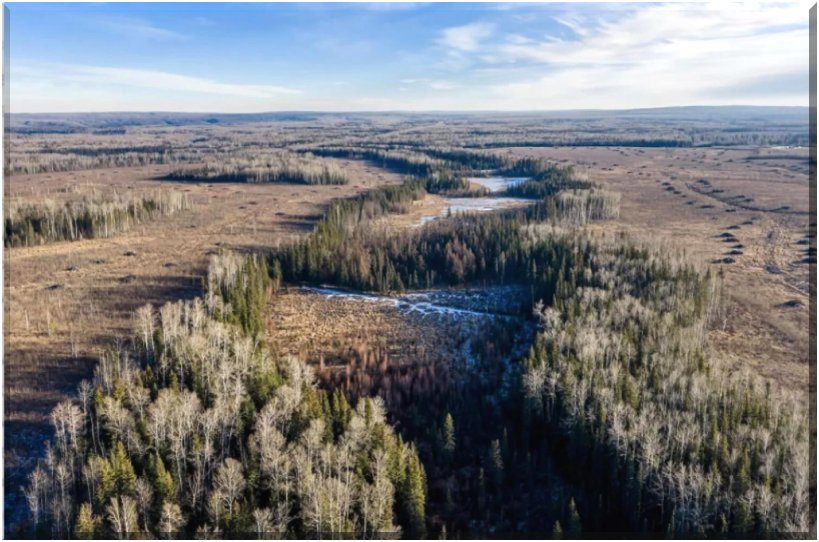
The federal government is examining whether O'Leary Digital's Wonder Valley project, proposed for the Greenview Industrial Gateway approximately 42 kilometres south of Grande Prairie, should undergo a federal environmental impact assessment.
The Impact Assessment Agency of Canada opened its official project file on November 17, following an October 27 request from Sturgeon Lake Cree Nation.
The federal review is separate from ongoing legal challenges involving provincial decisions.
It comes as questions continue about the project's water requirements, natural-gas consumption, waste heat, environmental effects and potential consequences for nearby communities.
The proposed development could represent billions of dollars in investment and substantial construction employment.
But the size of the opportunity also raises questions about the scale of the infrastructure required to support it.
What Ottawa Is Actually Deciding
Sturgeon Lake Cree Nation has requested that the federal government designate Wonder Valley under the Impact Assessment Act.
That would bring the project into the federal impact assessment process.
The federal agency is currently analyzing the request and preparing a recommendation.
Under federal procedures, a response with reasons is generally required within 90 days after a complete designation request enters the applicable process.
That does not mean the federal government has already ordered an environmental assessment.
Nor does it mean the project has been rejected or approved.
The decision will determine whether the additional federal assessment process is required.
The federal registry identifies the project's proposed footprint as approximately 6,417 hectares.
The development would include data centre buildings, natural-gas power generation, water infrastructure, roads and supporting facilities.
Sturgeon Lake Cree Nation Raises Treaty Rights Concerns
Sturgeon Lake Cree Nation has raised concerns about how the project could affect lands and resources used by its members.
Chief Sheldon Sunshine has identified the continued exercise of treaty rights within the proposed development area as an important consideration.
The Nation's concerns include water use, power generation, heat, noise and the cumulative effects of large-scale industrial activity.
These concerns are not limited to whether a particular facility meets an individual regulatory standard.
They also involve the combined consequences of developing a major industrial complex within an area used for traditional activities.
Sturgeon Lake Cree Nation has pursued judicial reviews involving three separate provincial matters:
- The water licence associated with the Greenview Industrial Gateway.
- Alberta's decision that Wonder Valley did not require a provincial environmental impact assessment report.
- The classification of the project's Indigenous consultation requirements.
These are distinct legal proceedings.
The existence of a judicial review does not establish that a government decision was unlawful.
The court must determine the issues properly before it.
A reported December 2026 hearing date for one of the proceedings has not been confirmed through an official court record.
The Heat Question: What Does 18 Gigawatts Actually Mean?
One of the most striking concerns involves the enormous amount of energy required to operate a development of this scale.
The federal project description identifies up to 9,000 megawatts, or nine gigawatts, of natural-gas-fuelled electricity generation.
That is proposed capacity, not electricity currently being generated.
Physicist Robert Davies has examined a scenario involving continuous generation and consumption of electricity at that scale.
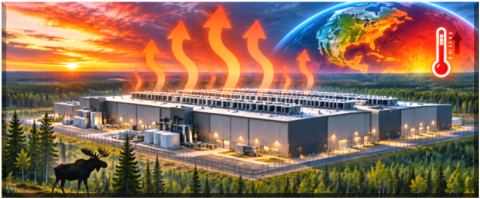
His preliminary analysis suggests that, including energy losses during generation, the development could ultimately release approximately 16 to 18 gigawatts of heat.
That is a very large continuous flow of thermal energy.
But it is important to understand what the figure means.
A gigawatt measures power — the rate at which energy is transferred or consumed.
A gigawatt-hour measures energy accumulated over time.
If 18 gigawatts of heat were released continuously for 24 hours, that would equal 432 gigawatt-hours of thermal energy in one day.
Over a full year, the same hypothetical operating rate would amount to approximately 158 terawatt-hours of heat.
These calculations illustrate the scale of the preliminary scenario.
They do not establish that Wonder Valley will operate at that level or that all the heat would remain concentrated in the surrounding environment.
The actual result would depend on the final power-generation equipment, operating conditions, cooling systems, project phases and heat-dispersal characteristics.
What About the Atomic Bomb Comparison?
Some discussions of the project have compared its potential daily heat output to the energy released by multiple atomic bombs.
Such comparisons can communicate the magnitude of an energy calculation.
But they can also be misleading.
An atomic explosion releases enormous energy almost instantaneously.
An industrial facility releases energy continuously over time.
Those are very different physical situations.
A data centre does not create an explosion simply because its cumulative daily energy output can be compared mathematically with an explosive event.
The more useful questions concern continuous heat release, local temperature effects, cooling requirements and the long-term environmental consequences of operating a facility of this scale.
Those questions require project-specific scientific modelling.
Heat Is Not the Same as Greenhouse Warming
Another distinction matters.
Waste heat and greenhouse-gas emissions affect the environment through different mechanisms.
Electricity consumed by computer equipment eventually becomes heat.
Natural-gas power generation also releases heat through its conversion processes.
Meanwhile, burning natural gas produces carbon dioxide and other emissions.
Carbon dioxide can contribute to long-term global warming by altering the Earth's radiation balance.
Direct waste heat can affect local conditions, but its broader climatic significance must be evaluated separately from greenhouse-gas warming.
The existence of substantial waste heat does not establish that the facility will produce a particular local temperature increase.
Nor does it eliminate the importance of assessing greenhouse-gas emissions.
Both issues deserve examination on their own scientific merits.
How Much Water Would Be Needed?
Water is another major concern.
Greenview holds a water licence authorizing diversion of up to six million cubic metres annually for industrial and commercial purposes within the Greenview Industrial Gateway.
That is equivalent to six billion litres per year.
The licence applies to the wider industrial gateway and is not proof that Wonder Valley will consume that entire volume.
The developer has described plans involving water treatment, storage, reuse and recirculation.
However, final phase-by-phase water balances and operating requirements have not been established in the reviewed public information.
Important questions remain about actual consumption, wastewater, cooling technologies and the effect of withdrawals during periods of reduced river flow.
A water licence is also not the same as approval of every industrial facility that might use the water.
What Does Greenview Stand to Gain — or Pay?
The economic questions deserve the same attention as the environmental ones.
A development approaching $70 billion in announced investment could create substantial opportunities for construction contractors, suppliers and regional businesses.
It could also generate future municipal revenue.
But proposed investment is not the same as money already spent.
And projected revenue is not the same as money guaranteed to a municipality.
Greenview residents have a legitimate interest in understanding what public infrastructure may be required.
Would local roads need upgrading?
Would emergency services require additional equipment or staffing?
Who would pay for water infrastructure and its long-term maintenance?
What would happen if the project were delayed, reduced in size or abandoned?
And what financial security would protect the municipality against unfinished infrastructure or future reclamation costs?
A current, project-specific accounting of potential municipal revenue, expenditures and liabilities has not been established in the information reviewed.
The Developer's Position
O'Leary Digital has presented Wonder Valley as a major opportunity to develop artificial intelligence infrastructure in Alberta.
The company describes a phased project supported by dedicated power generation and associated industrial infrastructure.
It has stated that it intends to comply with applicable provincial and federal regulatory requirements.
Its published materials also describe environmental studies, water-management measures and plans to address emissions and cooling.
Those commitments are relevant.
However, compliance with existing requirements and the question of whether additional assessment is warranted are separate issues.
The federal government must make its designation decision under the applicable legislation.
The Story Isn't Over
Wonder Valley remains a proposal of extraordinary scale, with substantial regulatory, engineering and financial questions unresolved.
Several developments will determine what happens next.
Will Ottawa require a federal environmental impact assessment?
What will the courts decide about the provincial water licence, environmental assessment decision and consultation classification?
Will the developer publish the detailed heat, water, emissions and noise studies needed to assess the proposed full development?
Can Greenview demonstrate the project's anticipated financial benefits alongside its potential public costs?
And how will Sturgeon Lake Cree Nation's treaty rights and concerns be addressed?
There is a difference between opposing development and asking that its consequences be properly measured.
The potential economic benefits of Wonder Valley deserve serious consideration.
So do its environmental effects, Indigenous rights implications and long-term public responsibilities.
For a project of this scale, those questions cannot be answered by investment projections alone.
Original sources
Impact Assessment Agency of Canada — Wonder Valley Data Centre Project, Registry 90892: https://iaac-aeic.gc.ca/050/evaluations/proj/90892
Sturgeon Lake Cree Nation — October 27, 2026 federal designation request, official registry: https://iaac-aeic.gc.ca/050/evaluations/proj/90892/document/168397
Impact Assessment Agency of Canada — Designating a Project under the Impact Assessment Act: https://www.canada.ca/en/impact-assessment-agency/services/policy-guidance/designating-project-impact-assessment-act.html
O'Leary Digital — Project information: https://www.olearydigital.ai/faq
Alberta Data Centre Watch — Wonder Valley evidence and regulatory tracking: https://albertadatacentrewatch.ca/projects/wonder-valley-ai-data-centre-park/