Alberta's Harvest Is Nearly Finished. Why Are Peace Country Farmers Still Playing Catch-Up?
Alberta reports 97% of its major crops harvested, but the Peace Region sits at just 89%. With canola particularly far behind, what do those numbers mean for farmers facing colder weather, additional costs and another uncertain finish to the growing season?
Across much of Alberta, the 2026 harvest is almost complete. Combines are being parked, grain is going into storage and farmers are turning their attention to the coming winter.
But in the Peace Country, the picture is different.
According to Alberta's final provincial crop report of the season, based on conditions as of October 27, approximately 97% of Alberta's major crops had been harvested.
In the Peace Region, that figure was only 89%.
The difference may not seem dramatic at first glance. But for a farmer with hundreds or thousands of acres still waiting to be combined, those remaining percentage points can represent substantial financial exposure.
And one crop stands out.
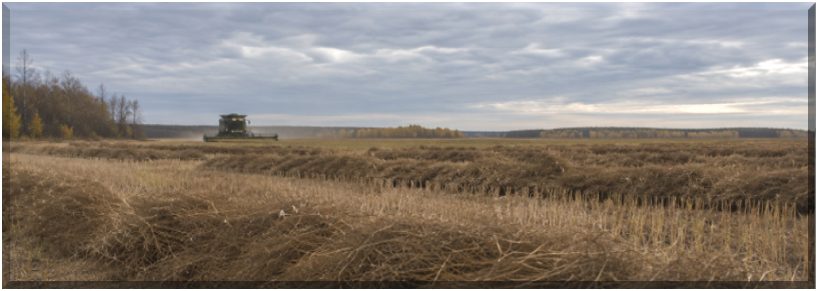
Only 80% of the Peace Region's canola had been combined, with another 15% reported as swathed.
That raises a question worth asking: When the province announces another nearly completed harvest, does that headline tell the whole story for farmers in northwestern Alberta?
The Numbers Tell Two Different Stories
The final crop report provides a useful snapshot of how the Peace Region compares with Alberta overall.
| Harvest measure | Reported progress |
|---|---|
| Alberta major crops harvested | 97% |
| Peace Region major crops harvested | 89% |
| Peace Region canola combined | 80% |
| Peace Region canola swathed | 15% |
The provincial average is encouraging. But averages can conceal significant regional differences.
A farmer in southern Alberta may have completed harvest weeks before a farmer north of Grande Prairie has finished combining.
Different growing seasons, rainfall patterns, crop maturity, soil conditions and temperatures all influence when a crop can be taken off.
For the Peace Country, where the growing season is often shorter and autumn weather can become challenging quickly, the timing matters.
Why Canola Is Particularly Important
Canola is a major crop across the Peace Country and an important contributor to farm revenue.
It can also present difficult harvest decisions.
Farmers must consider seed moisture, maturity, field conditions, weather forecasts and the risk of crop losses while waiting for suitable combining conditions.
Swathing can help manage maturity and harvesting, but swathed canola remains exposed to weather until it is collected.
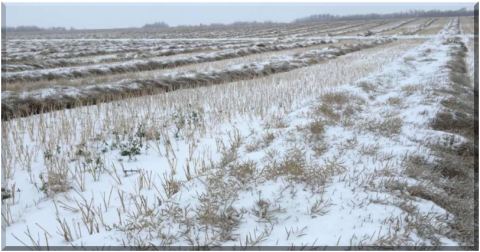
Snow, strong winds, repeated freezing and thawing, and prolonged damp conditions can complicate harvest and potentially affect quality or recoverable yield.
Not every delayed crop will suffer a loss. Some farmers may still finish under favourable conditions.
But the longer a crop remains in the field, the greater the uncertainty surrounding its eventual value.
The important number isn't simply how much canola remains unharvested. It's how much of its expected value farmers can ultimately recover.
What Does a Delayed Harvest Actually Cost?
The financial impact of a late harvest can extend far beyond a few extra days of operating a combine.
Consider a hypothetical Peace Country farm with 1,000 acres of canola still waiting to be harvested.
If that crop were expected to yield 40 bushels per acre, the potential production would be 40,000 bushels.
At an illustrative price of $12 per bushel, that represents $480,000 in gross crop value before expenses.
These are examples, not verified yields or current bids for a particular farm.
Even a relatively small loss in yield or selling price could have a meaningful effect.
- A 5% reduction in the value of that hypothetical crop would represent $24,000.
- A 10% reduction would represent $48,000.
- Additional drying, storage, equipment and labour costs could further reduce the farm's net income.
That does not mean Peace Country farmers are experiencing those losses. Actual results depend on crop condition, quality, yield, prices and individual farm circumstances.
But it illustrates why the final few percentage points of harvest progress can matter enormously.
Drying Grain: Another Cost Farmers Must Consider
When crops are harvested at higher moisture levels, farmers may need to dry them before safe storage or sale.
Grain drying requires equipment, energy, labour and time.
Depending on the crop, the amount of moisture to be removed and the drying system used, costs can become significant.
Farmers without sufficient drying or storage capacity may face additional challenges, including scheduling commercial drying services or making difficult decisions about when to harvest.
Waiting for natural field drying can reduce some expenses, but it can also increase exposure to unfavourable weather.
The decision becomes a balancing act.
Is it better to combine now and pay for drying, or wait for improved conditions and risk leaving the crop exposed?
There is no single answer that works for every farm.
Quality Matters as Much as Quantity
A harvested crop is not necessarily worth what a farmer originally expected.
Grain buyers assess factors that can affect grade and market value. Depending on the crop, these may include moisture, damage, cleanliness and other quality characteristics.
If a crop fails to meet the specifications for a higher grade, the farmer may receive a lower price.
In some circumstances, a farmer can harvest nearly all the expected bushels but still receive substantially less revenue because of quality discounts.
That is why a provincial harvest-completion percentage does not fully describe farm profitability.
A crop can be counted as harvested while the farmer is still facing additional drying costs, storage problems or lower-than-expected returns.
What About Next Year's Farm Finances?
Farmers do not simply collect their harvest income and start fresh the following spring.
Farm businesses carry substantial expenses, including seed, fertilizer, fuel, equipment, repairs, insurance, land costs and financing.
Many of those expenses must be paid regardless of whether the harvest is early, late or disappointing.
A delayed harvest can affect cash flow, especially when crops cannot be marketed immediately or when extra costs arise.
That can influence decisions about machinery purchases, land rentals, input spending and borrowing for the following growing season.
The effects may also extend beyond the farm gate.
Agricultural equipment dealers, repair shops, trucking companies, grain handlers and other local businesses all participate in the regional farm economy.
When farmers face financial pressure, the consequences can ripple through surrounding communities.
Is the Peace Country Being Overlooked?
Provincial crop reports are valuable because they provide a consistent picture of agricultural conditions.
But a single Alberta-wide percentage cannot fully describe what is happening in every region.
When 97% of the province's harvest is complete, it is understandable that the general message becomes one of a season nearing its end.
For Peace Country farmers, however, the remaining work may still be substantial.
And even within the Peace Region, conditions can differ considerably between individual farms.
Some producers may be finished and satisfied with their results. Others may still have crops standing or swathed, with important financial decisions ahead.
That raises a broader question about how agricultural news is reported.
Should harvest coverage focus more on regional differences, crop quality and farm economics rather than simply announcing how much of the province has been combined?
What We Still Need to Know
The final provincial report establishes that the Peace Region was behind Alberta's overall harvest progress as of October 27.
It does not tell us the final dollar value of any crop losses, the number of farms facing financial difficulty or exactly how much canola remains in the field around Grande Prairie today.
Those details require additional reporting.
Swan City Now would like to hear from farmers, grain buyers, crop advisers and agricultural service providers about how the 2026 season is actually finishing.
Have yields met expectations? Has grain quality been affected? Are drying and storage costs higher than usual? Are farmers receiving the prices they anticipated?
Those answers could tell us considerably more about the state of Peace Country agriculture than a provincial percentage alone.
Swan City Speaks: What Do You Think?
- With Alberta's harvest nearly finished but Peace Country farmers still working to bring in canola, what costs and challenges are the provincial percentages not telling us?
- Has the 2026 harvest been better or worse than expected on your farm? Are yields, crop quality and selling prices meeting your expectations?
- Are grain drying, fuel, equipment and financing costs taking a bigger share of farm revenue?
- Should provincial agricultural reports provide more detailed information about regional profitability and crop quality, not just harvest completion?
- Do people living in Grande Prairie and other urban communities understand how strongly the local economy depends on the financial health of surrounding farms?
What Have We Missed?
Are you a Peace Country farmer with canola still in the field? Have you completed harvest but faced unexpected costs or quality discounts?
We would like to hear about your experience — including good harvest results that deserve recognition.
Tell your neighbours what's happening on your farm and what you think the rest of the region should understand.
Join the conversation: https://swancitynow.com/join
We're neighbours. We don't all have to agree, but we can all benefit from asking better questions.
Sources
Government of Alberta — Alberta Crop Reports
https://www.alberta.ca/alberta-crop-reports
October 30, 2026 — Alberta Harvest Nears Completion
https://www.agcanada.com/daily/alberta-crop-report-harvest-nears-completion
Editor's note: Harvest percentages reflect reported conditions as of October 27, 2026, rather than verified field conditions on November 1. The farm financial examples are illustrative calculations, not documented losses or current local grain-price quotations.