The Harvest Isn't Over: What Happens to the Peace Country Crops Left in the Field?
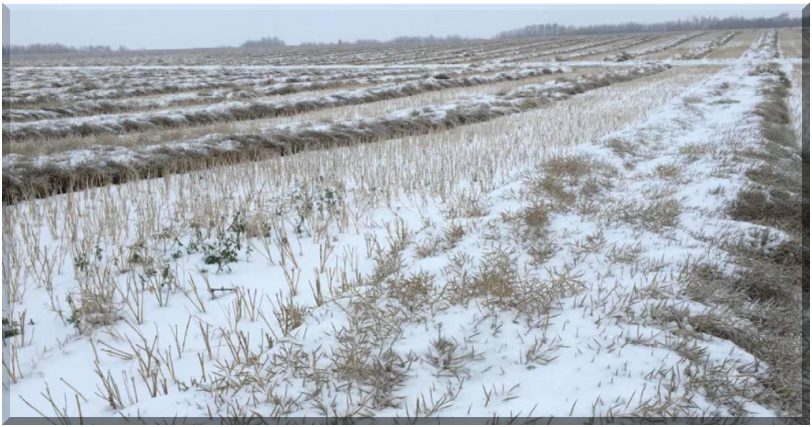
Alberta's final crop report says the Peace Region finished October with 11% of its major crops still unharvested. But the bigger question is not how much crop remains standing. It's how much farmers can recover, what it will cost and who absorbs the losses
The Provincial Report Is Finished. The Farmers Aren't.
Alberta has released its final crop report for 2026.
Across the province, 97% of major crops had been harvested as of October 27.
For much of southern and central Alberta, the season is essentially finished.
But in the Peace Region, only 89% had been harvested.
That leaves approximately 11% of the region's major crops unharvested at the reporting date.
The Peace Region made considerable progress during the final reporting week, advancing eight percentage points despite difficult weather.
But the arrival of colder temperatures, overnight frost, rain and snow has made further harvesting increasingly difficult.
For farmers with crops still in the field, the calendar does not necessarily determine when the work ends.
The weather does.
And sometimes the work must wait until spring.
Canola Is the Biggest Unfinished Business
The final provincial report identifies canola as one of the Peace Region's principal harvest challenges.
As of October 27:
- Spring wheat was 96% harvested.
- Barley was 96% harvested.
- Oats were 91% harvested.
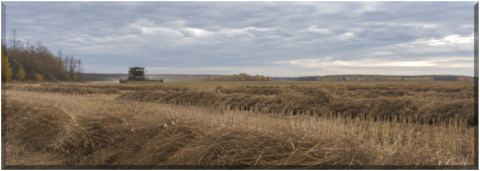
- Canola was approximately 80% combined.
- Another 15% of canola had been swathed but not combined.
- Dry peas were fully harvested.
The distinction between standing and swathed canola is important.
Standing canola remains attached to the plant.
Swathed canola has been cut and placed in rows to dry before combining.
Both can be exposed to weather damage, but the risks differ.
Swathed canola lying close to the ground may be vulnerable to snow cover, moisture, deterioration and wildlife.
Standing canola may suffer pod shattering, lodging or damage from wind and winter conditions.
Neither situation automatically means the crop is lost.
But every additional period of exposure can increase uncertainty.
And farmers may not know the final financial consequences until the crop is harvested, graded and sold.
Can Farmers Harvest Crops in the Spring?
Yes. Spring harvesting is possible in the Peace Country and elsewhere on the Prairies.
But it is generally a recovery option rather than an ideal plan.
A crop that survives winter may still be combined after snow melts and field conditions permit.
The outcome depends on the crop, weather, field conditions and how well the plants or swaths withstand winter.
Several problems can develop.
Wildlife damage
Deer, elk and other wildlife may feed on or trample crops left in the field.
Lodging
Plants can collapse under snow, wind or their own weight, making them difficult for combines to pick up.
Shattering
Canola pods can open and release seeds before harvest, reducing recoverable yield.
Weathering
Repeated wetting and drying may affect grain appearance, germination, quality and market grade.
Spring field conditions
Even when snow disappears, wet soil may prevent equipment from entering the field.
Seeding delays
Farmers may need to remove the previous year's crop before preparing the land for another growing season.
That last problem can be particularly costly.
Spring is already a short and demanding period in northern Alberta.
Adding unfinished harvest work creates another competing demand for labour, machinery and favourable weather.
The Hidden Cost: Farmers Can Harvest the Crop and Still Lose Money
A field that is eventually harvested is not necessarily a financial success.
The farmer may recover much of the grain but receive less money for it.
Consider a hypothetical example.
A producer expects to harvest 1,000 tonnes of grain.
At an assumed selling price of $250 per tonne, that crop would have a gross value of $250,000 before expenses.
Now imagine the producer faces three problems:
- Five per cent of the expected production cannot be recovered.
- The remaining grain sells at a lower price because of quality problems.
- Drying, handling and transportation add unexpected costs.
The farm's financial result could deteriorate substantially even though most of the crop was eventually harvested.
These figures are illustrative, not an estimate of losses on any Peace Country farm.
The actual outcome depends on yields, grades, contracts, drying costs, insurance and market conditions.
The important point is that harvest completion and profitability are not the same measurement.
A farmer can finish harvesting and still discover that the crop is worth considerably less than expected.
Wet Grain: Why Getting It Into the Bin Isn't the End
The provincial crop report says some northern Alberta producers have been combining crops above recommended moisture levels and relying on grain dryers.
That creates another financial challenge.
Grain stored with excessive moisture can deteriorate.
Depending on the crop and storage conditions, problems may include heating, mould development, spoilage and reduced marketability.
Drying can help protect the crop, but it costs money.
A grain dryer may require:
- Natural gas, propane or another heat source.
- Electricity.
- Additional labour.
- Equipment maintenance.
- Extra grain handling.
- Time during an already difficult harvest.
For farms without sufficient drying capacity, access to equipment or commercial drying services may become another challenge.
Even after drying, grain must be monitored carefully during storage.
Temperature, moisture and airflow can influence whether the crop remains in marketable condition.
This means a difficult harvest can continue generating costs long after the combine leaves the field.
What Does Drying Actually Cost?
There is no single drying cost that applies to every Peace Country farm.
The amount depends on the crop, its starting moisture content, the moisture level required for safe storage, the equipment used and the price of energy.
A farm drying a small amount of slightly damp grain faces a different situation from one drying thousands of tonnes harvested well above safe storage moisture.
The cost also depends on whether a producer owns a dryer, rents equipment or pays a commercial operator.
That raises a question Swan City Now intends to investigate.
How much additional money have Peace Region farmers spent on drying grain during the 2026 harvest?
The provincial crop report confirms drying is taking place.
It does not provide a regional dollar total for the additional expense.
Until farmers, grain handlers or agricultural organizations provide reliable figures, that cost remains unknown.
Grain Quality: The Difference Between Having a Crop and Having a Valuable Crop
Farmers are not paid simply for producing tonnes of grain.
Quality matters.
Grain buyers assess factors that can affect the grade, suitability and value of a crop.
For wheat, these may include sprouting, test weight, damaged kernels and other grading characteristics.
For canola, buyers may assess moisture, green seed, impurities and other quality factors.
The final Alberta crop report specifically identifies concerns about tough grain and canola dockage associated with moisture, green material and weeds.
Dockage generally refers to material removed during cleaning and grading, which can reduce the amount of payable grain.
Poorer grades or reduced usable quantities can mean lower returns.
A producer may have invested the same money in seed, fertilizer, fuel, machinery and labour as expected at the beginning of the season.
But the final selling price may be lower.
The farmer cannot recover those earlier expenses simply because the weather changed.
What Happens When the Crop Is Already Sold?
Another issue deserves attention.
Farmers sometimes enter delivery or pricing contracts before the entire crop has been harvested.
These agreements can help manage price risk and plan cash flow.
But what happens when the expected crop is not available in the quantity or quality originally anticipated?
The answer depends on the contract.
Some agreements may provide flexibility.
Others may involve delivery obligations, replacement grain, negotiated changes or financial consequences.
It would be incorrect to assume every producer with an unharvested crop faces contract penalties.
But the potential exposure is real enough to warrant examination.
A farmer who has sold grain in advance may face a different financial challenge from one who plans to market the crop after harvest.
How are local grain buyers handling contracts affected by delayed harvesting and reduced grain quality?
That is a question worth putting directly to grain elevators and producers.
Does Crop Insurance Cover the Loss?
Alberta farmers may have access to crop insurance and other agricultural risk-management programs through Agriculture Financial Services Corporation, commonly known as AFSC.
These programs are intended to help producers manage certain losses arising from events beyond their control.
But insurance is not the same as a guarantee that every financial loss will be reimbursed.
Coverage depends on the program, crop, insured yield, selected options, deadlines and policy conditions.
An important distinction is that an unharvested crop is not automatically considered a total loss.
Its condition and recoverable value may still need to be assessed.
Farmers with insured crops remaining in the field should consult AFSC about their specific coverage, reporting requirements and procedures before destroying or abandoning any insured crop.
The same principle applies to wildlife damage.
Whether a particular loss qualifies for compensation depends on the relevant program rules and circumstances.
For Swan City Now, several questions remain:
- How many Peace Region producers have reported unharvested acres to AFSC?
- What acreage is involved?
- How much damage has been reported?
- How many claims have been submitted?
- What compensation, if any, is expected?
The final provincial crop report does not provide those regional claims figures.
They should not be assumed.
The Wildlife Problem May Become More Serious
The province specifically identified wildlife damage to standing crops as a concern in the Peace Region.
A field left unharvested can become a food source for wildlife.
Animals may consume grain, trample plants or damage swaths.
The extent of the damage depends on location, crop type, wildlife activity and weather.
For some farms, the loss may be limited.
For others, repeated wildlife activity could significantly reduce the amount recoverable.
This creates another complication for insurance and compensation.
Farmers may need to document damage, preserve evidence and follow program-specific reporting requirements.
And when winter conditions prevent access to a field, assessing the damage may itself become difficult.
What About Next Year's Crop?
One of the less obvious consequences of a delayed harvest is the effect on the following growing season.
Farmers plan crop rotations, field preparation, fertilizer applications, equipment use and seeding schedules months in advance.
An unharvested field complicates those plans.
If the crop remains until spring, the farmer may have to:
- Wait until the field is accessible.
- Harvest or otherwise manage the remaining crop.
- Deal with residue and possible weed problems.
- Prepare the seedbed.
- Complete seeding before the optimal window closes.
Not every field will face all these difficulties.
But the risk is that one difficult harvest can interfere with the next growing season.
A late start may affect crop selection, planting decisions and ultimately yield potential.
That means the financial consequences of 2026 could extend into 2027.
Could the Wet Fall Also Bring Some Good News?
There is another side to the story.
The precipitation that made harvesting difficult also helped maintain soil moisture reserves.
According to the final provincial report, Peace Region surface soil moisture was rated 94% good to excellent.
Sub-surface moisture was rated 99% good to excellent.
Those figures suggest much of the region entered winter with favourable moisture reserves.
That may be beneficial for the next growing season.
However, favourable soil moisture does not guarantee a successful crop.
Spring temperatures, precipitation, drainage, planting conditions and summer weather will still matter.
For farmers, the same wet weather can create a difficult situation today while potentially providing some benefit for tomorrow.
That is one reason agriculture cannot be understood through a single percentage.
The Economic Effects Reach Beyond the Farm Gate
A difficult harvest affects more than the farmer.
Agriculture supports a network of businesses across the Peace Country.
Farm equipment dealers, mechanics, fuel suppliers, trucking companies, grain elevators, agricultural retailers and other businesses all depend in part on farm activity.
When producers face reduced revenue or unexpected expenses, they may delay purchases or reduce discretionary spending.
A farmer who planned to replace machinery may decide to wait another year.
A planned building project might be postponed.
Equipment repairs may take priority over upgrades.
These decisions can affect local businesses.
But it is important not to assume that the 2026 harvest has already caused a measurable regional economic downturn.
That would require evidence.
The better question is whether local agricultural businesses are beginning to see changes in spending, equipment purchases or demand for services.
Is This Becoming a More Difficult Region in Which to Farm?
The Peace Country has always presented agricultural challenges.
Its northern location means growing seasons, weather patterns and harvest windows differ from those in southern Alberta.
Farmers have adapted through crop selection, equipment, technology and decades of experience.
But a changing climate raises new questions.
Warmer conditions may lengthen growing seasons in some circumstances.
At the same time, extreme rainfall, drought, unusual temperature swings and other weather risks can complicate production.
One difficult harvest cannot establish a long-term climate trend.
That requires analysis of many years of local weather and agricultural records.
Nevertheless, the 2026 experience raises a worthwhile question:
Are Peace Country farmers facing greater harvest uncertainty, and are current equipment, infrastructure and insurance programs keeping pace?
That deserves a serious examination rather than an assumption.
Should Farmers Invest More in Drying and Storage?
A difficult harvest can renew interest in grain dryers, storage systems and other equipment intended to reduce weather-related losses.
But these investments can be expensive.
Large farms may be better positioned to spread equipment costs across more acres and greater production volumes.
Smaller farms may face different financial constraints.
There may also be opportunities for shared equipment, commercial drying services or other arrangements.
However, each option comes with practical and financial considerations.
Before suggesting that farmers simply purchase more equipment, it is worth asking:
- What does suitable drying capacity cost?
- How often would it be needed?
- What are the ongoing energy expenses?
- Could equipment be shared economically?
- Are there relevant financing or assistance programs?
- Would the investment improve long-term profitability?
A solution that works for one farm may not work for another.
What Does 11% Unharvested Actually Mean in Dollars?
This is the question that should concern the entire region.
The final crop report gives a percentage of major crops remaining unharvested.
But it does not provide a verified dollar value for the crop still in the field.
To calculate that accurately, we would need more information.
We would need to know the unharvested acreage by crop, expected yields, recoverable production, grain quality, market prices and additional costs.
We would also need to distinguish between crop value at risk and actual financial loss.
Those are very different figures.
A crop worth $100,000 before harvest is not necessarily a $100,000 loss simply because it remains in the field.
Some or all of it may still be recovered.
And even when grain is harvested, the producer may face lower prices and higher expenses.
The most useful number may not be the value of the crop left standing. It may be the reduction in net farm income after the final harvest and all additional costs are known.
That is the number Swan City Now would like to help establish.
The Story Isn't Over
Alberta has issued its final crop report of 2026.
But that does not mean the story is finished.
For some Peace Country farmers, the final results will not be known until next spring.
Swan City Now will continue following these questions:
1. How much crop remains unharvested?
We want to establish the actual acreage, particularly for canola and oats, and determine how much is standing versus swathed.
2. What will it cost to finish the harvest?
We will seek information on drying costs, additional machinery expenses, labour and spring recovery operations.
3. How much grain quality has been lost?
We will look for local evidence of grade reductions, dockage, spoilage and other factors affecting farm returns.
4. What role will crop insurance play?
We will seek regional information from AFSC about claims, reporting requirements and compensation.
5. What happens to the 2027 growing season?
We will follow whether spring harvesting delays field preparation or seeding.
6. What does this mean for the Peace Country economy?
We will examine whether the financial consequences are affecting agricultural suppliers, equipment dealers and other local businesses.
If there are meaningful developments, we will report them.
If there is no meaningful change, we will say so.
Swan City Now — Because the story doesn't end with the headline.
Swan City Speaks: What Do You Think?
1. Farmers: Do you still have crops standing or swathed? Are you planning to attempt further harvesting this fall, or will you wait until spring?
2. Financial impact: Has wet grain, drying, wildlife damage or lower grain quality added significant costs to your operation this year?
3. Long-term solutions: Should more attention be given to grain drying infrastructure, insurance coverage and ways to help Peace Country farmers manage increasingly difficult harvest conditions?
We especially welcome comments from farmers, grain buyers, agricultural suppliers and others with direct experience of the 2026 harvest.
Share your thoughts in the comments. Your opinion matters.
Sources
Government of Alberta — Final Alberta Crop Report, October 27, 2026
Alberta Agriculture Financial Services Corporation
Alberta Seed Guide — Alberta Harvest Hits 97%, but Peace Region Farmers Are Still Racing the Weather
https://www.seed.ab.ca/alberta-crop-report-october-27-2026-harvest/
Syngenta Canada — Final Alberta Crop Report Puts Harvest at 97% Complete
https://www.syngenta.ca/market-news/final-alberta-crop-report-puts-harvest-at-97--complete
Canadian Grain Commission — Grain Grading and Quality Information
Editor's note: Provincial harvest figures reflect conditions as of October 27, 2026, not a new field survey conducted November 4. Financial examples and potential consequences are explanatory scenarios, not verified losses experienced by individual Peace Country producers. Specific crop insurance coverage and claims procedures must be confirmed with AFSC.