From Farmland to Data Centres: Is This the Future Farmers Want for the Peace Country?
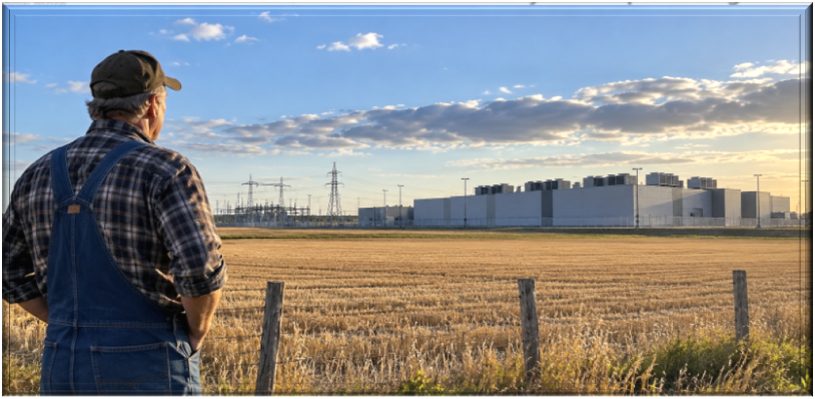
The County of Grande Prairie is considering how to regulate data centre development. But who gets to decide when productive agricultural land becomes industrial land — and who receives the benefits?
From Farmland to Data Centres: Is This the Future Farmers Want for the Peace Country?
The County of Grande Prairie is considering how to regulate data centre development. But who gets to decide when productive agricultural land becomes industrial land — and who receives the benefits?
By Swan City Now | Agriculture Desk | October 31, 2026 | 6 min read
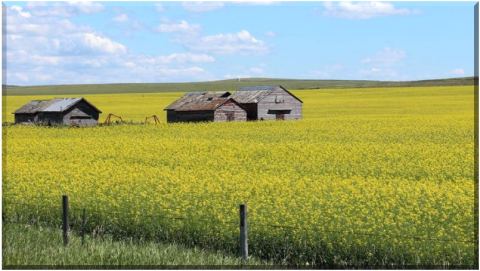
For generations, Peace Country farmers have worked to turn the region's soil into productive agricultural land.
They have cleared fields, improved drainage, built roads, maintained fences and invested in equipment to grow crops and raise livestock.
Now a very different kind of development is attracting attention across rural Alberta.
Data centres.
These enormous facilities house computer equipment used for artificial intelligence, cloud computing and other digital services.
They can require substantial electrical infrastructure, industrial buildings, cooling systems and supporting services.
They also promise investment, construction jobs and additional municipal tax revenue.
But there is a question that deserves particular attention from farmers and rural residents.
Is converting productive farmland into data centres a good use of the Peace Country's agricultural land?
And perhaps just as importantly:
Who gets to make that decision, and who benefits from it?
A December 2 Discussion That Farmers Should Watch
The County of Grande Prairie has been considering changes to its planning rules for data centre development.
A public hearing concerning proposed data centre zoning regulations has been identified for December 2, 2026, although residents should confirm the final agenda, time and participation instructions with the County.
The discussion could have implications well beyond any single proposed project.
Land-use rules determine where facilities may be located, what conditions developers must satisfy and how neighbouring properties are protected.
For farmers, the important questions include:
- Will productive agricultural land be protected?
- Will data centres be directed toward existing industrial land?
- What happens to neighbouring farms?
- How will water, electricity and road access be managed?
- What protections will exist if a facility eventually closes?
- Who will receive the tax revenue?
These are agricultural questions as much as industrial development questions.
Is All Farmland Equal?
Not every parcel of rural land has the same agricultural value.
Some land has highly productive soil and has supported farming for generations.
Other parcels may have poor drainage, difficult terrain, limited agricultural capability or existing industrial development nearby.
A responsible planning process should recognize those differences.
There may be circumstances where a data centre is an appropriate use of rural land.
But should prime farmland be considered when existing industrial sites or less productive land could accommodate the same development?
And should the County require an independent agricultural land assessment before approving major conversions?
Once farmland is covered by buildings, roads, substations and other industrial infrastructure, returning it to agricultural production may be difficult and expensive.
The Peace Country has a finite supply of productive agricultural land.
Decisions about its future should be made with that in mind.
What Would Farmers Gain?
There are potential benefits.
Large industrial projects can create construction work for local contractors, equipment operators, electricians, truckers and other trades.
They may generate business for hotels, restaurants, suppliers and transportation companies.
Landowners may receive substantial payments for selling or leasing property.
And municipalities may collect additional property tax revenue from industrial development.
That revenue could help support roads, bridges, recreation facilities and other local services.
Those benefits deserve consideration.
But farmers also have reason to ask how much of the promised economic activity will remain in the community once construction is complete.
How many permanent jobs will a data centre actually create?
How much will local businesses receive in contracts?
And how much additional municipal revenue will remain after the cost of roads, infrastructure and public services is considered?
A project worth billions of dollars does not necessarily produce billions of dollars in local benefits.
What Would Farmers Lose?
The obvious loss is agricultural land.
But the consequences may extend beyond the boundaries of the property being developed.
Neighbouring farmers could face changes involving:
- Heavy truck traffic during construction.
- Road access for large farm machinery.
- Drainage and stormwater management.
- Noise from cooling and electrical equipment.
- New power transmission infrastructure.
- Potential competition for water resources.
- Changes in surrounding land values.
- Future restrictions on agricultural operations.
Some of these concerns may be manageable through careful planning and enforceable permit conditions.
Others may depend on the location and design of a particular facility.
That is why farmers need access to actual engineering and environmental information, not simply general assurances.
A farmer whose land is not being sold may still live with the consequences of the development next door.
Should Sexsmith Residents Have a Say?
Consider a data centre proposed on County land near Sexsmith.
The project may be outside Sexsmith's municipal boundaries.
That means the County would generally control the municipal land-use decision.
But residents of Sexsmith could still experience some of the effects.
They may travel the same roads.
They may see new transmission lines or industrial buildings.
Local businesses may benefit from construction activity.
And residents may have concerns about traffic, noise, water or the long-term character of the surrounding area.
Should those residents have the right to voice their concerns even though they do not live within the County?
There is an important distinction between being heard and having a vote.
People outside the County may be able to make submissions or speak at a public hearing, subject to the applicable procedures.
But they do not elect County councillors, and they do not have the same political influence over County decisions as County voters.
That raises a broader question about regional fairness.
If the effects of development cross municipal boundaries, should public consultation cross those boundaries too?
And What About Grande Prairie Residents?
The same question applies to the City of Grande Prairie.
A large data centre located in the County could affect regional roads, electrical infrastructure, employment, housing and emergency services.
Some City businesses might benefit from construction and ongoing operations.
But the industrial property's municipal taxes would ordinarily be collected by the municipality where the property is located.
In other words, a data centre outside Grande Prairie's boundaries would generally pay its municipal property taxes to the County.
The City would not automatically receive a share.
That does not necessarily make the arrangement unfair.
Municipalities have different responsibilities, and the County may have to provide roads, planning services and other infrastructure needed for the development.
But it does raise a legitimate question.
When an industrial development produces benefits and costs across a region, should there be a mechanism for sharing both?
Is Sexsmith Missing Out on the Tax Revenue?
Imagine a major data centre is constructed just outside Sexsmith.
Its employees may shop in town.
Its contractors may purchase goods and services locally.
The community may experience increased traffic and development pressure.
But unless a specific agreement or other legal arrangement provides otherwise, Sexsmith would not ordinarily receive municipal property taxes from a facility located within County boundaries.
Those taxes would go to the County.
There may still be indirect economic benefits for Sexsmith.
And the County may incur substantial costs associated with the development.
The question is whether the financial benefits and costs are being distributed fairly.
Could neighbouring municipalities negotiate infrastructure cost-sharing agreements?
Could regional services be funded jointly?
Should the County publicly estimate the benefits and costs for surrounding communities before approving major projects?
These are questions worth examining before construction begins.
Do Rural Municipalities Have an Unfair Advantage?
There is another side to this discussion.
Large data centres need substantial sites, access to electricity and room for supporting infrastructure.
Rural municipalities often have more large parcels available than established cities.
That can make them attractive to developers.
But rural land is not necessarily cheaper to service.
A remote development may require new roads, electrical connections, water infrastructure and emergency response planning.
Urban industrial sites may already have some of those services.
The choice should therefore be based on the full cost of development, not simply the availability of inexpensive land.
Should Alberta encourage data centres to use existing industrial land before converting productive farmland?
And should neighbouring municipalities have a greater role in deciding where regionally significant industrial facilities are located?
What About the Farmer's Right to Sell?
There is another perspective that should not be overlooked.
Farmers own their land.
Some families have worked their properties for generations and may see an industrial sale as an opportunity to retire, pay down debt or secure their financial future.
Others may welcome the chance to lease a portion of their land for development.
It would be unfair to discuss farmland protection without acknowledging those property rights and economic realities.
But land ownership has always operated within land-use rules.
Farmers cannot necessarily build any industrial facility they choose on agricultural land.
Nor can other landowners automatically develop property without regard for neighbours.
The challenge is finding a reasonable balance between a landowner's opportunity and the community's long-term interests.
That balance should be established through transparent planning rather than negotiated behind closed doors.
The Water and Electricity Questions
Data centres can require substantial electricity.
Some designs also use significant amounts of water for cooling, while others rely on systems with much lower water consumption.
The actual requirements depend on the facility's design and operating technology.
For proposed County projects, residents should insist on project-specific figures.
How much electricity will be required?
Will new transmission infrastructure be needed?
How much water will the facility consume?
Where will that water come from?
Could agricultural users or nearby residents be affected?
And who pays for any necessary infrastructure upgrades?
Without those numbers, it is impossible to properly evaluate the trade-offs.
Farmers understand that water and power are not unlimited resources.
They also understand that promises made during development should be backed by enforceable conditions.
Who Pays if a Data Centre Closes?
Agriculture has seen industries come and go.
Farmers and rural residents are familiar with the long-term consequences of abandoned infrastructure, including orphaned oil and gas wells.
A data centre is not an oil well, and the regulatory and financial risks are different.
But the underlying question remains relevant.
Who is responsible for removing obsolete buildings, equipment and infrastructure if the operator closes or becomes insolvent?
Should developers be required to provide financial security for eventual site restoration?
Should the County establish clear decommissioning requirements?
And should those obligations remain enforceable if the property changes ownership?
A development that produces tax revenue for 20 years could still leave substantial costs if its closure is poorly managed.
Those risks should be addressed before approval, not after a facility is abandoned.
Could There Be a Better Way?
The debate does not have to be reduced to being either for or against data centres.
A more constructive approach could include:
- Giving priority to existing industrial land and lower-quality agricultural land.
- Requiring independent agricultural impact assessments.
- Publishing project-specific water and electricity requirements.
- Evaluating road and infrastructure costs before approval.
- Consulting neighbouring municipalities and affected landowners.
- Examining regional cost-sharing where impacts cross boundaries.
- Requiring appropriate financial security for decommissioning.
- Publishing realistic estimates of permanent jobs and municipal tax revenue.
These measures would not automatically prevent development.
They would help residents determine whether a particular proposal is genuinely in the region's long-term interest.
Farmers Deserve a Seat at the Table
The Peace Country has been an agricultural region for generations.
Farming supports local businesses, equipment dealerships, trucking companies, grain handlers, livestock operations and rural communities.
Its value cannot be measured solely by the annual property taxes collected on farmland.
At the same time, new industries can provide investment, jobs and opportunities for economic diversification.
Both realities deserve recognition.
The important question is not whether data centres should ever be built in the County of Grande Prairie.
It is whether they are being located on the right land, under the right conditions, with the right protections and a fair distribution of benefits.
Before the County makes decisions that could reshape parts of the rural landscape, farmers and neighbouring communities deserve clear answers.
And the discussion should include the people who will be living and farming beside these developments long after the construction crews have left.
Swan City Speaks: What Do You Think?
-
Farmers and rural landowners: Should productive agricultural land be protected from data centre development, or should individual landowners have the freedom to sell for industrial use? Where should the line be drawn?
-
If a data centre is built near Sexsmith or Grande Prairie but inside County boundaries, should those neighbouring municipalities receive a share of the benefits when they also experience some of the impacts? How could that be done fairly?
-
Should the County require developers to disclose water use, electricity requirements, permanent jobs, expected tax revenue and eventual site restoration plans before approving major data centres?
Share your thoughts in the comments. Your opinion matters.
Swan City Now especially wants to hear from Peace Country farmers, rural landowners and residents of Sexsmith, Clairmont and Grande Prairie.
You don't have to agree with your neighbours to help shape a better discussion.