Grande Prairie's New Police Service: What Will Taxpayers Pay in 2027 — and What Are They Getting?
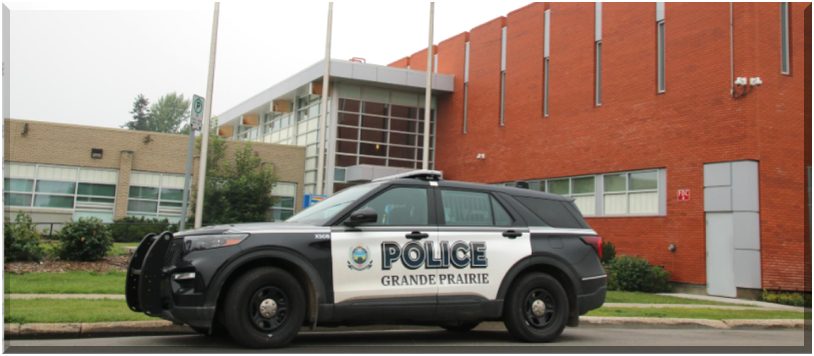
Grande Prairie has moved to its own municipal police service. With the 2027 budget under consideration, residents have reason to examine the full cost of the transition, future operating expenses and whether the original financial projections still hold.
A New Police Service — and a New Financial Question
Grande Prairie has entered a new era of municipal policing.
After decades of relying on the RCMP as its primary police service, the city has moved to the Grande Prairie Police Service.
The change affects more than uniforms, patrol vehicles and police administration.
It also changes how the municipality plans, manages and accounts for the money spent on policing.
For residents, the most important financial question is straightforward:
How much will policing cost Grande Prairie taxpayers in 2027, and how does that compare with what they were paying before?
The answer requires more than looking at the GPPS operating budget.
It must include the costs of establishing the new service, any continuing transition expenses, capital purchases, provincial funding and other municipal services connected to public safety.
It must also distinguish between money already spent, money approved for future spending and money merely requested.
The Original Estimate: $19 Million
When Grande Prairie Council considered the transition to municipal policing in 2023, the City prepared a detailed policing transition report.
That report estimated transition costs of approximately $19 million, including a 20 per cent contingency.
The Province of Alberta initially committed $9.7 million toward the transition.
Those figures established an important financial baseline.
But they were estimates made before the full transition was completed.
The relevant questions today are:
- How much has the transition actually cost?
- How much of the provincial contribution has been received and spent?
- Have additional provincial contributions been approved?
- What portion of transition spending has been paid directly by the City?
- Are there outstanding commitments that will appear in the 2027 budget or later years?
A transition estimate is not the same thing as a final accounting.
Until the actual expenditures and funding contributions are reconciled, the original $19-million figure should not be presented as the final cost.
What Council Was Asked to Consider in October
The City's October 19, 2026 Council report provides a timely reason to revisit the financial questions.
According to the report, GPPS presented operating funding requests covering 2027 through 2030 and capital funding requests covering 2027 through 2031.
Those requests were referred to fall budget deliberations.
That is a significant distinction.
A funding request is not an approved expenditure.
Council may approve, amend, defer or reject requested spending through its budget process.
The October report establishes that future GPPS funding was before Council, but it does not by itself establish the final 2027 police budget.
To determine what taxpayers will actually pay, the requested amounts must be compared with the final approved budget and any subsequent amendments.
What Counts as the Cost of Policing?
One of the difficulties in comparing municipal police services is deciding which expenses belong in the calculation.
The GPPS operating budget is an obvious starting point, but it may not tell the entire story.
A complete accounting should identify the following categories without counting the same expense twice.
1. Police Operations
These are the recurring costs of providing police services.
They may include:
- Police officer and civilian employee salaries
- Benefits and pension contributions
- Training and professional development
- Administration and supervision
- Information technology and communications
- Vehicle operation and maintenance
- Equipment, supplies and contracted services
These expenses are expected to continue from year to year.
2. Capital Costs
Capital spending can include patrol vehicles, specialized equipment, technology systems, buildings and facility improvements.
Some purchases may be one-time investments.
Others may require replacement after several years.
For that reason, a single year's capital budget may not represent the long-term annual cost of policing.
3. Transition Costs
Transition spending can include recruitment, training, planning, technology development, equipment purchases and other costs associated with establishing the new organization.
These expenses should be reported separately from normal operations.
Otherwise, residents may mistakenly believe that a one-time expense will recur every year.
4. Other Public Safety Services
Grande Prairie also funds municipal enforcement and other public safety activities.
Some services work alongside police officers but have separate responsibilities and budgets.
A broad public safety comparison may include these services, but their costs should be clearly identified.
The goal is not to produce the largest possible number. It is to produce an accurate number that residents can understand and compare.
Was Municipal Policing Supposed to Save Money?
The original transition proposal included financial projections comparing a municipal police service with continued RCMP contract policing.
Those projections were part of the rationale considered when the City decided to proceed.
However, a forecast made in 2023 is not proof of savings in 2027.
Several factors can change the result.
Police salaries and benefits may increase.
Recruitment and training may cost more than expected.
Equipment and technology requirements may change.
The number of officers required to deliver services may also differ from earlier assumptions.
Meanwhile, the cost of continued RCMP policing would not necessarily have remained unchanged.
A meaningful comparison should therefore examine three figures:
First: What the City originally projected municipal policing would cost.
Second: What the City is actually budgeting and spending on GPPS.
Third: What a comparable RCMP contract policing arrangement would cost under current conditions.
The third figure is especially important.
Comparing the 2027 municipal police budget with an older RCMP budget, without adjusting for staffing, inflation and service levels, could produce a misleading conclusion.
The question is not simply whether GPPS costs more or less than the RCMP did several years ago.
It is whether the municipality's current financial position supports the assumptions made when the transition was approved.
The Staffing Question: Are We Getting What Was Planned?
The 2023 policing transition report projected that Grande Prairie would have 100 municipal police officers and 31 peace officers by the end of 2027.
That provides a measurable target.
But the number of authorized positions is not necessarily the number of officers available to respond to calls.
A complete staffing report should distinguish between:
- Authorized positions
- Positions actually filled
- Recruits undergoing training
- Officers assigned to administrative or specialized duties
- Officers available for front-line deployment
- Vacant positions
These distinctions matter because staffing is one of the largest components of police spending.
A budget may fund a certain number of positions without all of those positions being filled.
Conversely, overtime and other operational expenses may rise when vacancies remain.
Residents should be able to compare staffing targets with actual staffing and understand how those differences affect service delivery.
What Are Taxpayers Receiving?
Police spending is not only a financial issue.
It is also a service-delivery issue.
A municipality can spend more on policing and receive improved services.
It can also spend more without achieving every intended improvement.
The available evidence must determine which outcomes have occurred.
Useful measures include:
Response Times
How long does it take police to respond to emergency and non-emergency calls?
Are comparable response-time figures available from the former RCMP service and the new GPPS?
Calls for Service
How many calls are police handling?
Has the number changed, and are the categories of calls being measured consistently?
Crime Clearance Rates
What proportion of reported offences are cleared by police?
Changes must be interpreted carefully because clearance rates can be affected by the types of offences reported and the time required to complete investigations.
Community Policing
How much time is being devoted to neighbourhood patrols, traffic enforcement, crime prevention and community engagement?
Officer Availability
How many trained officers are available for operational duties compared with the staffing plan?
These measures should be published with clear definitions and comparable reporting periods.
Because GPPS only recently became the police of jurisdiction, it is too early to draw firm conclusions about long-term performance.
A few weeks of operations cannot establish whether the transition has produced sustained improvements or declines.
What Does This Mean for Property Taxes?
For homeowners, policing costs ultimately connect to the City's overall finances.
However, it would be inaccurate to suggest that every dollar in the GPPS budget represents a new tax increase.
Grande Prairie already paid for policing under its previous arrangement.
The relevant figure is the change in the City's net policing costs after accounting for funding sources, previous expenditures and any related budget adjustments.
A useful taxpayer comparison would show:
- The previous net municipal cost of policing
- The approved 2027 net municipal cost
- The difference between the two
- The share of that difference funded through property taxation
- The approximate impact on a representative residential property, if supported by the approved tax and assessment figures
It is also important to separate policing costs from the City's other spending decisions.
An increase in the overall property tax requirement cannot automatically be attributed to GPPS.
Likewise, a change in policing spending does not necessarily produce an identical change in property taxes.
The City's final budget and tax calculations are needed before any reliable household impact can be stated.
The Questions Council Should Be Able to Answer
The October budget referral creates an opportunity for a clear public accounting.
Residents should be able to obtain answers to several basic questions.
1. What is the total approved GPPS operating budget for 2027?
The figure should be compared with previous approved budgets and actual expenditures.
2. What capital spending has been approved?
Major purchases and their expected useful lives should be identified.
3. What is the final transition cost?
The City should distinguish actual spending from estimates and remaining commitments.
4. How much provincial funding has been received?
The accounting should show the contribution's effect on the City's net cost.
5. What is the actual staffing level?
The figures should distinguish authorized, filled and operational positions.
6. Have the original savings projections changed?
If so, the reasons should be explained.
7. What performance measures will be made public?
Residents need a way to assess service delivery over time.
These are normal accountability questions for a publicly funded service.
They do not presume that the transition has succeeded or failed.
A Decision That Will Affect Future Budgets
Policing is one of the municipality's major ongoing responsibilities.
Unlike a single construction project, police operations require funding every year.
Staffing commitments, technology systems, facilities and equipment replacement can create expenses extending well beyond the current budget cycle.
That makes the 2027 budget particularly important.
It represents an early opportunity to compare the financial assumptions behind the policing transition with the cost of operating the new service.
It also offers a starting point for evaluating performance under the new organization.
The figures should be examined carefully, without assuming that higher spending automatically means better policing or that lower spending automatically means a better outcome.
Both cost and service quality matter.
The Story Isn't Over
The October 19 Council report establishes that GPPS funding requests were referred to fall budget deliberations.
It does not establish the final approved 2027 amounts.
The principal unresolved questions are:
- What operating and capital amounts did GPPS request?
- What amounts did Council ultimately approve?
- What are the actual transition expenditures to date?
- How do those expenditures compare with the original estimate?
- How does actual staffing compare with the transition plan?
- What comparable service-performance information will be publicly available?
Until the relevant budget decisions and financial statements are confirmed, a definitive 2027 taxpayer cost cannot be responsibly calculated.
Swan City Speaks: What Do You Think?
-
What matters most to you when evaluating the new Grande Prairie Police Service: response times, neighbourhood presence, crime prevention, overall cost or another measure?
-
Should the City publish a detailed comparison of the original policing transition estimates and the actual costs?
-
What information would help you decide whether Grande Prairie taxpayers are receiving good value from their police service?
Share your thoughts in the comments. Your opinion matters.