The Sunday Roundup: The Stories That Got the Peace Country Talking This Past Week

From a long-awaited Beaverlodge bypass to billion-dollar data-centre questions and the history of our communities, here's what Peace Country readers have been following.
Back on top · first published Nov 15
Beaverlodge's bypass: When does a promise become a plan?
Twenty-four years is a long time to discuss a highway.
It's long enough for children to grow up, businesses to change hands, municipal councils to come and go, and an entire generation to wonder whether a project will ever become reality.
That's what makes the Beaverlodge bypass story about much more than a road.
The story revisits a transportation project that has remained part of the community's conversation for decades.
The fundamental question is straightforward: What would it take to move the bypass from discussion to construction?
Highway projects are expensive. Governments must weigh traffic volumes, safety, engineering requirements, available funding and competing priorities.
Those are legitimate considerations.
But after decades of discussion, residents also deserve to understand where a project stands, what decisions have been made and what obstacles remain.
What is the cost of waiting?
There is another side to the discussion that deserves attention.
A highway bypass can change the economic geography of a town.
For some businesses, removing heavy trucks and through-traffic from a downtown may improve safety and create opportunities for a more pedestrian-friendly commercial district.
For others, losing passing traffic can mean losing customers.
A bypass is not automatically good or bad for every business.
That is why the discussion needs to include more than the question of when construction might begin.
What would the bypass mean for Beaverlodge's downtown? How would local businesses adapt? Would the existing highway become a safer and more attractive community street?
And what happens if the bypass never proceeds?
The bigger Peace Country question
Beaverlodge isn't the only community waiting for major transportation improvements.
The Highway 40X Southwest Grande Prairie Bypass, the Highway 40X/43 interchange and other regional highway projects have also been subjects of government planning and discussion.
The County of Grande Prairie received an Alberta Transportation update on several of these projects in November.
But receiving an update is not the same as receiving construction funding or a confirmed completion date.
For a region that depends heavily on agriculture, forestry, energy, trucking and industrial transportation, highway infrastructure is an economic issue as much as a transportation issue.
The question worth asking: Are transportation priorities keeping pace with the economic activity and population growth of the Peace Country?
That question deserves more than another announcement.
It deserves clear project status information, realistic timelines and an explanation of how priorities are determined.
Related reading: Alberta Transportation Updates Council on Highway 40X — But When Will Construction Begin?
Wonder Valley: Big ambitions require equally big answers
The Peace Country has seen major industrial development before.
Oil and gas, forestry and agriculture have brought investment, employment and economic opportunity. They have also brought difficult discussions about land, water, infrastructure and long-term responsibilities.
Now data centres are entering that conversation.
Environmental applications matter because they provide an opportunity to examine what a project may require and how potential impacts will be assessed.
But an application is not an approval, and a proposed project is not the same thing as an operating facility.
Those distinctions are especially important when developments are described in terms of enormous investment potential.
Who benefits, and who carries the risk?
Large data-centre proposals can involve substantial spending on land, buildings, electrical infrastructure, cooling systems and computing equipment.
They may also generate construction employment, ongoing operations jobs and municipal tax revenue.
But those potential benefits need to be examined alongside the costs.
How much electricity will be required?
Will additional electrical infrastructure be needed, and who will pay for it?
What water sources and cooling systems are proposed?
How much permanent employment would remain after construction?
And how much of the economic benefit would stay in the Peace Country?
There is also the question of what happens if a project changes ownership, is scaled back or never reaches full operation.
These are not arguments against development.
They are questions that should be answered before communities are asked to accept long-term commitments or consequences.
Public participation must mean something
Another recent story, Wonder Valley: Fifteen Minutes for Questions — Is That Enough for the Peace Country?, examined concerns about opportunities for public discussion.
Not every industry presentation is intended to be a formal public consultation. A meeting held for a particular organization may have a different purpose from a statutory hearing or community open house.
That distinction matters.
But so does the larger principle.
When a development could affect land use, electricity infrastructure, water resources or municipal finances, residents need clear information about when and how they can participate in the actual decision-making process.
Public confidence is built through accessible information, meaningful opportunities to ask questions and transparent decisions.
The question worth asking: Can residents clearly identify what has been proposed, what has been approved, who is responsible for each decision and when they can have their say?
If those answers are difficult to find, the public conversation becomes more difficult than it needs to be.
Related reading: County Data Centre Hearing: Register by November 27 — Here's How to Make Your Voice Heard
Beaverlodge's history: A town that moved to meet the future
One of the most fascinating stories in this month's collection looks backward rather than forward.
Beaverlodge: The Town That Moved Down the Hill When the Railway Arrived
The story explores a community whose development was profoundly influenced by transportation.
Today, we tend to think of towns as permanent places.
Their streets, businesses, schools and neighbourhoods appear fixed on the landscape.
But the early history of the Peace Country tells a different story.
Transportation routes helped determine where communities grew, where businesses invested and where farmers brought their products to market.
When the railway arrived, its influence extended far beyond the tracks themselves.
The railway was yesterday's economic infrastructure
The railway connected agricultural communities to larger markets.
It helped determine where grain elevators, warehouses and commercial districts developed.
Communities that gained convenient railway access could enjoy important economic advantages.
Others had to adapt.
The story of Beaverlodge is a reminder that infrastructure decisions can influence a community for generations.
And that makes the history surprisingly relevant to today's debates.
A century ago, communities were concerned about railway routes.
Today, they debate highway bypasses, industrial corridors, electrical transmission lines and major technology developments.
The technology changes. The underlying questions often remain remarkably similar.
Who gets connected?
Who gets left behind?
And who decides?
History is more than nostalgia
The Our Past Our Peace Country series has also explored other communities across the region.
Grande Prairie: From an 80-Acre Townsite to the City That Changed the Peace Country
Sexsmith: The Little Prairie Town That Became the Grain Capital of the British Empire
Hythe: The Little Peace Country Town That Followed the Railway — and Refused to Disappear
Each community has a different story, but common themes emerge: settlement, transportation, agriculture, entrepreneurship and the determination of residents to build lasting communities.
Understanding these histories provides context for the decisions being made today.
The Peace Country was built through change.
The challenge for every generation is deciding which changes will strengthen its communities and which may leave lasting difficulties.
Teepee Creek: When the water system goes, who pays?
Few services are more essential than a reliable supply of safe drinking water.
Yet providing that service in rural communities can be complicated and expensive.
Teepee Creek's Water System Is Being Shut Down — Who Pays for Water After That?
The story examines a situation that raises important questions about the future of rural infrastructure.
For households accustomed to a shared water arrangement, changing to individual wells, treatment systems or cisterns can mean new responsibilities.
Those responsibilities may include maintenance, water testing, equipment replacement, electricity and, in some cases, ongoing water hauling.
The initial cost of installing a system is only part of the financial picture.
The cost doesn't disappear when responsibility changes
When a public or shared water system becomes impractical to maintain, governments may consider alternatives that shift more responsibility to individual property owners.
That does not necessarily mean the decision is unreasonable.
Aging infrastructure, changing regulations and limited numbers of users can make some systems increasingly difficult to operate.
But it does raise an important question.
Does replacing a shared system with individual arrangements reduce the overall cost of providing water, or does it primarily change who pays?
The answer depends on the alternatives, their expected lifespan and their ongoing operating costs.
A household may receive assistance with installation but still face significant expenses years later.
Pumps fail. Treatment equipment requires maintenance. Cisterns need cleaning. Water delivery costs can change.
Those future obligations deserve as much attention as the initial decision.
A question for rural Alberta
Teepee Creek's situation is not simply a local plumbing problem.
It illustrates a challenge faced by many smaller communities: how to maintain essential services when infrastructure ages and the cost must be shared among relatively few properties.
The same issue can arise with roads, bridges, wastewater systems and other public facilities.
The question worth asking: What level of essential infrastructure should rural residents reasonably expect, and how should the cost be divided between individual households and the broader community?
There may not be one answer that works everywhere.
But the consequences of these decisions can last for decades.
Rural health care: A problem that doesn't end when the doors reopen
Another important story concerns emergency medical services in Beaverlodge.
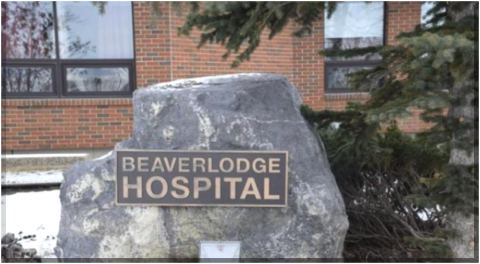
Beaverlodge Hospital: Another Emergency Physician Shortage — But Where Is the Long-Term Solution?
When an emergency department experiences a temporary disruption because a physician is unavailable, the immediate issue is where patients can obtain care.
But the longer-term question is why these disruptions continue to occur.
Recruitment, retention, workload, scheduling and the availability of qualified medical professionals all influence rural emergency services.
Restoring normal operations after a disruption is welcome news.
It does not necessarily mean the underlying staffing problem has been solved.
For residents of smaller communities, dependable access to emergency care is not a luxury.
It is an essential part of community life.
Where is our share of the data-centre economy?
Another story worth revisiting asks a deceptively simple question.
Where Is Our Cut? The Billion-Dollar Data Centre Question Facing the Peace Country
Major industrial developments can create significant economic activity, but the benefits are not necessarily distributed evenly.
Construction contractors, landowners, technology suppliers, utilities, municipalities and provincial governments may all benefit in different ways.
The residents living closest to a development may experience its effects differently.
That makes municipal taxation, infrastructure financing and local employment important parts of the discussion.
It also raises questions about whether communities have enough information to evaluate the economic promises associated with major proposals.
The size of a proposed investment is only one measure of its potential value.
What ultimately matters to a community is what the development delivers, what it costs and what responsibilities remain.
The story isn't over
These stories have something in common.
They concern decisions whose consequences extend beyond a single council meeting, announcement or news cycle.
The Beaverlodge bypass raises questions about long-term infrastructure priorities.
Wonder Valley raises questions about development, environmental oversight and public participation.
Teepee Creek raises questions about the future cost of essential rural services.
Rural physician shortages raise questions about the stability of health-care access.
And the history of our communities reminds us that decisions made decades ago can still shape daily life.
Some questions have partial answers. Others remain unresolved.
Not every story has a new development, and an absence of change should never be presented as breaking news.
But an unresolved issue does not become unimportant simply because time has passed.
Your community. Your stories.
What makes local news valuable isn't simply how many people read a particular article.
It's whether the information helps residents understand their communities, participate in decisions and recognize issues that might otherwise go unnoticed.
A major highway project can affect an entire region.
A water-system decision may affect only a handful of households.
Both deserve accurate, thoughtful coverage.
And some of the most important stories begin with a resident asking a simple question:
"Why is this happening?"
Have a question, a photograph, a community concern or a story worth sharing?
Visit The Local Wire to contribute, explore community activities through Swan City Today, or learn how to write for your community.
The Sunday Roundup returns November 29 with more Peace Country stories worth another look, meaningful developments since our last edition, and the important questions that remain unanswered.
Your Peace Country week, in one good read.
Because sometimes the most important local news deserves a second look.