Wonder Valley: Residents Asked to Trust the Process — But Where Are the Studies?
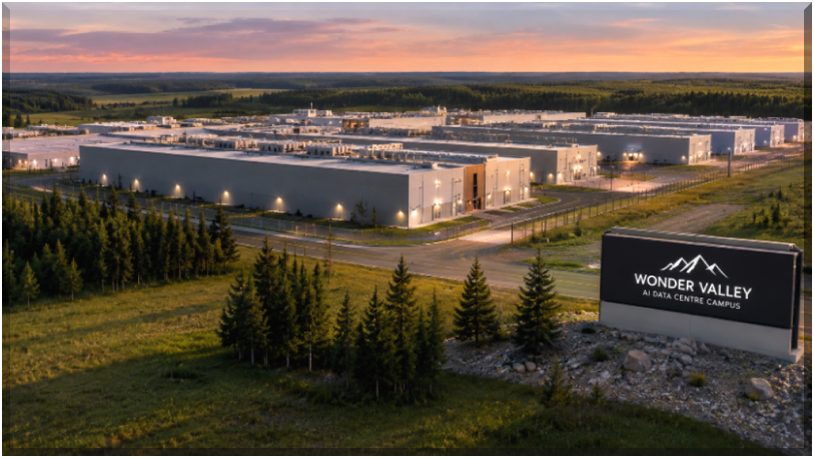
Grovedale resident's account of fifth public engagement session raises questions about land measurements, environmental studies, traffic, local benefits and transparency as federal authorities consider a new assessment
Five meetings later, the questions remain
How many public engagement meetings should residents have to attend before they can see the studies supporting a massive industrial development proposed near their homes?
That question is emerging from Grovedale, where a local resident has publicly described her experiences attending five engagement sessions concerning the proposed Wonder Valley AI data centre development.
In a detailed Facebook account of a November 9 meeting, a resident identified as Elizabeth outlined concerns about the project's size, environmental assessments, traffic impacts, financial benefits and the information being provided to surrounding communities.
She made her position clear from the beginning.
She opposes industrial development of this scale near her rural community and acknowledges that her views reflect that concern.
She also cautioned that recording was not permitted at the meeting and that her account represents personal recollections, not official minutes or a verified transcript.
That distinction is important.
Her account provides a first-hand perspective on the public engagement process, but statements attributed to project representatives have not been independently confirmed.
Nevertheless, several of the questions she raises can be examined against publicly available government and developer records.
And one discrepancy is already documented.
How big is Wonder Valley? Two different answers
According to Elizabeth's account, an O'Leary Digital representative identified as Zach described the proposed development as approximately 13,000 acres.
However, she says the presentation also included a figure of 6,417 hectares.
Those numbers are not equivalent.
6,417 hectares equals approximately 15,856 acres — a difference of roughly 2,856 acres.
The discrepancy is not confined to her recollection.
O'Leary Digital's own website describes the Alberta project area as approximately 13,000 acres.
Meanwhile, the Impact Assessment Agency of Canada's newly opened Wonder Valley file describes a total project footprint of approximately 6,417 hectares.
Both figures appear in publicly accessible project information.
They may describe different boundaries, development phases or land requirements.
But without a clear explanation, residents cannot determine why the figures differ.
For a project involving thousands of acres of industrial development, that is not an insignificant detail.
Which figure represents the actual proposed development?
Does one include supporting infrastructure or future expansion areas?
How much land would be disturbed during each construction phase?
And which boundaries are being used when assessing environmental effects?
Those questions deserve a straightforward answer supported by maps and project documentation.
Environmental studies: Completed, but not available?
Elizabeth reports asking whether environmental studies would be published on the developer's website.
According to her recollection, representatives said they would not be, explaining that studies could require revisions as regulatory applications progressed.
That account has not been independently confirmed by the developer.
O'Leary Digital's published information says environmental considerations are being incorporated into project planning and that technical studies, regulatory applications and consultation activities are ongoing.
The company says it intends to use technologies and operational practices designed to reduce water consumption, manage emissions and mitigate noise.
Those are important commitments.
But they raise another question.
How can residents independently evaluate those commitments without access to the supporting technical information?
Publishing preliminary studies does not necessarily require presenting them as final.
Documents can be identified as drafts, accompanied by limitations and updated as new information becomes available.
Some information may legitimately be confidential or subject to regulatory restrictions.
But the distinction between information that cannot be released and information a developer simply chooses not to release matters.
Residents need to understand what studies exist, which are complete, which remain under development and when the public will be able to examine them.
A provincial assessment was not required. Now Ottawa is examining the project.
The environmental review process has taken a significant new turn.
On March 31, 2026, Alberta Environment and Protected Areas determined that the Wonder Valley proposal did not require a provincial environmental impact assessment report under the Environmental Protection and Enhancement Act.
That decision did not eliminate other regulatory requirements.
The province's letter specifically identified the possibility of additional approvals and environmental obligations.
Sturgeon Lake Cree Nation has challenged aspects of the provincial process, including environmental assessment and Indigenous consultation decisions.
Now a separate federal process has begun.
On November 17, the Impact Assessment Agency of Canada opened a project file following an October 27 request to designate Wonder Valley under the federal Impact Assessment Act.
The federal agency is reviewing the request and will make a recommendation about whether the project should be designated.
That does not mean a full federal impact assessment has been ordered.
It does mean federal authorities are now considering whether additional scrutiny is warranted.
For communities concerned about water, wildlife, industrial emissions, heat, land disturbance and Indigenous rights, the development is significant.
Highway 40: What happens when construction begins?
Transportation is another major concern.
Elizabeth reports that representatives told residents a traffic impact assessment had been completed but would not be shared publicly.
She also recalls discussion of approximately 11,000 direct construction jobs between 2027 and 2031.
Those statements and employment figures have not been independently verified from the November 9 meeting.
The developer publicly anticipates thousands of construction jobs as the project advances through multiple phases.
That potential economic activity could benefit the Peace Country.
It could also place substantial additional demands on local roads.
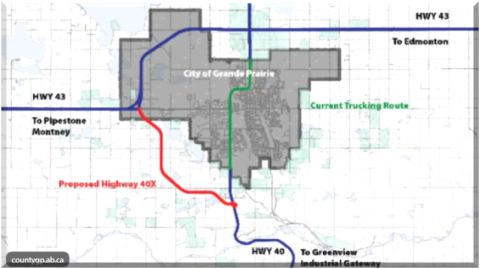
Highway 40 is already an important route for industrial traffic, resource development, commercial transportation and rural residents.
What would thousands of construction workers mean for traffic volumes?
How many heavy truck movements would be required?
Would road improvements be completed before major construction begins?
Who would pay for those improvements?
And would traffic studies account for other industrial projects that may be developed in the region at the same time?
The answers are particularly important for people who use these roads every day.
Millions in potential revenue — but what does Grovedale receive?
Economic benefits have been central to the Wonder Valley proposal since its announcement in December 2024.
The MD of Greenview and O'Leary Ventures promoted the project as a major new industrial opportunity, potentially bringing substantial investment, employment and municipal revenue.
Elizabeth says representatives at the November meeting discussed approximately $600 million in potential provincial government revenue over five years.
She also recalls being unable to obtain a specific estimate of how much additional revenue Greenview itself could receive.
Those meeting statements remain unverified.
The broader financial question, however, is legitimate.
How much new property tax revenue could the municipality actually collect?
How much would be required for roads, emergency services, utilities and other infrastructure?
Would the benefits be distributed throughout the municipality, or would communities nearest the development receive specific improvements?
Elizabeth raised possibilities including schools, daycare, emergency services, seniors' facilities and community amenities.
These are suggestions, not commitments established in the available project records.
And not all of those services fall under municipal responsibility.
But the underlying question remains.
If a development of this scale proceeds beside a rural community, what measurable benefits will that community receive?
A projected increase in regional economic activity is not the same as a funded commitment to local services.
What about natural gas, water, waste and heat?
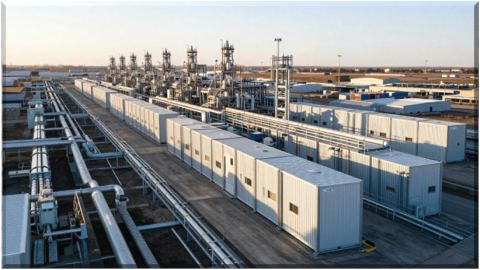
The proposed development is not simply a collection of computer buildings.
According to the new federal project description, Wonder Valley could eventually include up to 9,000 megawatts of natural-gas-fuelled power generation and eleven data centre clusters, each rated at 500 megawatts.
The proposal also includes water treatment and supply systems, gas distribution infrastructure, roads and supporting facilities.
Those are proposed full-development figures, not evidence that the facilities have already been constructed or approved.
Elizabeth says she asked about natural gas supply partnerships and was told none had yet been established.
She also reports receiving no identification of a specific waste disposal facility when asking about construction and industrial waste.
Neither statement has been independently verified.
The developer's published material describes plans for phased infrastructure development, water management and cooling systems intended to reduce environmental impacts.
But residents are asking for more specific information.
Where will the natural gas come from?
How much will be consumed at each stage?
Where will construction and industrial waste go?
What will happen to waste heat?
How will wildlife, water resources and nearby properties be protected?
What monitoring information will be available to the public?
Those questions become more important as the proposed scale increases.
Is the full purpose of AI infrastructure being discussed?
Elizabeth also questioned whether the public presentations adequately explain the broader economic and strategic motivations for building massive AI computing facilities.
Kevin O'Leary has publicly discussed artificial intelligence in the context of international competition, including competition with China.
The resident questioned why local presentations appeared to focus more heavily on familiar consumer technologies.
Her concern was not that military applications had been established for Wonder Valley.
They have not.
Rather, she questioned whether residents were receiving a sufficiently complete explanation of the industries and customers such infrastructure might ultimately serve.
That is a reasonable subject for public discussion.
Large computing facilities can support many applications, including commercial software, scientific research, industrial modelling and potentially government or defence-related workloads.
Their eventual uses depend on customers, contracts and operating arrangements.
The public project information reviewed does not establish that Wonder Valley has secured military customers.
But identifying the intended customer base, where commercially possible, could help residents better understand the proposal.
Does low attendance mean public support?
Elizabeth estimated that 14 Grovedale residents attended her November 9 session and approximately 27 attended across three sessions.
Those attendance numbers are her estimates and have not been independently confirmed.
She questioned whether limited attendance reflected support, indifference or simply the pressures of everyday life.
That is an important distinction.
A poorly attended public meeting does not necessarily mean a community supports a project.
Nor does it establish widespread opposition.
People may be working, raising families, managing farms, travelling or simply unable to attend.
Meaningful public engagement cannot be measured by attendance alone.
It also depends on whether residents receive understandable information, have opportunities to ask questions and can see how their concerns affect decisions.
Trust, but verify
Elizabeth ended her account with a familiar phrase:
"Trust, but verify."
It is a useful standard for both developers and the communities affected by their projects.
O'Leary Digital has publicly committed to regulatory compliance, environmental responsibility and community engagement.
Those commitments should be acknowledged.
Sturgeon Lake Cree Nation has raised concerns through formal legal and regulatory processes.
Those concerns deserve examination without treating unproven allegations as established findings.
Residents have asked for clearer information about the scale and consequences of the development.
Those questions should not be dismissed simply because some residents oppose the project.
A development can offer substantial economic opportunities while still requiring careful examination of its costs, risks and long-term consequences.
The two possibilities are not mutually exclusive.
The Story Isn't Over
The latest federal review and the concerns raised at the November 9 engagement session leave several important questions unanswered.
- Why does the developer identify approximately 13,000 acres while the federal project description identifies approximately 15,856 acres?
- Which environmental, traffic and infrastructure studies have been completed, and when will they be available for public review?
- What specific financial benefits are projected for the MD of Greenview, and what costs would the municipality assume?
- What road improvements would be necessary before major construction begins?
- Where will the project's natural gas, water and waste management services come from?
- What protections will be established for neighbouring residents, wildlife, water resources and Indigenous rights?
- What specific commitments, if any, will be made to Grovedale and surrounding communities?
- How will residents know whether their concerns have influenced project planning?
The project remains in development, with significant regulatory and infrastructure work ahead.
Its potential economic benefits are substantial.
So are the questions surrounding its scale.
For the people who live beside Wonder Valley, being asked to trust the process is not unreasonable. But being able to verify the information behind that process is equally important.
Sources
-
Impact Assessment Agency of Canada — Wonder Valley Data Centre Project, opened November 17, 2026: https://iaac-aeic.gc.ca/050/evaluations/proj/90892
-
O'Leary Digital — Wonder Valley project information and frequently asked questions: https://www.olearydigital.ai/faq
-
MD of Greenview — Original Wonder Valley announcement, December 9, 2024: https://mdgreenview.ab.ca/media-release-worlds-largest-ai-data-centre-industrial-park-wonder-valley-coming-to-the-greenview-industrial-gateway/
-
Alberta Environment and Protected Areas — Environmental assessment determination, March 31, 2026: https://www.theenergymix.com/wp-content/uploads/2026/04/Letter-No-EIA-Required-Wonder-Valley.pdf
-
Public Facebook account attributed to Elizabeth, describing the November 9, 2026 engagement session. Account authenticity and original post URL have not yet been independently confirmed.
Editorial note: This article attributes the meeting details to Elizabeth's recollections and separates them from government and developer records. The November 9 meeting statements have not been independently confirmed, and no response from O'Leary Digital or Greenview has been obtained specifically about her account.