AI Is Good. Who Pays If the Data Centre Boom Goes Bust?

Artificial intelligence is already useful. It can help a mechanic search a service manual, a small business sort through paperwork or a researcher work through a large set of records. Those uses depend on real machines running somewhere. They explain why someone will build more computing capacity. The harder question is whether someone will pay to use the particular building a developer wants to put beside your road.
Back on top · first published Nov 12
The White House release and press pool reports name Mark Zuckerberg, Tim Cook, Bill Gates, Satya Nadella, Sundar Pichai, Sergey Brin, Sam Altman, Greg Brockman, Lisa Su and Safra Catz among those at the Sept. 4, 2025 gathering. Those records confirm attendance at the event.
A landowner can sell. A developer can make a site more valuable by securing permits and a credible path to power. An equipment maker can get paid when it ships. A construction crew can get paid when it builds. The operator’s bet may run for years after those cheques have cleared. So may the host community’s obligations.
That timing is where the real-estate question gets interesting. Who can cash out early? Who has to stay until the last server is removed? And whose signature actually guarantees that the money will be there?
Two Peace Country projects, two different paper trails
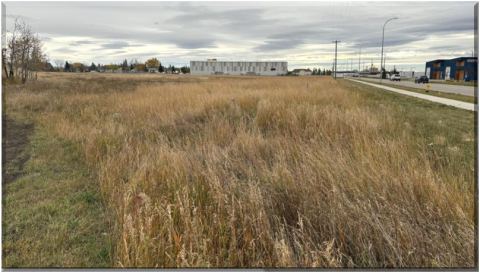
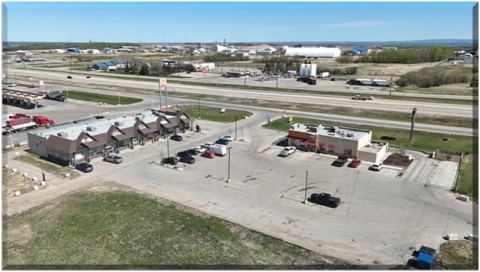
Emerson Trail. On Sept. 4, 2026, the County issued development permit PLDEV20250629 at 732041 Range Road 62, north of Highway 672. The County describes a data processing establishment with five buildings, 15 generators and 15 make-up air or cooling units. It says the area structure plan and rezoning went through public processes. The specific permit went through administration without advance circulation to adjacent landowners because data processing was a permitted use under the applicable industrial zoning. A decision notice was posted afterward.
The permit was appealed. The County’s public page lists an Oct. 26 preliminary hearing before the Land and Property Rights Tribunal. The outcome of that hearing could not be verified from the public records reviewed for this story. The County says conditions must be satisfied before construction and further approvals may be required. It also lists a separate May permit for five speculative buildings that authorizes no specific use. Counting permits as operating data centres would overstate what the records establish.
The planning record explains how neighbours can participate in an industrial rezoning and still learn the details of a particular development after approval. At what point should nearby residents see generator locations, expected operating hours, noise modelling, traffic and water demand while their input can still affect the decision? County of Grande Prairie permit history and FAQ
Wonder Valley. In December 2024, the Municipal District of Greenview announced that its industrial gateway had signed a letter of intent with O’Leary Ventures for the purchase and development of land. Kevin O’Leary’s pitch envisioned offering up to 7.5 GW to large computing customers over several years. Alberta’s major-projects inventory lists the first phase as proposed, with a $12-billion estimated cost and a planned 1.4-GW off-grid power system. The province lists $70 billion for full buildout. The 1.4 GW is planned generation for the first phase, and the $70 billion assumes the larger development goes ahead.
The public records reviewed for this story did not verify a binding first-phase customer agreement, a closed construction financing package or a committed chip delivery schedule for either Wonder Valley or the September Emerson Trail permit. Commercial agreements can be private. Residents can still ask for verifiable milestones and the identity of the entity guaranteeing local obligations. Greenview’s announcement · Alberta Major Projects first-phase listing
Where the real-estate money is made
The first business in a data centre deal may be land development. A promoter can obtain an option to buy a property, then spend money on zoning, engineering, utility studies, fibre access and environmental work. Each step can make the site more attractive to a buyer who wants a head start. The promoter might sell the land, sell an interest in the project company, bring in a partner or develop and operate the facility. A resale can reward years of legitimate work. It also means the person who pitched the project may have earned a return before the community sees a working data hall.
Municipal approvals can make a project easier to finance. Sponsor equity or a land loan can come early. Construction lenders can require evidence of permits, a credible power-delivery date, funded equity, a construction budget, completion support and, where the business model depends on leasing, a customer contract. Conditions vary by deal and may apply to particular loan draws. A land-use decision and a safety-code building permit are separate milestones. An owner-operator building its own campus has a different demand test from a developer betting it can lease a building later.
Even a signed lease deserves a closer look. Who owes the rent? Does a parent guarantee it? When does the rent start? What happens if power arrives late or the facility misses its performance tests? A cloud provider may lease the building and sell computing time to AI companies. That can leave several businesses between the facility’s owner and the people ultimately paying to use its chips. Ask whether their obligations still hold if one of them fails. Commercial Real Estate Finance Council’s November 2026 financing primer · Dentons on financing by development stage
What the gold rush and the railway tell us
Parks Canada historian Margaret Archibald documented the trade that supplied Dawson during the Klondike rush. The town depended on outside shipments, and its merchants built businesses around the people arriving to look for gold. The modern equivalents can be the landowner, generator maker, fibre contractor or chip supplier. They can earn money from the rush before anyone knows whether the final operator will make a profit. They can also lose money through unpaid invoices, unsold inventory or capacity built for a customer that walks away.
The Canadian Pacific Railway adds the public-finance question. The federal government granted the company $25 million and about 25 million acres. Canada got a railway with enduring value. The public contribution was also enormous. For a data centre, ask what lasts locally: a road open to the public, a water line with other users, apprenticeships, an expanded tax base, or a dedicated facility with few alternative uses. The value of a promise depends on who owns the asset, who can use it and who pays to maintain it. Parks Canada historical study on the Dawson trade · Library and Archives Canada on the CPR
How many are coming, and how much compute is that?
There is no consistent census across these four geographies. One campus can have several buildings, several applications and multiple construction phases. A grid queue captures projects requesting grid service. A brokerage can count only projects it tracks, or focus on space available for lease. The most useful numbers carry their own definitions.
| Where | What the record shows | What the number measures |
|---|---|---|
| Alberta | 29 proposals and more than 16 GW in June 2025. The AESO later reported 1.2 GW allocated through load contracts for two projects, at 970 MW and 230 MW. | An early grid-request snapshot and a subsequent first-round allocation. Separately proposed off-grid projects have their own approval and delivery path. |
| Canada | Colliers reported 1.4 GW commissioned and at least 5.5 GW in its named planned or under-construction pipeline in September 2026. | Selected Canadian developments, measured as capacity. There is no comparable national site count in this survey. |
| United States | CBRE tracked about 7.5 GW under construction in eight major U.S. leasing markets at midyear 2026. About 80% was preleased. A separate tracker listed 216.1 GW of U.S. capacity across operating, construction and announced projects combined. | CBRE covers a defined leasing market. The broader tracker mixes development stages and publishes capacity, rather than a national planned-only site count on its public summary. |
| World | One commercial AI buildout tracker listed 1,065 projects on Nov. 12, including 451 announced or permitted, 235 under construction and 379 operating. It reported 278.6 GW across all stages. | A tracked AI project universe across 64 countries. Coverage and reporting vary by country and project. |
AESO June 2025 announcement · AESO allocation and large-load process · Colliers Canadian market report · CBRE midyear survey · Data Center Index global tracker
A megawatt is a rate of electricity use. A 100-MW facility drawing that much continuously would use about 876 gigawatt-hours a year. If those 100 MW measure the whole site and it takes 1.2 watts at the meter for every watt that goes to IT, about 83 MW goes to servers, storage and networking. Even then, the chip mix, interconnection speeds, utilization and type of work determine what the facility can do. A training cluster and a facility serving everyday AI queries can use the same amount of electricity and produce very different results.
The International Energy Agency estimates data centres worldwide used 485 terawatt-hours in 2025 and projects 945 TWh in 2030 in its base case. That is annual energy across the sector. Project trackers quote electrical capacity, often years ahead of delivery. A community assessing a proposal needs the first phase’s expected grid draw, total facility load and annual energy use, each clearly labelled. IEA, Key Questions on Energy and AI
NVIDIA’s shakeup and the supply question
On Nov. 12, Reuters reported that NVIDIA co-founder Jensen Huang resigned as chief executive and CFO Colette Kress became interim CEO. Reuters also reported that Chinese AI companies were seeking to rent computing capacity abroad amid concern Washington might tighten remote-access restrictions. The U.S. had already changed its review policy in January to allow case-by-case licensing for certain qualifying exports to China or Macau, including NVIDIA H200-class chips. That published rule and the reported prospect of new limits on remote use are separate developments. A new blanket restriction on purchases by Canadian facilities was not verified.
For a Peace Country project, the practical question is who buys and receives the hardware. A landlord may supply the powered shell while the tenant buys the servers. An operator selling computing time may have to fund the chips itself. Either way, a forecast should identify the buyer, the supply arrangement, delivery dates and the consequences of delay. A large cluster also needs compatible networking, cooling and power equipment. A project whose revenues depend on a specific overseas customer should be able to explain its exposure if that customer’s access rules change. Reuters on NVIDIA’s leadership change · Reuters on remote chip access · U.S. export rule
What happens if supply outruns demand?
Today’s leasing figures give developers a credible case for building. JLL reported 66 GW under construction across North America at midyear, with 95% committed, using a broader definition that includes owner-occupied facilities. That helps explain why its figures differ from CBRE’s. Neither survey tells residents whether a proposed Peace Country campus has a customer.
If too many comparable facilities arrive in the same market, tenants can bargain for lower prices and developers can delay later phases. A functioning site with secure power, good fibre and a customer that pays may hold its value. A half-built shell, an older cluster with high power costs, or a remote site with a missed connection date has fewer options. Better chips and more efficient models could reduce electricity required per task. Lower costs could also encourage more use. The net effect on demand remains uncertain.
There are already examples of projects losing their place in line. Reuters reported Nov. 9 that Australia’s NextDC would pause projects without customer contracts after a Melbourne expansion ran into power delays and community opposition. In October, Reuters reported that Microsoft had pulled out of a deal to anchor a UK Nscale project after its connection slipped into the 2030s. A global boom can continue while a particular site loses its customer. JLL midyear report · Reuters on NextDC · Reuters on Nscale
Who pays when the music stops?
Equity investors can lose their money. Lenders can take losses if their collateral sells for less than the debt. Contractors can be left with unpaid bills. A municipality can face a different kind of loss: a road rebuilt early, fire-service capacity added for a project that stalls, or tax revenue budgeted for a campus that stays half finished. A utility can face the cost of equipment sized for load that never arrives. Residents may live with noise, traffic or impaired use of their property even while the project is profitable. Each risk needs its own answer.
Alberta says data centres pay for their power, their connections and their own infrastructure. Its utility legislation also creates a route for projects that bring their own generation. For any particular project, the remaining questions are what the approved tariffs and agreements require if demand falls, how shared upgrades are allocated, and what can be collected after a default. Ohio offers a concrete comparison. Its regulator approved a tariff requiring eligible new large data centres in AEP Ohio’s territory to pay for a minimum share of contracted capacity, generally described by the state consumer advocate as at least 85%, for up to 12 years. That makes part of the cost payable even if actual use disappoints. Alberta on electricity costs · Alberta’s self-supply framework · Ohio Consumers’ Counsel on the tariff
Alberta’s orphan wells show why closure security matters. The Orphan Well Association is primarily funded by an industry levy. The Alberta Energy Regulator set the 2026–27 levy at $154.56 million. Ottawa also made a $200-million repayable payment to the association in 2020 and separately provided $1 billion to Alberta for oil and gas site cleanup. Those were different programs. The public has already supplied capital when the industry’s ordinary arrangements fell short of the cleanup response governments wanted.
A server hall and an oil well have different closure needs. A data centre may leave transformers, fuel systems, generators, batteries, cooling equipment and a power plant. Some assets can be sold or reused. Removal, hazardous-material handling and land restoration still cost money, particularly if salvage prices fall across an industry downturn. The parallel is what happens when the responsible company has few assets left and the cleanup bill survives it. Alberta Energy Regulator levy notice · Orphan Well Association funding · Federal Finance records
What the host community actually gets
Jobs. Ask for peak construction headcount, total construction job-years and permanent on-site jobs as separate figures. A Virginia legislative review found that most of the sector’s economic benefits there came during initial construction. Industry representatives told reviewers a typical 250,000-square-foot building might have about 50 full-time workers, roughly half contractors. That is a Virginia example. An Alberta project should show its own staffing, training and local procurement commitments. Virginia legislative audit
Taxes. Alberta Municipalities says the land, building and qualifying power and mechanical systems can be assessed for property tax. Computing equipment can represent a large share of investment and is excluded from that property assessment. Alberta’s Budget 2026 implementation page separately describes a provincial computing-equipment levy tied to actual public-grid electricity use, with a 0% rate for power drawn outside the broader grid. A host needs its own year-by-year estimate of municipal revenue after any concessions, plus the costs of serving the site. Nearby communities may share traffic and labour pressures while the tax base sits in the host municipality. Alberta Municipalities on assessment · Alberta’s budget implementation
Water, air, heat and land. Ask for the source and annual volume of water, peak withdrawals, water consumed versus returned, drought plans and wastewater handling. Closed-loop designs can limit direct consumption, depending on how they reject heat. Gas generation still has fuel, emissions and noise implications. A waste-heat proposal becomes more credible with a nearby buyer, a funded connection and a year-round use. Residents should see night-time noise at the nearest homes, expected generator testing and traffic routes. Where Crown decisions could adversely affect Treaty rights, the duty to consult is a separate obligation. Local employment or an ownership offer is a separate matter for rights holders to consider. Alberta water allocations · Alberta on Indigenous consultation and participation
Control and access. Who owns the land, the operator and the power plant? Who is authorized to sign for each? If the pitch includes Canadian sovereignty, ask who controls the hardware, data access and operations, and whether Canadian researchers or local businesses will get access on stated terms. Canada’s responsible development principles call for lasting local benefits, transparency and protection for ratepayers. Project-specific permits, tariffs and contracts determine what the community can enforce. Canada’s Responsible Data Centre Development Principles
Who is in the room before the public hearing?
Lobbying is one way companies, industry groups and community organizations put their case to government. Alberta’s provincial lobbyist registry lets people look up reportable lobbying. Municipal meeting records, agreements and disclosures are a separate source. The Emerson Trail timeline documents a gap between consultation on industrial land use and notice of a specific project. Motives for individual decisions require evidence. One way to narrow the gap is to publish the applicant, controlling owners, paid representatives, proposed public concessions and a plain-language record of the commitments discussed before a vote.
A local spokesperson may be an employee, investor, consultant or community supporter. Ask what authority and financial interest that person has, and which company will sign the agreement. The same test applies whether the developer is from the Peace Country or a major city. If a road is part of the pitch, the public can ask for the route, budget, payer, construction deadline and bond. A promise to build the road after approvals has a different value from a funded obligation that survives a sale. Alberta Lobbyist Registry · County of Grande Prairie development history
What a birth-to-death agreement could cover
This is a policy option. The approvals and agreements available would depend on provincial law and which body has authority over land use, utilities, water or reclamation. The financial principle is that before a project creates an obligation for the public, the project puts up enough independent security to pay for it.
| When | What the public could ask to see |
|---|---|
| Before site disturbance | Name the owners and the party responsible for each facility. Establish baseline land, water and noise conditions. Independently price cleanup for the work about to begin, including a project that stops halfway through. |
| Before a road or utility upgrade | Identify the payer, the beneficiary and the owner. Require deposits, guarantees or enforceable minimum payments where permitted. Publish any public spending, tax concessions or loan guarantees and the conditions for recovering them. |
| Before each construction phase | Confirm that funding, power and customer demand or owner-use plans support that phase. Increase security before the project expands. Tie public commitments to verified milestones. |
| During operation and after a sale | Keep closure funds available through an acceptable bond, standby letter of credit or other independently held security. Review costs periodically. Keep security in place until an approved replacement is effective. Report local jobs, resource use and compliance against agreed measures. |
| At default or closure | Define when the authority can call the security and who removes equipment, manages contamination and restores the site. Release the remaining funds after independent verification of the agreed work. |
Banks can insist on these protections as a condition of financing. A lender’s security over the buildings protects its loan. Closure security must also be accessible to the authority responsible for the work, including after insolvency. A promise from a project company that could run out of money is a weak substitute for funds it cannot spend elsewhere. A parent guarantee can help where the parent has the financial strength to honour it.
If the community’s terms are no tax dollars for a private project, spell out what that covers. Include upfront spending, loan guarantees, dedicated road and utility works, emergency services attributable to the project and cleanup. Then publish the amounts and the signed obligations. That gives residents a way to tell whether they are sharing the benefit or underwriting a private bet.
The story isn’t over
The County’s Dec. 2 hearing starts at 1 p.m. in Council Chambers in Clairmont. It concerns the proposed Data Centre Campus district and the rules for future applications. Registration to speak in person or remotely closes Nov. 27. The County says in-person speakers can register with Legislative Services and remote speakers must use its form. The Emerson Trail appeal is a separate proceeding.
Three records would make the local debate more concrete: a public statement of the first phase’s customer and financing status, independently costed commitments for roads, utilities and emergency services, and proof of who pays if work stops. A project can bring real jobs and computing power to the Peace Country. The agreements determine whether the people who live here also get a fair deal. County hearing notice and registration
Swan City Speaks: What Do You Think?
- What should be public before a municipality approves a data centre: the tenant’s name, proof of a binding commitment, or both?
- Should the developer have to post enough security to finish promised infrastructure and restore the site even if the company fails?
- What lasting local benefit would make a data centre worth hosting in your community?
Share your thoughts in the comments. Your opinion matters.