When the Servers Move In, Will the Wildlife Move Out? The Environmental Questions Behind Peace Country Data Centres
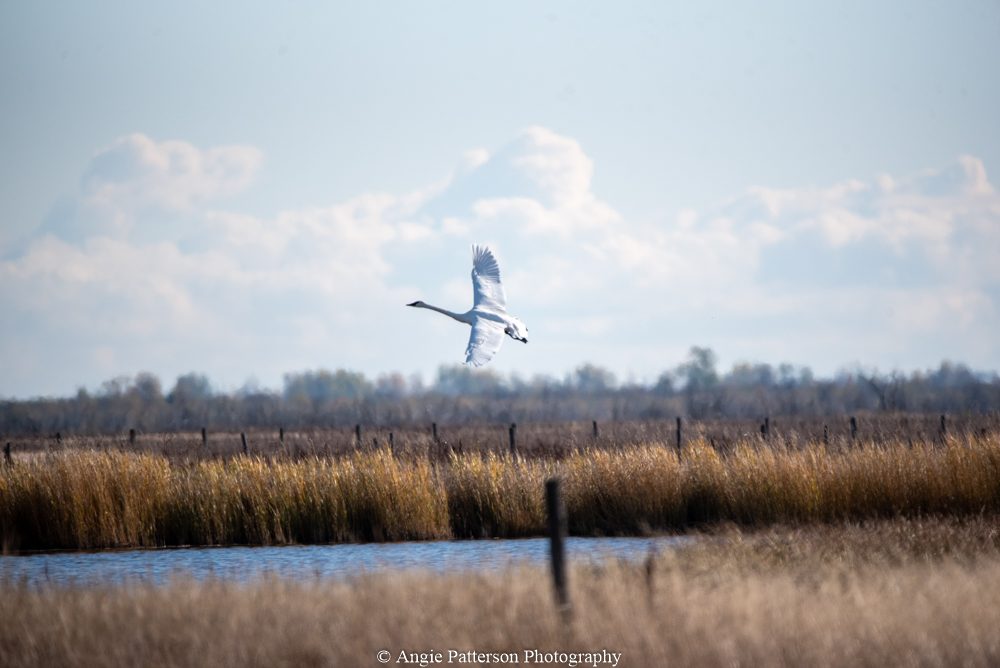
As large data centres move closer to the Peace Country, questions about electricity, water and taxes are getting attention. But what about the birds, wildlife and natural habitats that already occupy these lands?
Where Have All the Birds Gone?
Imagine sitting outside your home on a summer morning in the Peace Country.
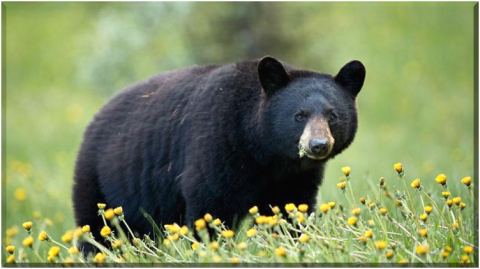
You hear the familiar sounds of songbirds, perhaps a woodpecker in the distance. Deer occasionally cross the nearby fields, and migrating birds return each spring.
Now imagine a large industrial development arriving nearby, bringing buildings, cooling equipment, generators, security lighting and electrical infrastructure.
Would the wildlife remain?
That question is becoming increasingly relevant as Alberta positions itself as a destination for large data centres.
In parts of North America where these facilities already operate, residents have complained about continuous mechanical noise and changes in their surroundings. Some have reported fewer birds and other wildlife.
Those observations deserve attention, but they are not scientific proof that data centres caused wildlife populations to decline.
The distinction matters.
What Does Science Actually Tell Us?
Research into industrial development has established that human activity can affect wildlife in several ways.
The effects depend on the location, species, intensity of disturbance and design of the development.
Three environmental concerns are particularly relevant to data centres.
1. Noise That Never Stops
Unlike many industrial operations, data centres can operate around the clock.
Large facilities may contain cooling equipment, ventilation systems, electrical transformers and generators.
Some of this equipment can produce a continuous mechanical hum.
Research into human-generated noise has shown that birds may change their singing behaviour, avoid noisy habitats or experience difficulty communicating.
Birds rely on sound to attract mates, defend territories and warn of danger.
When background noise interferes with those activities, some species may move elsewhere.
However, the scientific evidence does not establish that every data centre will drive birds away. Much of the existing research concerns roads, industrial operations and other sources of environmental noise rather than data centres specifically.
The important question is whether the noise levels expected from a proposed facility could affect nearby wildlife habitat.
2. A Landscape That Never Gets Dark
Many Peace Country residents appreciate something increasingly difficult to find near large cities: a genuinely dark night sky.
Artificial lighting can disrupt wildlife behaviour.
Birds may become disoriented by lighting, particularly during migration. Nocturnal animals can change their feeding and movement patterns, while insects may be attracted to artificial lights.
Large industrial campuses may require security lighting throughout the night.
But lighting impacts can be reduced through careful design, shielding, lower-intensity fixtures and controls that limit unnecessary illumination.
The question is whether those protections will be required before development begins.
3. Habitat That Cannot Simply Be Replaced
Perhaps the most obvious environmental concern is the physical transformation of land.
A large data centre campus may require substantial buildings, roads, parking areas, electrical infrastructure and equipment yards.
Where natural habitat is removed, animals lose the vegetation, shelter and food sources they previously depended upon.
Even agricultural land can provide habitat.
Peace Country fields, shelterbelts, wetlands and wooded areas support different species throughout the year.
Migratory birds may use agricultural landscapes for feeding and resting. Deer travel through fields and wooded corridors, while wetlands support waterfowl and other wildlife.
Replacing those areas with industrial infrastructure can change how wildlife uses the surrounding landscape.
Not every industrial site presents the same risk. Building on previously disturbed land may have very different consequences from clearing wetlands, woodland or important wildlife corridors.
The Emerson Trail Development: What Do We Know?
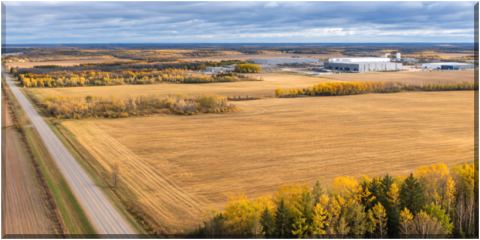
The County of Grande Prairie approved development permit PLDEV20250629 on September 4, 2026, for a proposed data processing establishment near Emerson Trail.
The permit covers a data processing establishment and five accessory buildings.
The site is within an area zoned for industrial development.
The approval has been appealed to the Land and Property Rights Tribunal.
Importantly, the development permit does not mean construction is guaranteed.
Additional regulatory approvals and permit conditions may still apply.
The County has also stated that the development permit does not establish the project's final electricity or water requirements.
But several environmental questions remain.
What will the combined noise levels be when all equipment is operating?
Has the surrounding wildlife habitat been assessed, and will the findings be available to residents?
Will nearby wetlands, shelterbelts and wildlife corridors be protected?
What limits will apply to nighttime lighting?
Without project-specific environmental information, it is not possible to determine whether the proposed facility would significantly affect local wildlife.
Wonder Valley Raises Similar Questions
The proposed Wonder Valley development in the Municipal District of Greenview demonstrates the scale of industrial development being discussed in northwestern Alberta.
Projects of this size can involve extensive supporting infrastructure, including power generation, roads, transmission connections and other facilities.
The environmental footprint is not necessarily limited to the buildings containing computer servers.
Supporting infrastructure may also affect surrounding land.
For a region with extensive forests, wetlands, agricultural land and wildlife habitat, the cumulative effects of several developments deserve consideration.
One facility might have a limited effect on a particular species. Multiple developments, combined with roads, power infrastructure and other industrial activities, could create a much larger disturbance.
That is why examining each project in isolation may not tell the whole environmental story.
Are Data Centres Being Judged by the Right Standards?
Data centres are often promoted for their potential economic benefits.
They can generate construction employment, create opportunities for local contractors, attract investment and contribute to municipal property tax revenues.
Those benefits deserve consideration.
But residents may reasonably ask whether economic development should also be measured against environmental costs.
A traditional industrial development may face scrutiny over air emissions, water use, noise and land disturbance.
Data centres can present some of those same issues, even though their primary purpose is processing and storing digital information.
The challenge for municipalities is to ensure that their planning rules reflect the actual size and operating characteristics of modern facilities.
The County of Grande Prairie is considering new land-use rules specifically addressing data centre development.
A public hearing is scheduled for December 2, 2026.
That provides an opportunity to consider whether environmental safeguards should be more clearly addressed in future development proposals.
Should Wildlife Studies Be Required Before Approval?
One possible approach would be to establish baseline environmental conditions before a major data centre is constructed.
That could include:
- Bird surveys: Identify species present during breeding and migration seasons.
- Wildlife assessments: Document important habitat and movement corridors.
- Noise modelling: Estimate operating noise at neighbouring properties and sensitive habitats.
- Lighting plans: Establish standards that reduce unnecessary nighttime illumination.
- Wetland protection: Identify sensitive areas and determine how development would avoid or minimize disturbance.
- Post-construction monitoring: Compare conditions after operations begin with those recorded beforehand.
Not every site would necessarily require the same level of assessment.
A development on an established industrial property may have fewer habitat concerns than one proposed beside wetlands or undisturbed woodland.
The important principle is that environmental risks should be assessed according to the actual location and project design.
Who Is Responsible if Wildlife Disappears?
This raises another difficult question.
Suppose a major facility begins operating and residents subsequently report fewer birds, changes in wildlife movement or a persistent industrial hum.
Who determines whether the development caused those changes?
And what happens if a problem is confirmed?
Without reliable information about wildlife conditions before construction, establishing cause and effect could be difficult.
Wildlife populations naturally fluctuate because of weather, disease, predators, habitat changes and other factors.
A decline occurring after construction does not automatically prove that the development caused it.
But without baseline studies, residents and regulators may have little evidence available to investigate legitimate concerns.
That makes early environmental documentation particularly valuable.
It also raises questions about who pays for monitoring and what corrective measures could be required if unacceptable impacts are identified.
Development and Wildlife Do Not Have to Be Enemies
There is no scientific basis for claiming that all data centres inevitably destroy surrounding wildlife populations.
Thoughtful site selection, effective noise controls, responsible lighting and habitat protection can reduce environmental impacts.
Data centres also differ considerably in their designs and operating systems.
Some may have relatively limited effects on nearby wildlife. Others, particularly large campuses requiring extensive supporting infrastructure, could present greater challenges.
The issue is not whether the Peace Country should reject technological development.
It is whether the region can attract investment while protecting the environmental qualities that make it a desirable place to live.
For many residents, those qualities include more than clean air and open space.
They include the birds at the feeder, deer in the fields, wetlands along country roads and the quiet of a rural evening.
Those things have value, even when they do not appear on a municipal tax assessment.
December 2: An Opportunity to Ask Questions
The County of Grande Prairie's proposed data centre zoning changes will be considered at a public hearing on December 2, 2026.
Residents wishing to participate should review the County's registration requirements and deadlines.
The hearing concerns proposed land-use rules for future data centre development. It is not a new approval hearing for the existing Emerson Trail permit.
Nevertheless, it offers an opportunity to raise questions about environmental studies, noise, lighting, habitat protection and public disclosure.
Residents can review the proposal and participation instructions through the County's official engagement website.
County of Grande Prairie — Proposed Data Centre Land Use Bylaw Changes
Swan City Speaks: What Do You Think?
- Should major data centre developments be required to complete independent wildlife and habitat assessments before receiving municipal approval?
- Would you accept a large data centre near your property if it brought new tax revenue but potentially changed the quiet, dark skies and wildlife in your neighbourhood?
- Should developers be responsible for wildlife monitoring and corrective measures if environmental impacts are confirmed after construction?
Share your thoughts in the comments. Your opinion matters.