County Data Centres: Are the New Rules Coming Too Late for Existing Approvals?
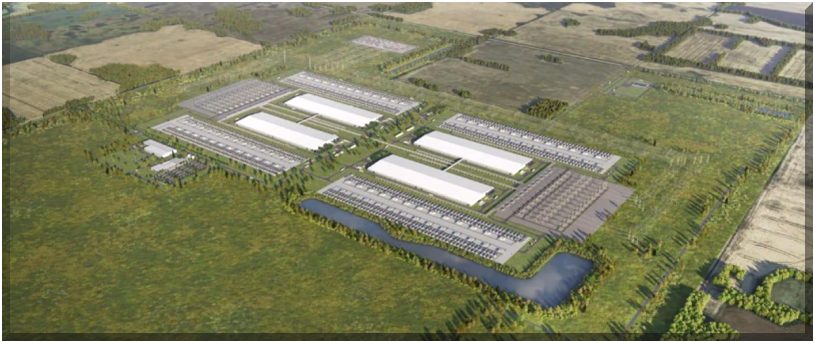
The County of Grande Prairie wants tougher, clearer rules for future data centres. But several development permits have already been issued. Will the new rules address residents' concerns, or are some of the most important decisions already behind us?
Back on top · first published Nov 1
The County of Grande Prairie is preparing to change how data centres are approved, but the timing raises a question residents deserve to have answered.
Why are new rules being introduced after several data centre-related development permits have already been issued?
On October 5, County Council gave first reading to proposed Land Use Bylaw Amendment 2680-26-046.
The amendment would establish a new Data Centre Campus (DAT) District specifically for data centre developments.
It would also remove data processing establishments as a permitted use from other land use districts.
In practical terms, future developers would generally need to apply for a specific rezoning before a development permit could be considered.
That would give residents an opportunity to understand what is being proposed and participate earlier in the planning process.
But this change comes after the County issued permits under its existing regulations.
The question is whether the new framework can address concerns about developments that have already received municipal approvals.
How Did We Get Here?
The County's own published timeline provides important background.
- 2003: The County adopted its Land Use Bylaw, allowing data processing establishments as a permitted use in certain industrial districts.
- 2009: The Emerson Trail Area Structure Plan was adopted, identifying the area for future industrial development.
- May 2026: Development permit PLDEV20260129 was approved for a data processing establishment on land already zoned Rural Medium Industrial.
- May 2026: Permit PLDEV20260127 was approved for five speculative buildings and related infrastructure. This permit did not approve a specific use for those buildings.
- June 2026: Land associated with PLDEV20260127 was rezoned from agricultural to industrial.
- September 4, 2026: Permit PLDEV20250629 was issued for a data processing establishment at 732041 Range Road 62.
- September 23: The County publicly addressed concerns about the Emerson Trail approval process.
- September 25: The appeal period for PLDEV20250629 closed.
- September 28: Council directed administration to prepare amendments addressing data centres.
- October 5: Council gave first reading to the proposed Data Centre Campus zoning rules.
- October 26: A preliminary appeal hearing was scheduled before the Land and Property Rights Tribunal.
- December 2: Council is scheduled to hold a public hearing on the proposed new zoning rules.
This sequence raises an obvious question.
If the County now believes data centres deserve their own zoning district, should that requirement have been considered before the earlier permits were issued?
That does not automatically mean the earlier approvals were improper.
It does suggest that the scale and nature of modern data centres may have moved beyond what the County's original planning rules anticipated.
Was the County Following Its Own Rules?
According to the County, the September 4 development permit was issued in accordance with the Land Use Bylaw adopted in 2003.
At that time, a data processing establishment was a permitted use in the applicable industrial zoning district.
The County explains that the land had already gone through an industrial planning and rezoning process, which included public consultation.
Because the proposed development fell within a permitted use, the subsequent development permit did not require another public consultation process.
The County says the permit was not circulated to adjacent landowners for that reason.
This distinction is important.
A decision can comply with existing regulations while still raising legitimate questions about whether those regulations are adequate.
The issue is not simply whether staff followed the bylaw.
It is whether a planning framework developed more than two decades ago provides sufficient public oversight for the much larger data centres now being proposed.
What About the Emerson Trail Appeal?
Development permit PLDEV20250629 was appealed to Alberta's Land and Property Rights Tribunal.
The County identified October 26 as the date for a preliminary hearing.
As of this article's preparation, the outcome of that hearing has not been independently confirmed through a published tribunal decision.
A preliminary hearing is not necessarily a final determination of whether the development permit will stand.
The tribunal process is separate from the County's December 2 public hearing.
That distinction matters because residents should not assume that participating in the December hearing will automatically reopen the September development permit.
The December hearing concerns proposed changes to future land use regulations.
What remains unanswered is whether the appeal, permit conditions or other regulatory requirements could materially change the Emerson Trail proposal.
What Would the New Rules Actually Change?
The proposed Data Centre Campus District would create a dedicated zoning category for data centre developments.
Rather than relying on broader industrial classifications, future applications would need to identify their intended data centre use through a specific rezoning process.
That could provide several advantages.
Earlier public awareness
Residents would have an opportunity to learn about a proposed data centre during the rezoning stage.
Greater transparency
The intended use of a property would be more clearly identified rather than being included within a broad industrial category.
More opportunity for public participation
Residents could raise concerns before Council makes a rezoning decision.
More consistent planning
The County could establish requirements specifically suited to large data processing developments.
These are meaningful potential improvements.
However, one major question remains.
What happens to projects that already hold valid development permits?
The County should clearly explain which requirements would apply to existing approvals, which would apply only to future applications, and what happens if an approved project later seeks substantial changes.
What Has Actually Been Approved?
A development permit does not necessarily mean a project is ready to begin construction.
The County states that the September 4 permit contains conditions that must be satisfied before construction can proceed.
Depending on the final design, additional approvals may also be required from provincial or other regulatory authorities.
These could involve electricity generation, grid connections, environmental requirements and other matters.
The County has emphasized that issuing a development permit does not guarantee that a data centre will ultimately be built or become operational.
That is an important distinction.
But it also creates a question about the sequence of approvals.
How much should residents know about a project's electricity, water, noise and infrastructure requirements before municipal development approval is granted?
Should those details be established early, or is it reasonable to address them through later regulatory processes?
There may be practical arguments for both approaches.
Developers may need preliminary municipal approvals before committing substantial money to engineering and regulatory applications.
Residents, however, may reasonably want to understand the likely impacts before a project advances too far.
Finding the appropriate balance is one of the issues the new rules should address.
Electricity: Who Supplies It and Who Pays?
Large data centres can require substantial electrical power.
Some projects connect to the provincial electricity grid, while others propose generating electricity on-site.
The County's municipal approval does not, by itself, establish the final electricity supply arrangements for Emerson Trail.
The confirmed electricity demand and final supply configuration have not been publicly established in the County information reviewed for this article.
That leaves several questions.
- How much electricity would the completed development require?
- Would the project depend on the provincial grid, on-site generation or a combination?
- Would new transmission or distribution infrastructure be required?
- Who would pay for any necessary infrastructure upgrades?
- Could the development affect electricity costs or system capacity for other customers?
These questions should be answered using project-specific engineering information rather than assumptions about data centres elsewhere.
Residents need to know which costs would be borne by the developer and whether any could ultimately affect other electricity customers.
Water: An Issue That Deserves Specific Answers
Water is another important concern.
Data centres can use different cooling technologies, and their water requirements vary considerably.
Some cooling systems consume substantial amounts of water. Others are designed to reduce water consumption, although they may involve different electricity or infrastructure requirements.
The County has indicated that water requirements for the Emerson Trail development depend on its final design and would involve separate approvals where applicable.
A confirmed project-specific water consumption figure has not been established in the County information reviewed.
That means it would be premature to claim that the project will consume a particular number of litres or cubic metres each day.
But the absence of a confirmed figure is itself a reason to ask questions.
- Where would the water come from?
- Would groundwater, surface water or municipal water supplies be involved?
- How much water would be consumed rather than recirculated?
- Would neighbouring agricultural or residential water users be affected?
- What monitoring and reporting requirements would apply?
In a region where water availability matters to farms, acreages and communities, these questions deserve detailed answers.
What Happens to Agricultural Land?
The Emerson Trail area has been identified for industrial development through the County's planning process.
That is different from suggesting the site is currently zoned exclusively for agricultural use.
Nevertheless, the broader expansion of data centres raises an important regional land-use question.
How much agricultural land should be converted to industrial development, and what should determine whether that conversion is justified?
Agricultural land is a finite resource.
Industrial development may generate significant investment and municipal tax revenue, but those benefits need to be weighed against the long-term loss of productive land and possible effects on neighbouring farms.
The question becomes especially important when large developments require extensive land, roads, electricity infrastructure and supporting facilities.
Should future data centres be encouraged toward existing industrial areas before additional farmland is considered?
And should agricultural productivity be a specific consideration when evaluating proposed locations?
Who Benefits Financially?
Data centres are frequently discussed in terms of investment, construction activity, employment and municipal tax revenue.
Those benefits may be substantial, but they should be evaluated using verifiable figures.
For Emerson Trail, the County information reviewed for this article does not establish a confirmed annual municipal tax contribution or permanent employment total.
Without those figures, residents cannot make a complete assessment of the financial benefits.
There are also different kinds of economic activity to consider.
Construction may create substantial temporary employment.
Once operational, a highly automated data centre may require a different and potentially smaller permanent workforce.
Municipal property taxes may provide ongoing revenue, but the amount depends on applicable assessment and taxation rules.
The most useful information would be a transparent financial breakdown showing:
- Estimated municipal property taxes.
- Expected construction employment.
- Expected permanent employment.
- Local infrastructure costs.
- Any public incentives or financial commitments.
- Potential long-term municipal liabilities.
The relevant question is not simply how much money a developer proposes to invest, but how much lasting economic benefit the surrounding community receives.
Should Neighbouring Communities Have a Voice?
Data centre development may occur within County boundaries, but some impacts could extend beyond them.
Residents of Sexsmith, Grande Prairie and surrounding rural communities may have concerns about electricity, water, traffic, environmental effects and regional infrastructure.
Municipal boundaries determine formal land-use authority.
However, they do not necessarily contain every economic or environmental effect of a development.
That raises a broader regional question.
Should residents of neighbouring municipalities have opportunities to comment when a major industrial project could affect services or resources they share?
And if the County receives substantial tax revenue from a development while neighbouring municipalities experience costs, should there be a discussion about regional cost-sharing?
This does not mean neighbouring municipalities should automatically control County land-use decisions.
It means regional impacts deserve consideration even when a project is located within one municipality.
What Happens if the Data Centre Closes?
There is another question that deserves attention before large industrial projects are built.
Who is responsible for the site if the business eventually closes?
Technology changes rapidly.
Equipment can become obsolete, business models can fail and companies can change ownership.
None of that proves a particular data centre will fail.
However, responsible long-term planning should consider what happens when any large industrial facility reaches the end of its useful life.
Alberta's experience with orphaned oil and gas infrastructure illustrates why financial responsibility and site restoration deserve attention before problems develop.
Data centres are regulated differently from oil and gas wells, and the comparison should not be treated as evidence that they will create the same liabilities.
But the underlying question is reasonable.
Should developers be required to provide financial security, decommissioning plans or other assurances that the cost of restoring a site will not fall unexpectedly on taxpayers?
Residents should also know which regulatory authority would be responsible for enforcing those obligations.
Is December 2 Too Late?
The December 2 public hearing is an important opportunity for residents to influence the County's future data centre regulations.
But it is important to understand what that hearing can and cannot accomplish.
The proposed bylaw has received first reading only.
Council has not yet given it final approval.
Residents can provide feedback before Council considers second and third readings.
However, the hearing is not a new public consultation on the September 4 Emerson Trail development permit.
That permit is subject to a separate appeal process.
The key issue is whether the County's new framework will provide meaningful protections for future developments while leaving existing approvals governed by earlier rules.
If the County believes stronger oversight is necessary today, residents deserve an explanation of how projects approved under the previous framework will be managed.
What Should Residents Ask Before December 2?
The public hearing should be about more than whether data centres are good or bad.
It is an opportunity to consider whether the County's rules are sufficient to protect the public interest while allowing responsible development.
Some of the most important questions include:
- Will the new rules apply to expansions or major changes to previously approved developments?
- What information about electricity and water use must developers disclose before rezoning?
- Will the County require financial security for site closure and restoration?
- How will neighbouring landowners and municipalities be notified?
- Will proposed developments be assessed for their effects on agricultural land?
- How will potential tax benefits and public infrastructure costs be evaluated?
- What information will be made available before residents are asked to comment?
These questions deserve clear answers before the proposed regulations receive final approval.
How to Participate
The County of Grande Prairie has scheduled a public hearing on the proposed Data Centre Campus District.
Date: Wednesday, December 2, 2026
Time: 1:00 p.m.
Location: County Council Chambers, 10001 – 84 Avenue, Clairmont
Deadline to register to speak: November 27, 2026
Residents can participate in person or remotely, subject to the County's registration requirements.
Feedback can also be submitted through the County's public engagement website or by email.
County engagement page:
https://engagecountygp.ca/proposed-data-centre-land-use-bylaw-changes
Email for comments and questions:
Legislative Services:
780-532-9842, extension 3393
Residents should review the proposed bylaw and participation instructions before submitting comments.
Whatever Happened To...? The Emerson Trail Approval
Swan City Now will continue following the Emerson Trail development and the proposed County zoning changes.
Several developments deserve further attention:
- The outcome and next steps following the October 26 tribunal preliminary hearing.
- Whether the existing development permit remains in effect and whether its conditions have been satisfied.
- The identity and responsibilities of the ultimate developer and operator.
- Confirmed electricity and water requirements.
- Expected municipal tax revenue and permanent employment.
- The final wording and approval status of the proposed Data Centre Campus District.
These are measurable developments that can be revisited.
If the County strengthens its regulations, residents should know what changed.
If the existing permits proceed without changes, residents should understand why.
And if no meaningful progress occurs, that should be reported too.
Swan City Speaks: What Do You Think?
-
Should the County have established special data centre zoning rules before issuing development permits for these projects, or was it reasonable to use the existing industrial regulations?
-
Should developers be required to disclose electricity demand, water requirements, expected tax revenue and long-term site restoration plans before receiving municipal approval?
-
If a major data centre is located in the County but affects neighbouring communities, should residents of Grande Prairie and Sexsmith have a formal opportunity to raise concerns?
Share your thoughts in the comments. Your opinion matters.
Original Sources
County of Grande Prairie — Data Centres: Permits, Timeline, Appeals and Proposed Regulations
https://www.countygp.ab.ca/business-building-development/data-centres
County of Grande Prairie — September 23, 2026: Information on Approved Data Centre Development Permit
County of Grande Prairie — October 5, 2026: Proposed Land Use Changes Open for Public Feedback
County of Grande Prairie — Public Engagement and December 2 Hearing
https://engagecountygp.ca/proposed-data-centre-land-use-bylaw-changes
Government of Alberta — Data Centre Information
https://www.alberta.ca/datacentres
Editorial note: This article distinguishes confirmed municipal approvals from unresolved project details. The October 26 tribunal hearing outcome, project-specific utility requirements, financial benefits and future regulatory obligations should be updated when verified information becomes available.