Fairview: The Town That Rose When Waterhole Was Left Behind
Our Past, Our Peace Country — A railway changed the map, a community moved, and a town built a future around agriculture, education and determination.
Before Fairview, There Was Waterhole
Imagine travelling through the Peace Country in the early twentieth century.
There is no paved Highway 2, no modern Fairview downtown and no college campus.
The road toward Dunvegan is a trail.
Travellers need places to stop, rest their horses, obtain supplies and find accommodation.
About six kilometres south of the present town of Fairview, a settlement develops around a watering place.
It becomes known as Waterhole.
For years, Waterhole is an important gathering and commercial point for settlers north of the Peace River.
Then the railway arrives.
But it does not come through Waterhole.
It passes farther north.
Within a remarkably short time, the centre of the district's commercial activity begins moving toward the tracks.
Waterhole declines.
Fairview grows.
The story of Fairview is also the story of the community that came before it.
A Much Older History Along the Peace River
The history of the Fairview district did not begin with homesteading or railway construction.
The Peace River valley and surrounding uplands have long been part of Indigenous territories and travel networks.
Dane-zaa peoples have longstanding connections to the region, including the area around Dunvegan.
Other Indigenous communities also travelled, traded and maintained relationships throughout the Peace Country.
The river was an important transportation corridor long before European traders established posts.
In 1805, the North West Company established a trading post at Dunvegan.
The site later became associated with the Hudson's Bay Company, missionary activity and agricultural development.
Today, Historic Dunvegan preserves buildings and records connected to that history.
The site is approximately 26 kilometres south of Fairview.
That proximity matters.
Long before Fairview became a railway town, the surrounding district was connected to the river, trading posts, missions, Indigenous communities and established travel routes.
The railway would create a new commercial centre, but it did not create the region's history.
Waterhole: A Community Built Around the Trail
The South Peace Historical Society's account of Fairview describes Waterhole as a settlement that developed where travellers could water their animals on the trail toward Dunvegan.
The settlement served farmers, travellers and businesses in the surrounding agricultural district.
Waterhole's location made sense in the era of horse-drawn transportation.
A stopping place needed access to water.
Merchants needed customers travelling through the district.
Farm families needed a place to purchase supplies and conduct business.
As settlement increased, Waterhole developed into a local service centre.
It had stores and other businesses.
It was a place where people gathered, traded and built community connections.
For the families who lived there, Waterhole was not simply a temporary camp waiting for something better.
It was home.
But its prosperity depended on transportation routes.
And those routes were about to change.
The Railway Makes a Different Choice
During the 1920s, railway construction continued across the northern Peace Country.
The railway offered enormous advantages to agricultural communities.
Farmers could ship grain more efficiently.
Merchants could receive goods without relying entirely on difficult overland hauling.
Passengers could travel farther and more conveniently.
A railway station could become the centre of a new commercial district.
But there was a problem for Waterhole.
The railway route passed approximately six kilometres to the north.
The line would serve a new location rather than the established settlement.
For Waterhole residents and business owners, the decision created a difficult choice.
Remain where they had already invested in homes and businesses, or move closer to the railway and the opportunities it promised.
Many chose to move.
The new railway townsite became Fairview, taking its name from an early homestead.
1928: A Town Begins Moving
The South Peace Historical Society records that the railway reached the Fairview district in 1928.
Residents and businesses from Waterhole moved toward the new townsite.
Some buildings were physically relocated.
Others were dismantled and reconstructed.
This was a major undertaking in an era before modern moving equipment.
A building represented considerable labour and expense.
Moving one required planning, equipment and the cooperation of people who understood the challenges of transporting heavy structures.
Yet the railway's economic advantages were powerful enough to encourage the relocation.
The shift also illustrates something important about early Peace Country development.
The location of a town was not always determined by where people had first settled.
Sometimes it was determined by where a railway company placed its tracks.
Fairview's development was part of that wider pattern.
Other communities across the Peace Country experienced similar changes as railway routes reshaped the region.
The First Train Arrives
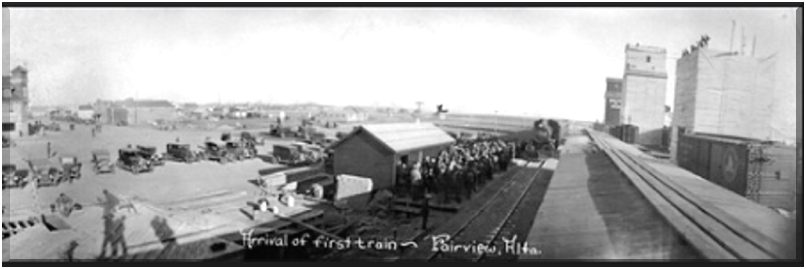
A remarkable photograph preserved by the Provincial Archives of Alberta documents the arrival of the first train in Fairview in 1928.
The photograph is held in the Lucien Mercier fonds, archival reference A.10283.
It captures a defining moment in the town's history.
The arrival of a train meant much more than the completion of a railway journey.
It signalled that the new townsite was connected to a larger transportation network.
Farmers could look toward distant markets.
Merchants could anticipate new supplies.
New residents could reach the district more easily.
For the people who had moved from Waterhole, the train represented the reason they had made such a difficult decision.
The photograph also provides an opportunity for today's residents to examine the people and buildings present during Fairview's earliest days.
Who was there to witness the event?
Which families appear in the picture?
What became of the businesses established around the railway?
Those are questions that historical photographs can help answer.
Six Grain Elevators in the First Summer
Fairview grew quickly.
According to the South Peace Historical Society, by the end of the summer of 1928 the new settlement had six grain elevators, three hotels and a variety of businesses.
Its population was estimated at 400 to 500 people.
That is a striking level of development for a new railway townsite.
The grain elevators were especially important.
They connected the agricultural production of the surrounding countryside to the railway.
Farmers could haul grain to town, where it would be stored and loaded for shipment.
The elevators also brought customers into Fairview.
A farmer delivering grain might purchase supplies, visit a bank, obtain equipment or meet other residents.
The railway and elevators supported the commercial activity of the town.
They were not simply industrial buildings.
They were central to Fairview's early economy.
What Happened to Waterhole?
As Fairview grew, Waterhole lost much of its commercial purpose.
The businesses that had served travellers along the old trail increasingly operated near the railway instead.
Families relocated.
The centre of activity shifted.
The old settlement gradually declined.
Its disappearance from the commercial map did not erase the people who had lived there.
Family histories, photographs, cemetery records and archaeological evidence preserve parts of the Waterhole story.
A provincial archaeological investigation was conducted at the former settlement site in 1990.
The existence of that investigation is important because it shows that Waterhole is not merely a remembered place name.
It is a historical settlement whose physical remains and documentary history deserve preservation.
Waterhole also offers a reminder that progress for one location can mean decline for another.
The railway created opportunity at Fairview.
But it helped end Waterhole's role as the district's commercial centre.
Fairview Becomes a Village
Fairview was incorporated as a village on March 28, 1929.
Only a short time had passed since the new townsite developed beside the railway.
The community needed municipal services and local administration.
Roads, utilities, fire protection and other responsibilities required decisions and funding.
The first United Church was established in the community, and a schoolhouse was constructed in 1929.
Health care also followed the population shift.
A small hospital originally located at Waterhole was moved to Fairview in 1928.
The early hospital had six beds.
These institutions demonstrate how quickly Fairview was becoming more than a railway siding.
It was developing the services needed by families who intended to stay.
The town also served people living on surrounding farms.
Its importance was never measured only by the number of residents inside municipal boundaries.
It depended on the much larger agricultural district.
From Railway Town to Regional Centre
Agriculture remained central to Fairview's development.
The surrounding countryside produced grain and livestock.
Farm families depended on businesses and services in town.
Merchants depended on the purchasing power of those families.
That relationship created both opportunity and vulnerability.
Poor harvests could reduce spending.
Commodity prices could affect farm income.
Transportation costs influenced profitability.
Like other Prairie communities, Fairview faced the challenges of the Great Depression and changing agricultural markets.
But its position on the railway and its growing public institutions helped establish a lasting role in the region.
By the late 1940s, Fairview had developed well beyond its beginnings as a new townsite.
It was preparing for another transformation.
This time, the defining institution would not be a railway station.
It would be a college.
The $50,000 Decision That Helped Change Fairview
In 1948, Alberta's Department of Agriculture was looking for a location for a new agricultural college in the Peace Country.
Fairview was considered a strong candidate.
But there was a problem.
The community's water supply was inadequate for the proposed institution.
That could have ended Fairview's opportunity.
Instead, local leadership organized a fundraising effort.
Northwestern Polytechnic's institutional history records that the mayor formed a committee to raise money for water-system improvements.
The committee raised approximately $50,000 in a short period.
That was a substantial local investment in 1948.
It demonstrated that residents were willing to contribute toward infrastructure that could bring lasting benefits to the community.
The decision was about more than water pipes.
It was about whether Fairview could secure an institution that would attract students, staff, investment and opportunities for generations.
The community's effort helped overcome a significant obstacle.
Construction arrangements followed in 1949.
1951: Fairview Becomes a College Town
The Fairview School of Agriculture and Home Economics opened in 1951.
According to the institution's historical records, 51 students registered in October of that year.
There were 36 students studying agriculture and 15 studying home economics.
J.E. Hawker was appointed the first principal.
The first class graduated in 1953.
For Fairview, the college represented a major change in identity.
The community was no longer simply a place where farmers shipped grain and purchased supplies.
It was also a place where young people came to learn.
Students could receive practical education connected to agriculture and rural life.
The college provided employment.
It brought visitors and families into the community.
It helped connect Fairview with the broader Peace Country and beyond.
The railway had shaped the town's location.
The college helped shape its identity.
1958: Fire Threatens the College's Future
Fairview's college history also includes a serious setback.
In 1958, fire destroyed the mechanics building and gymnasium.
Northwestern Polytechnic's history confirms that no one was injured.
But the destruction created uncertainty about the institution's future.
The South Peace Historical Society records that the school closed for two years before reopening in 1960.
Facilities were gradually replaced and expanded.
The episode echoes a familiar pattern in Peace Country history.
Communities built institutions with considerable effort.
Fires and economic difficulties sometimes threatened those investments.
Recovery required new decisions and renewed commitment.
Fairview's college survived that early crisis and continued developing educational programs.
Ian Macdonald and the Growth of Fairview College
One of the people closely associated with the college's later development was Ian Malcolm Macdonald.
He was born in Fairview in 1932 and grew up on the family farm.
He graduated with honours from the college's first class in 1953.
Years later, he became an important leader in the institution's governance.
The Government of Alberta's Order of Excellence biography records that Macdonald was appointed chair of Fairview College's first board of governors in 1978.
He later returned for a second term.
During his leadership, the college underwent major expansion.
The provincial biography records approximately $14 million in development and growth from around 200 students on one campus to more than 1,000 students across 12 satellite campuses.
Programs expanded beyond the college's original agricultural focus.
Trades, apprenticeship training and specialized programs became increasingly important.
Macdonald's career illustrates the relationship between the college and the community.
He had been a local student.
He became a farmer and community leader.
He later helped guide the institution that had shaped his own education.
His contribution was recognized through the Alberta Order of Excellence.
The College Changes With the Region
Agriculture changed dramatically during the second half of the twentieth century.
Farms became larger and more mechanized.
Equipment became more sophisticated.
Employment opportunities expanded in trades, transportation, health care and resource industries.
Fairview's educational institution changed as well.
Programs evolved to reflect new demands.
Training expanded into technical and vocational fields.
The college eventually became part of the broader Northwestern Polytechnic system.
In October 2025, Northwestern Polytechnic announced plans to close its Fairview campus at the end of the 2025–26 academic year.
The announcement generated concern about the future of post-secondary education in the community.
By 2026, the Town of Fairview was publicly supporting efforts to retain educational opportunities at the site, including a transition involving Northern Lakes College and provincial partners.
The Town's economic development information identifies trades and health-care training associated with Northern Lakes College in Fairview.
The current arrangement should not be confused with the original Fairview College or its later Northwestern Polytechnic administration.
But the larger historical connection remains.
Fairview's identity has been tied to post-secondary education since 1951.
The future use of the campus is therefore not simply a question about buildings.
It is part of a history that began when residents raised money to secure the original college.
A Town Connected to the Peace River
Fairview's history is also inseparable from Dunvegan.
The Peace River crossing south of town has long been important to transportation.
Before the modern bridge, crossing the river required other arrangements, including ferry service.
The opening of the Dunvegan suspension bridge in 1960 improved regional road connections.
It helped connect communities on both sides of the river.
Highways increasingly took over transportation roles once dominated by railway lines and older trails.
Fairview's position between Grande Prairie and Peace River helped it remain a service centre.
The community developed around the needs of farms, businesses, schools, health care and regional transportation.
Its economy changed, but its role as a gathering and service point continued.
The Museum That Keeps the Old Town Alive
One of Fairview's most important historical resources is the Fairview Pioneer Museum.
Located near Cummings Lake, the museum preserves buildings, equipment and artefacts associated with early life in the district.
The Municipal District of Fairview identifies several restored and furnished structures, including the Macdonald and Scotswood schools, the Malkinson Building and a former United Grain Growers elevator office.
The museum also preserves machinery, vehicles and household objects.
These collections help explain everyday life in ways that written histories cannot always capture.
A school desk tells part of the story of education.
A piece of farm machinery illustrates the labour required to produce food.
A business sign recalls a shop that may no longer exist.
Old photographs preserve the faces of residents whose names might otherwise disappear.
The museum is particularly important because Fairview's story includes buildings and families from an earlier settlement.
Waterhole may have lost its commercial centre.
But its history remains part of the district's identity.
What Fairview's History Tells Us Today
Fairview's history is a story of transportation, investment and community decisions.
The old trail helped create Waterhole.
The railway helped create Fairview.
Agriculture supported the town's early businesses.
Residents invested in water infrastructure to attract a college.
Education became one of the community's defining institutions.
Roads and changing industries altered the regional economy.
Each generation faced decisions about what was worth building and what could be sustained.
Some investments succeeded.
Others required adaptation.
And some places, like Waterhole, lost their original purpose as economic conditions changed.
There is a lesson in that history.
Communities do not control every railway route, market price or government decision.
But local choices can still influence their future.
Fairview's residents demonstrated that in 1948 when they raised money for a water system that helped secure a college.
Nearly eight decades later, the question of education's place in Fairview remains important.
Waterhole lost the railway. Fairview gained a town. And a generation later, residents helped give that town a college.
Those are different chapters of the same Peace Country story.
Historical Photographs Worth Sharing
1. The First Train Arrives in Fairview, 1928 — Recommended Cover Photograph
The Provincial Archives of Alberta holds an original photograph showing the arrival of the first train in Fairview.
Suggested caption: The first train arrives in Fairview in 1928, marking the railway connection that helped transform a new townsite into the commercial centre of the surrounding agricultural district.
Credit: Provincial Archives of Alberta, Lucien Mercier fonds, A.10283. Original photographer not established in the accessible description.
The Provincial Archives has made this photograph publicly viewable and labels it as having no known copyright restrictions. That statement is not an independent guarantee of every possible publication right.
Image: https://www.flickr.com/photos/95711690@N03/54632839741/
2. Fairview Railway and Main Street, Late 1920s
A period photograph of the station, grain elevators or commercial buildings would illustrate the rapid development that followed the 1928 railway arrival.
Suggested caption: Fairview's early railway district, where grain elevators and new businesses helped establish the town after commercial activity shifted north from Waterhole.
Credit: To be confirmed from the original archival record. Do not assign a photographer, date or collection without verification.
3. Waterhole Before the Move
A verified photograph of Waterhole's original businesses, street or community buildings would provide an important comparison with the new Fairview townsite.
Suggested caption: Waterhole, the settlement south of present-day Fairview that served travellers and farmers before the railway shifted commercial activity north in 1928.
Credit: To be confirmed from the original photograph or archival catalogue.
4. Fairview School of Agriculture and Home Economics, 1951
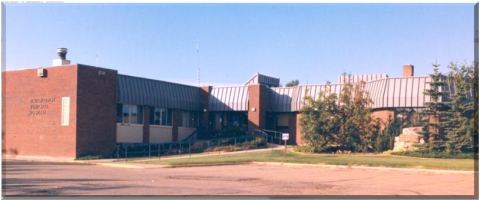
An institutional photograph of the original campus or first student intake would connect the railway story to Fairview's second major period of development.
Suggested caption: The Fairview School of Agriculture and Home Economics opened in 1951 after local residents helped fund improvements to the community's water supply.
Credit: Confirm the exact image and rights through the college's historical collection or Provincial Archives of Alberta.
5. Fairview Pioneer Museum
A contemporary, original photograph of the museum's restored buildings would illustrate the continuing preservation of local history.
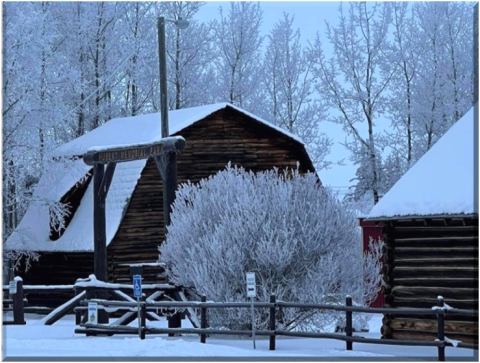
Suggested caption: Historic buildings at the Fairview Pioneer Museum preserve the everyday history of the families, businesses and schools that helped develop the district.
Credit: Photographer or supplying organization to be identified when the image is selected.
Sources and Historical References
South Peace Historical Society — The Town of Fairview
Local historical account documenting Waterhole, the 1928 railway, grain elevators, early hospital and municipal development.
https://calverley.ca/article/16-016-the-town-of-fairview/
Provincial Archives of Alberta — Arrival of the First Train in Fairview, 1928
Original archival photograph from the Lucien Mercier fonds, reference A.10283.
https://www.flickr.com/photos/95711690@N03/54632839741/
Northwestern Polytechnic — Institutional History
Original institutional chronology covering the 1948 water-supply fundraising effort, construction, opening enrolment, principals and 1958 fire.
https://www.nwpolytech.ca/about/our-history
Government of Alberta — Ian Malcolm Macdonald, Alberta Order of Excellence
Biographical record of the Fairview graduate and college board chair, including the institution's expansion.
https://www.alberta.ca/aoe-ian-macdonald
Town of Fairview — Save Fairview Campus
Municipal record of the October 2025 campus closure announcement and subsequent community advocacy and transition discussions.
https://www.fairview.ca/community/living-in-fairview/save-fairview-campus/
Town of Fairview — Economic Development
Current municipal description of Fairview's regional economy and post-secondary training role.
https://www.fairview.ca/business/fairview-economic-development/
Municipal District of Fairview — Attractions
Information about Historic Dunvegan and the Fairview Pioneer Museum.
https://www.mdfairview.com/visit-us/attractions
Spirit of the Peace Museums — Fairview Pioneer Museum
Museum collection description, historic buildings and preserved artefacts.
https://spiritofthepeace.ca/our-museums/fairview-pioneer-museum/
South Peace Regional Archives — Elmer Hagglund Fonds
Railway employee family history documenting construction work on the railway line from Whitelaw toward Fairview.
https://www.southpeacearchives.org/finding-aid/fonds-121-elmer-hagglund-fonds/
Swan City Speaks: What Do You Think?
Fairview residents, former residents and families with roots in Waterhole and the surrounding district — your memories can help preserve this history.
-
Does your family have a connection to Waterhole? Were relatives among the people who moved when the railway bypassed the old settlement? Do you know which buildings were relocated?
-
Do you have photographs of early Fairview? We'd particularly like to see the railway station, grain elevators, downtown businesses, schools, hotels and homes. Can you identify the people pictured?
-
Did you attend or work at Fairview College? What do you remember about the original agricultural school, the 1958 fire, campus expansion or student life?
-
Which families and businesses should be remembered? Are there important Indigenous histories, Métis families, early merchants, farmers, educators or community leaders whose contributions deserve greater recognition?
-
Can you help correct or expand the historical record? Old photographs, family letters, diaries, school records and memories may help clarify events that are only partly documented.
When sharing photographs, please include any known names, approximate dates, locations and information about who owns the image.
Fairview's history is more than the story of a railway town.
It is also the story of Waterhole, the surrounding farms, the college and generations of people who helped build a community in the Heart of the Peace.
Share your memories and thoughts in the comments. Your opinion matters.